

This tiramisu cookies recipe came about the way most of my favorite recipes do – I had half a container of mascarpone sitting in the fridge from a weekend dessert project, and I didn’t want it to go to waste. I also wanted the flavor of tiramisu without spending an afternoon layering ladyfingers and waiting six hours for everything to set. Turns out, you can pack all of those flavors into a cookie that takes about 40 minutes from start to finish. I’ve been baking and writing about it on this blog for over six years, and this recipe has quietly become the one I make more than any other.
How This Espresso Mascarpone Cookie Recipe Came Together
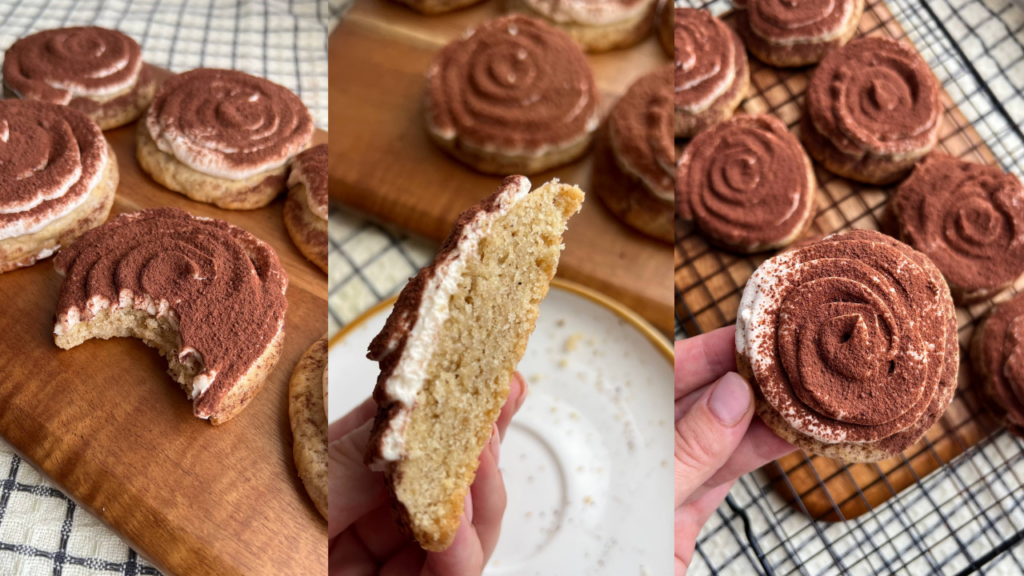
I honestly just love tiramisu. The combination of espresso, mascarpone, and cocoa is one of those things that never gets old for me. But the classic layered version is a commitment. You need the ladyfingers, the egg yolks, hours of chilling. It’s not something you throw together on a Tuesday night.
So I started wondering whether I could get those same flavors into a simpler format. A cookie felt right. Something soft, something you could eat with your afternoon coffee. The first couple of attempts were too flat and didn’t taste like much beyond generic coffee cookies. It took me a few rounds of adjusting the mascarpone ratio and figuring out how much espresso the dough could handle before I landed on a version I was genuinely happy with. Soft center, a slight crispness at the edges, real espresso flavor, and that creamy richness from the mascarpone baked right in.
Choosing the Right Ingredients for Tiramisu Cookies
Mascarpone: The Heart of the Cookie
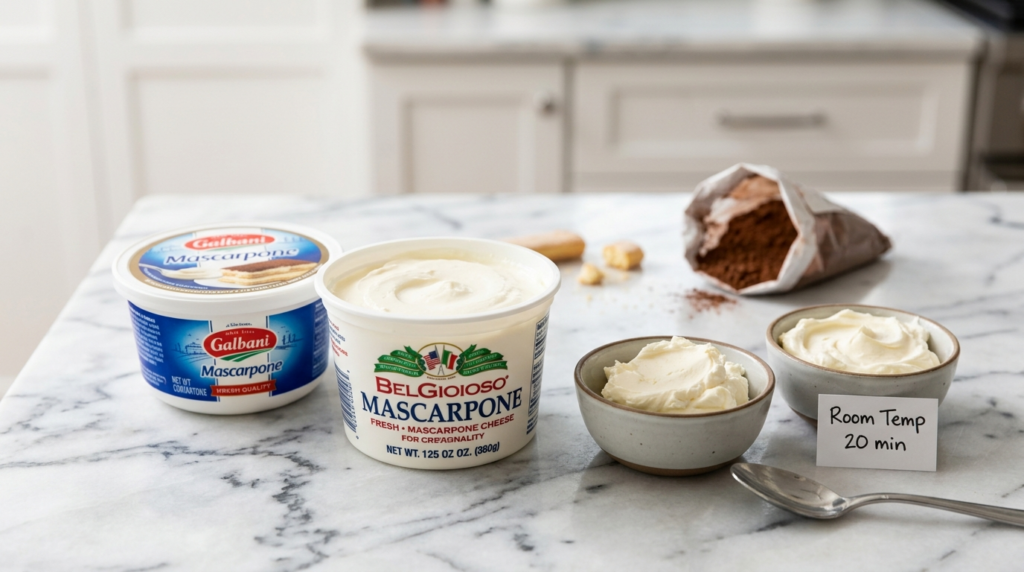
You really do need mascarpone here. Cream cheese or ricotta won’t give you the same result. I usually reach for BelGioioso or Galbani – both are widely available and consistently good. BelGioioso has a slightly tangier flavor, which I find works nicely in cookies because it balances the sweetness. When you open the container, it should smell clean, milky, with just a gentle cream scent. Anything sharp or sour means it has turned.
One thing that makes a noticeable difference: let the mascarpone sit out for about 20 minutes before you use it. Cold mascarpone doesn’t incorporate smoothly into the dough. You end up with little pockets of cheese that never fully blend in, and the texture of the finished cookie suffers.
Espresso Powder: The Coffee Flavor That Matters
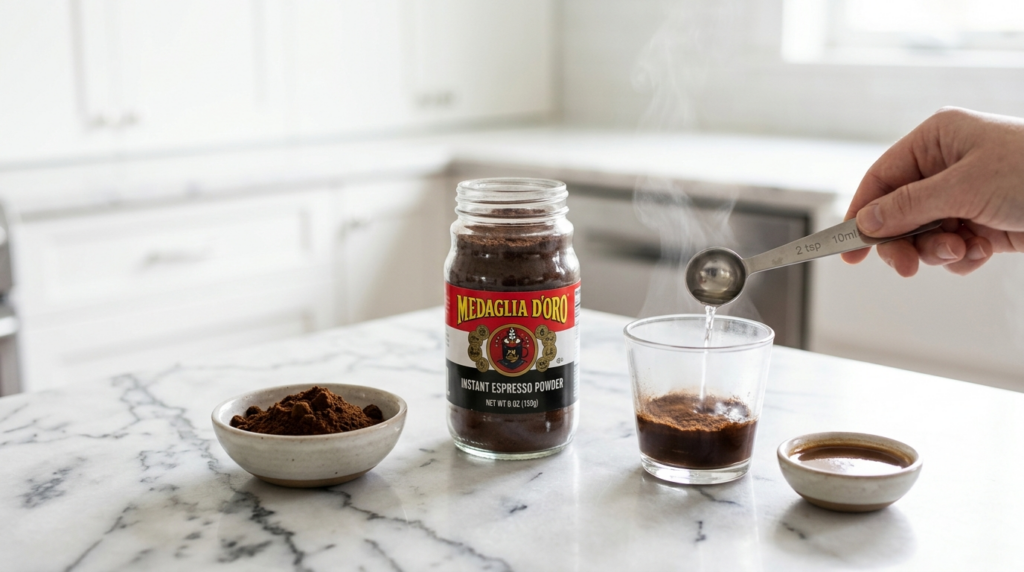
Instant espresso powder is perfectly fine here. Medaglia d’Oro is the brand I keep in my pantry. The important thing is to dissolve it in a small amount of hot water first – about 2 teaspoons (10 ml) of boiling water. Dry espresso powder stirred directly into dough doesn’t distribute evenly, and you get unpleasant bitter spots in some cookies while others taste like nothing happened.
Brewed espresso also works. Pull a double shot and measure out just 1 tablespoon (15 ml). Any more liquid than that throws off the dough consistency.
Cocoa Powder for Dusting
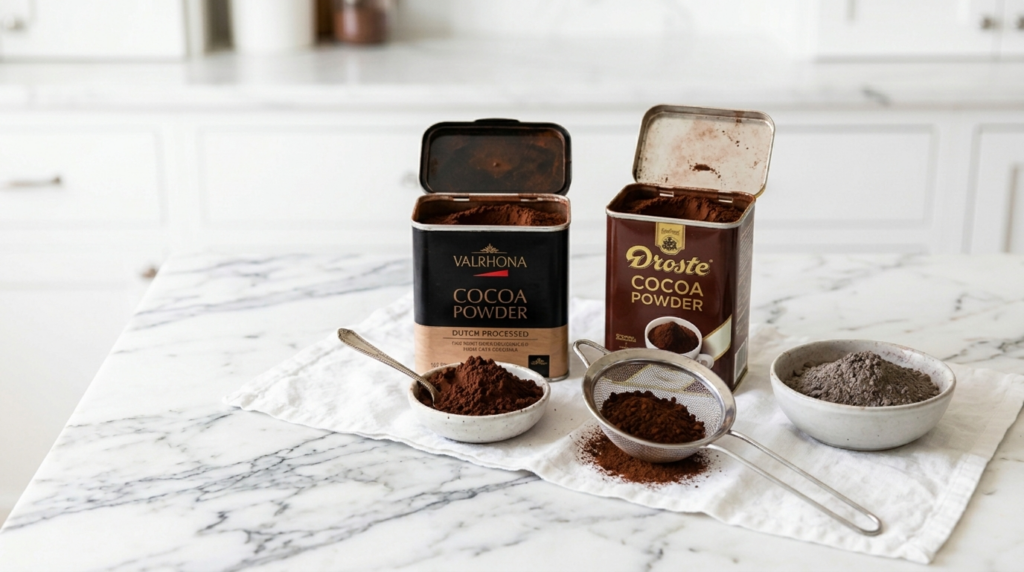
Valrhona is my first choice for the cocoa dusting. Droste is a reliable backup. Cheaper cocoa powders tend to look grayish once they settle on the cookies, and the flavor is just flat. You want something deep and dark that echoes the classic tiramisu finish. Dutch-processed cocoa is what you’re after, not natural cocoa.
The Flour
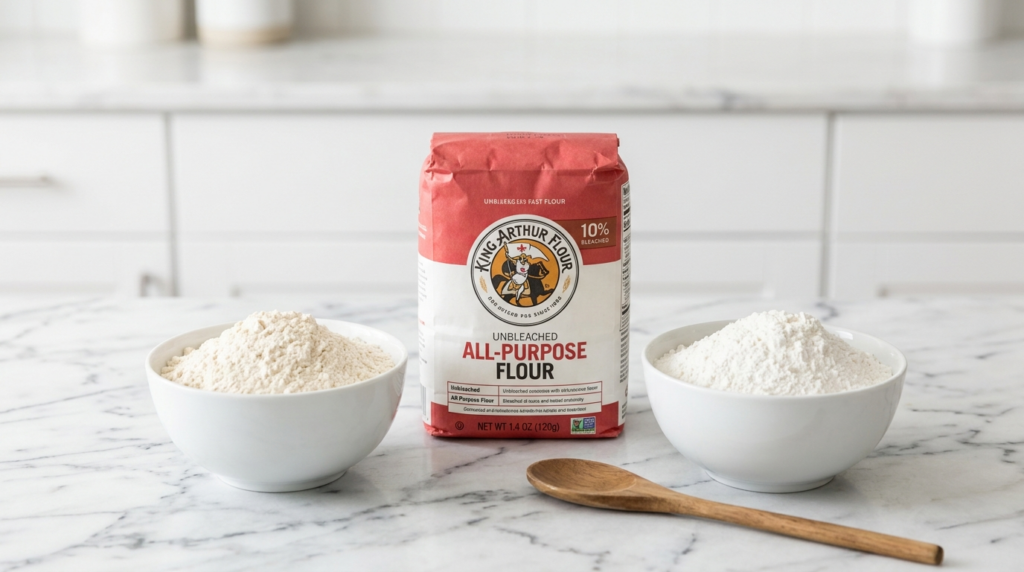
All-purpose, unbleached. I stick with King Arthur because the protein content hovers around 11.7%, which gives these cookies a good balance of chew and tenderness. Bleached flour makes them spread a bit too much and they come out overly soft. Nothing complicated here – just use a decent unbleached all-purpose and you’re set.
Full Ingredient List
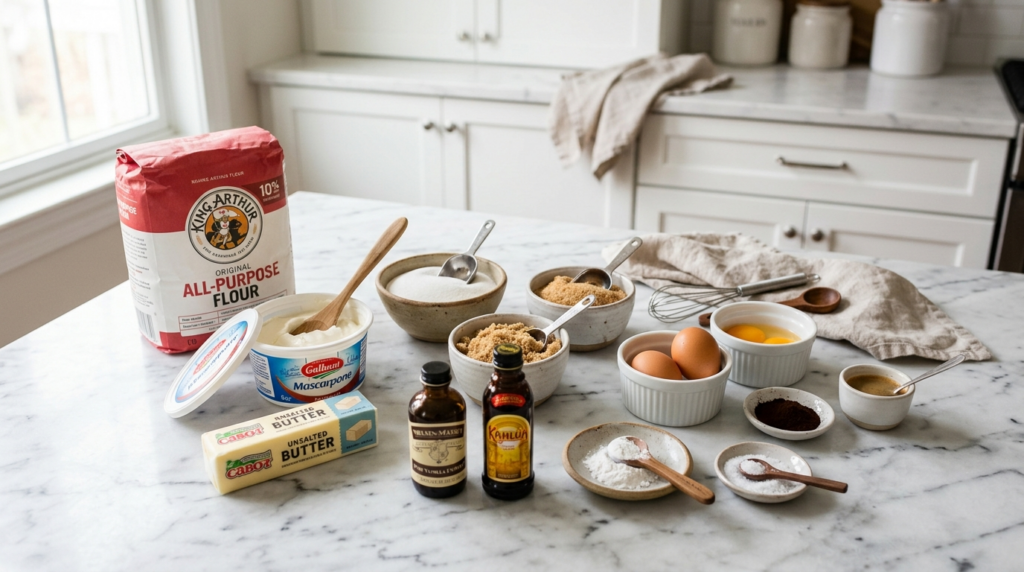
- All-purpose flour – 2 and 1/4 cups (280g)
- Mascarpone cheese – 4 oz (113g), slightly softened
- Unsalted butter – 1/2 cup (113g / 1 stick), room temperature
- Granulated sugar – 1/2 cup (100g)
- Light brown sugar – 1/3 cup (65g), packed
- Instant espresso powder – 2 tablespoons (6g), dissolved in 2 teaspoons hot water
- Large egg – 1 whole plus 1 yolk
- Pure vanilla extract – 1 and 1/2 teaspoons (7 ml)
- Kahlúa or coffee liqueur – 1 tablespoon (15 ml), optional but recommended
- Baking powder – 1 teaspoon (4g)
- Fine sea salt – 3/4 teaspoon (4g)
- White chocolate chips – 1/2 cup (85g)
- Dutch-processed cocoa powder – for dusting, about 2 tablespoons (12g)
Makes approximately 24 cookies.
Tiramisu Cookie Substitutions: What Works and What Doesn’t
Mascarpone Substitutes
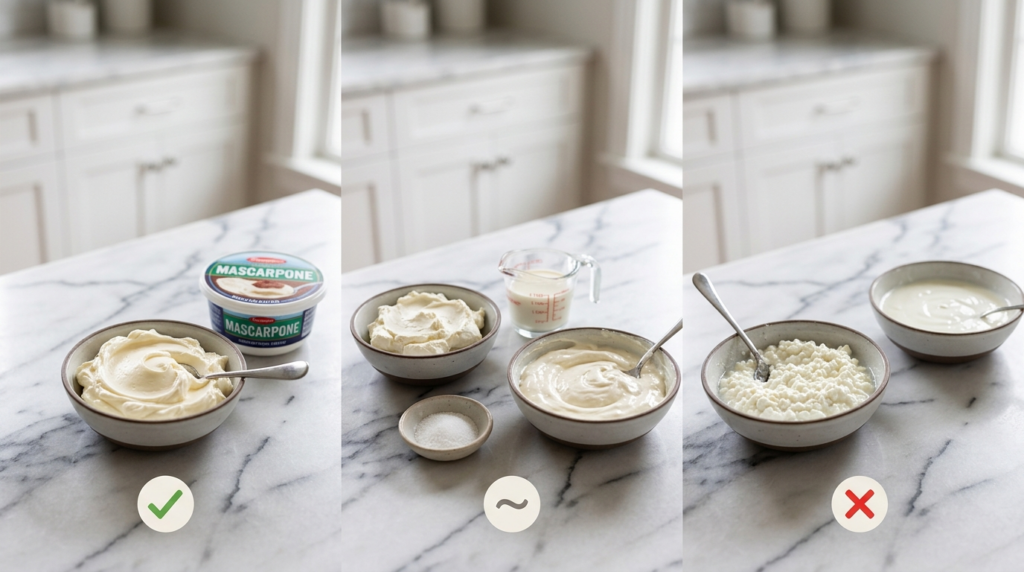
There’s no perfect swap. Full-fat cream cheese mixed with 2 tablespoons (30 ml) of heavy cream and a small pinch of sugar will get you in the neighborhood – the texture is a touch denser and you lose some of that delicate mascarpone sweetness, but the cookies are still good. Ricotta doesn’t work here. I tried it once and the cookies came out heavy and bland, more like little pancakes than anything resembling tiramisu.
Kahlúa
You can leave it out entirely, or replace it with 1 teaspoon of rum extract mixed into 2 teaspoons of strong brewed coffee. The Kahlúa adds a gentle boozy warmth that rounds everything out, but the cookies hold their own without it. I skip it when I’m making these for kids.
Brown Sugar
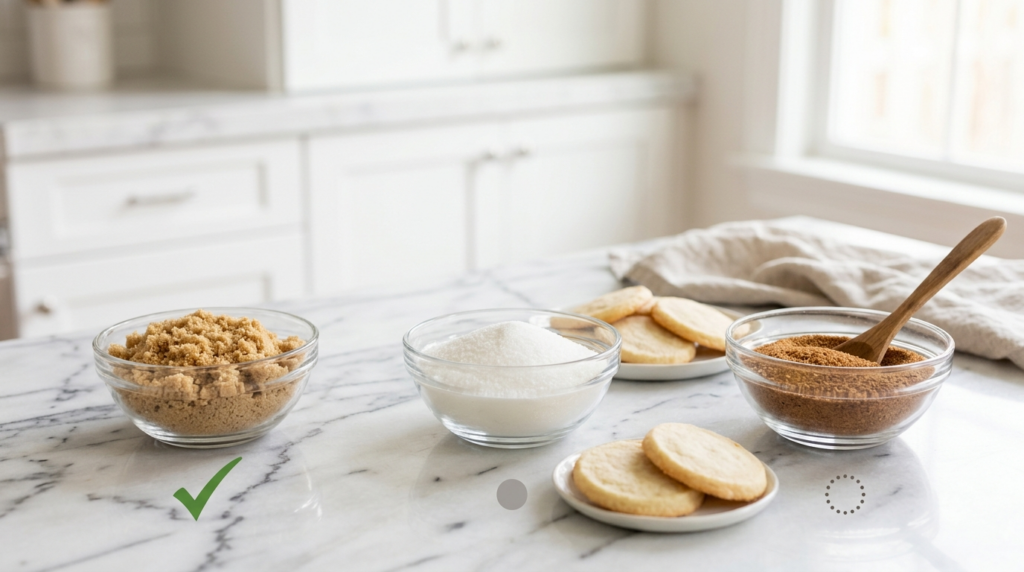
All granulated sugar works in a pinch, but the cookies will lean crisper and lose some chewiness. The molasses in brown sugar contributes more than just sweetness – it adds moisture and a subtle depth. Coconut sugar is an option, though it introduces a caramel note that pulls the flavor away from tiramisu.
White Chocolate Chips
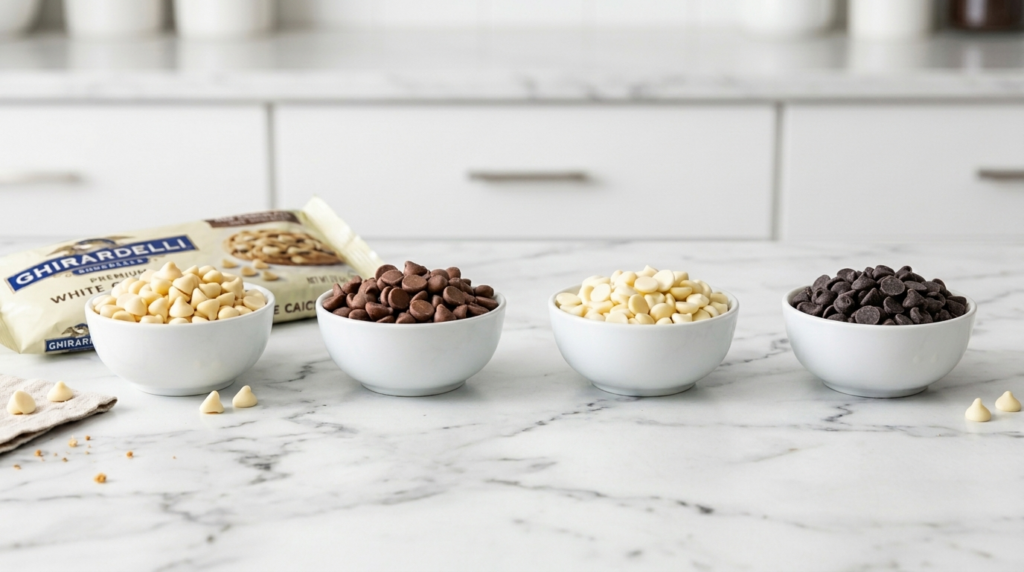
I’d avoid swapping in milk chocolate. It competes with the espresso and muddies the flavor. White chocolate complements coffee really well because it’s mostly cocoa butter and sugar – it amplifies the creamy quality instead of fighting it. Ghirardelli makes solid white chips. Store-brand white chips can taste a bit waxy. Dark chocolate chips turn this into more of a mocha cookie, which is fine, but it’s a different thing entirely.
The Non-Negotiables
Espresso powder (or real espresso). Regular brewed coffee is too weak and too liquid. And real butter. Margarine changes the texture in a way that I really don’t care for – the cookies come out greasy and flat.
How to Make Tiramisu Cookies: My Process Start to Finish
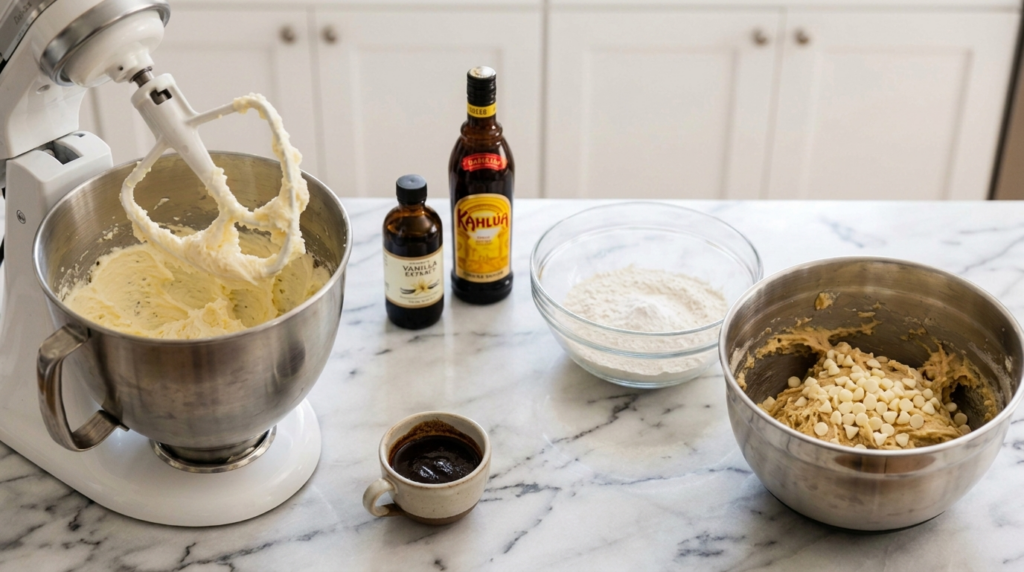
First thing I do is set the oven to 350°F (175°C) and line two baking sheets with parchment paper. I prefer parchment over silicone mats for these because it gives slightly better browning on the bottoms, and that little bit of crispness underneath is important for the overall texture.
Then I prep the espresso. Two tablespoons (6g) of instant espresso powder into a small cup, add 2 teaspoons of boiling water, stir until it becomes a thick dark paste. Set it aside to cool for a minute.
Butter and both sugars go into my stand mixer with the paddle attachment. I beat them on medium speed for about 3 minutes. You want it genuinely fluffy and lighter in color, not just stirred together. Then the mascarpone goes in for another minute of mixing. The mixture might look a little curdled at this stage. That’s normal – it comes together as you keep going.
Next, the egg and the extra yolk. That second yolk is doing a lot of quiet work here. It makes the cookies richer and more tender without adding the extra liquid that a full second egg would bring. Beat everything for about 30 seconds, then add the dissolved espresso paste, the vanilla, and the Kahlúa. The kitchen smells wonderful at this point.
In a separate bowl, whisk together the flour, baking powder, and salt. Add the dry ingredients to the wet mixture in two additions, mixing on low speed. Stop mixing as soon as the flour is just barely incorporated. A few small streaks of flour are fine. Over-mixing develops the gluten and makes the cookies tough. Fold the white chocolate chips in by hand with a spatula. Quick, gentle folds. That’s it.
A note: the dough will be noticeably softer than standard cookie dough because of the mascarpone. This is exactly right. Don’t add extra flour to compensate.
Scoop the dough using a medium cookie scoop – roughly 1.5 tablespoons per ball. Space them about 2 inches (5 cm) apart on your prepared sheets.
Now, this part is easy to skip, but please don’t. Chill the scooped dough balls in the fridge for 15 minutes before baking. Chilled dough holds its shape better, spreads less, and bakes up taller with a better texture throughout. The one time I got impatient and skipped this step, the cookies spread too thin and had greasy edges. It’s only 15 minutes.
Bake for exactly 11 minutes. The centers will still look slightly underdone and puffy, and the edges will have just the faintest hint of golden color. Pull them out. They continue to set on the hot baking sheet for another 2 to 3 minutes – that carryover baking is what gives you the soft center without an underbaked middle.
Let them rest on the sheet for 5 minutes, then move them to a wire rack. While they’re still a little warm, grab a fine-mesh sieve and dust the tops generously with Dutch-processed cocoa powder. The warmth helps the cocoa adhere and partially absorb into the surface, creating a thin layer that has a slight crack when you bite through. Dusting while warm is the move – if you wait until they’ve cooled completely, the cocoa just sits on top and brushes off at the lightest touch.
Why These Coffee Cookies Actually Taste Like Tiramisu
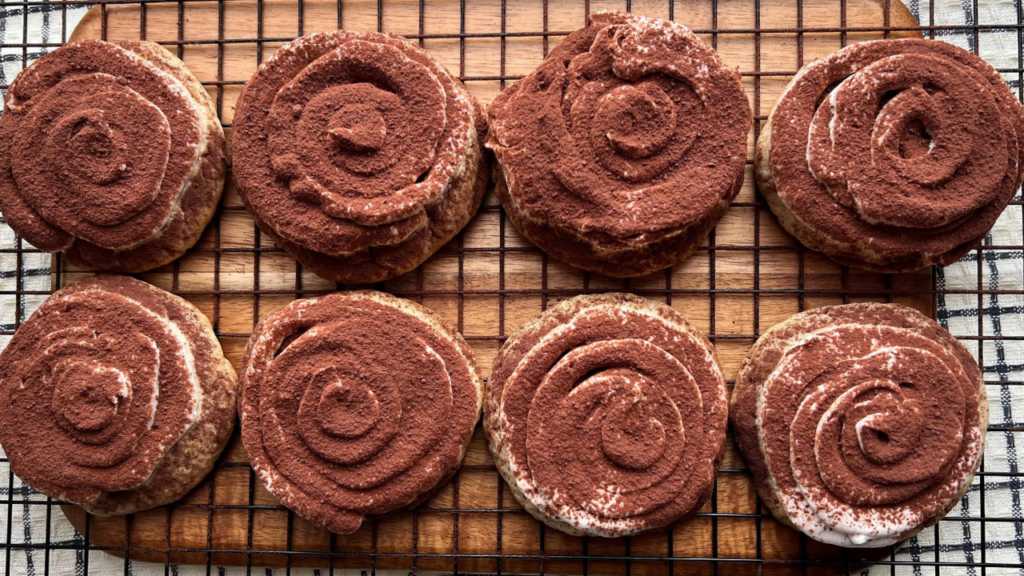
A lot of tiramisu cookie recipes online are really just coffee cookies with cocoa powder on top. I’ve tried plenty of them, and most are fine but don’t really deliver on the promise. The difference here is the mascarpone baked into the dough itself. It changes the interior texture completely – creamy, almost like a cross between a soft cookie and a tiny cheesecake bite. Combined with a strong dose of espresso, a touch of Kahlúa, and that cocoa finish, every major flavor from traditional tiramisu is present.
The white chocolate chips serve a specific purpose too. They melt during baking into little pockets of creamy sweetness that mirror the zabaglione layer in the classic dessert. It’s a subtle thing, but once you taste it, it makes sense.
Storage, Freezing, and Calorie Info
How to Store These Cookies
Keep them at room temperature in an airtight container for up to 4 days. Because of the mascarpone, they’re a bit more perishable than a standard cookie – by day 5 the texture starts to go and the espresso flavor fades. Layer sheets of parchment paper between the cookies so the cocoa dust doesn’t smear everywhere inside the container.
Stored in the fridge, they firm up quite a bit. Some people prefer them that way. Totally a personal preference.
Can You Freeze These Italian Dessert Cookies?
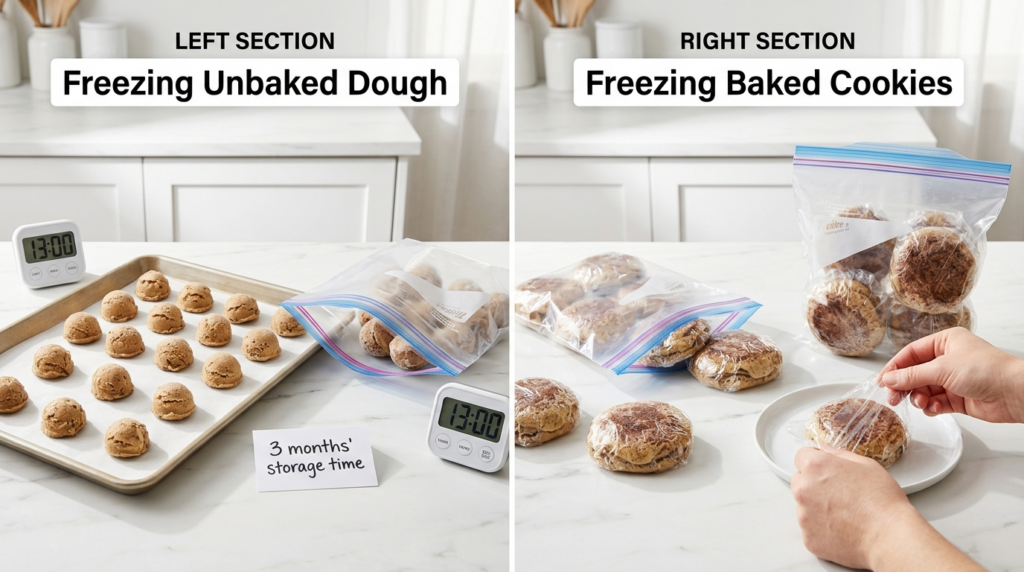
Absolutely. For unbaked dough, freeze the scooped balls on a sheet pan until solid, then transfer them to a freezer bag. They keep well for up to 3 months. Bake straight from frozen at the same 350°F (175°C) but add 2 extra minutes, so 13 minutes total. Dust with cocoa after they come out of the oven.
Already-baked cookies freeze well too. Wrap them individually in plastic wrap, store in a freezer bag, and thaw at room temperature for about 30 minutes. A quick re-dust of cocoa freshens them up since freezing tends to dull the surface. And a short 8 to 10 second trip through the microwave brings back the soft center nicely.
Calorie Count
Each cookie comes in at roughly 165 to 175 calories, depending on scoop size and white chocolate chip generosity. Compared to a full slice of layered tiramisu, which can easily top 400 calories, this is a much lighter way to get that same flavor fix.
Common Mistakes When Making Tiramisu Cookies at Home
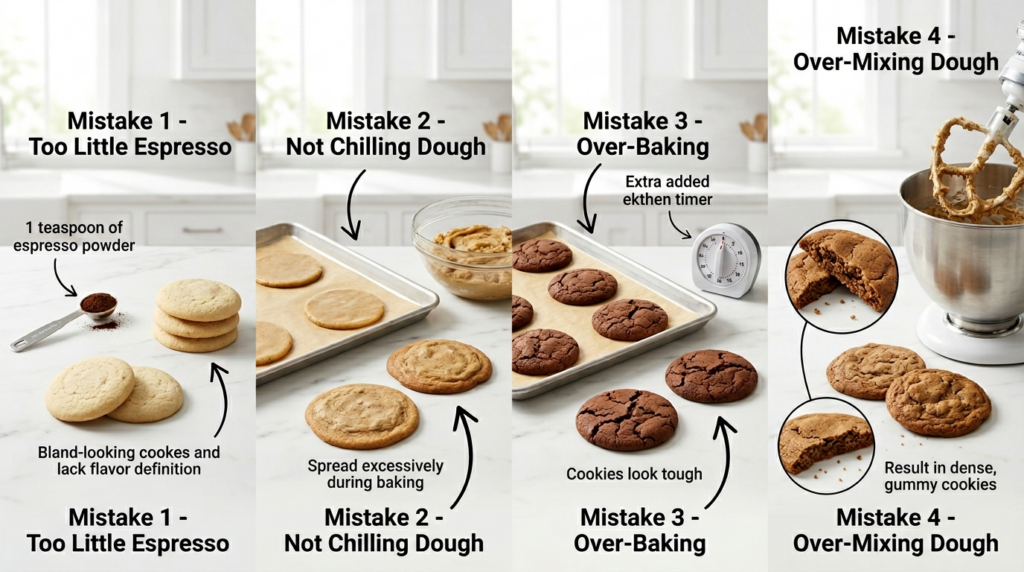
Using too little espresso. I’ve seen recipes calling for a single teaspoon of espresso powder for the whole batch. One teaspoon barely registers after baking. Two tablespoons sounds like a lot when you’re measuring it, but the oven mellows the bitterness significantly, and what’s left is a genuine, roasty coffee flavor that actually comes through.
Skipping the chill. I said it above and I’ll repeat it here. Chill. The. Dough.
Over-baking. These tiramisu-style cookies go from perfect to overdone in about 90 seconds. They should look slightly underdone when they come out of the oven. Puffy, a touch shiny on top, almost too soft. The residual heat from the pan finishes the job. Every time I’ve been tempted to add “just one more minute,” the result has been dry, overbaked cookies.
Dusting the cocoa too late. Warm cookies absorb the cocoa and hold onto it. Cold cookies just let it sit on the surface, and it falls off the second someone picks one up. Do it while they’re warm.
Who These Cookies Are Really For
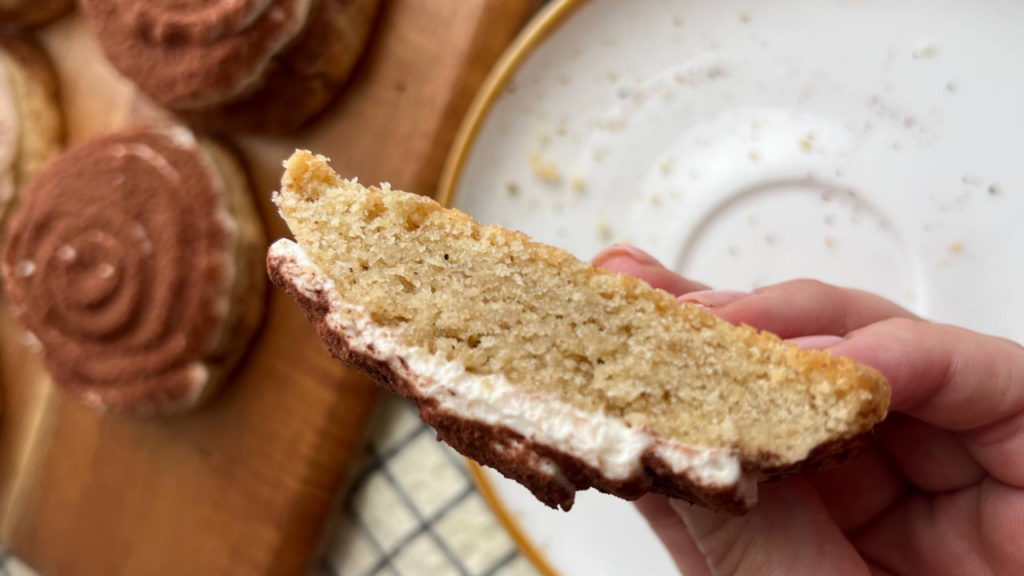
Anyone who loves tiramisu but wants something easier and faster. Anyone who needs something impressive for a gathering but only has 40 minutes. Anyone who, like me, just really enjoys coffee-flavored baked goods. This tiramisu cookies recipe is one of the simplest crowd-pleasers I’ve come up with. People always seem a little surprised that a cookie can taste this much like the real dessert. But it can. And it does.
Go make them. I think you’ll be really happy with how they turn out.