

I used to think I knew how to cook pasta. Boil water, dump spaghetti, wait eight minutes, drain, pour jar sauce on top. Done. I did this for years. Years! And honestly, I thought it was fine. Not amazing, but fine. Then I spent two weeks in Italy visiting a friend’s family in Puglia, and on my first night there, his mom served me a plate of simple penne with tomato sauce. Nothing fancy. No truffle oil, no rare cheese. Just penne, tomatoes, garlic, olive oil. And it was a completely different food. Like, I’d been eating a photocopy of pasta my whole life without ever seeing the original.
That trip wrecked me, in the best way. I came home and started obsessing over what I was doing wrong. Turns out… basically everything. So this is what I learned, through trial and error and a lot of sticky, mushy, flavorless bowls of noodles along the way.
Why cooking pasta the Italian way actually matters

Here’s the thing I didn’t get for the longest time. Pasta isn’t just a vehicle for sauce. In Italy, the noodle itself is the star. The sauce is more like a supporting actor. When you cook it properly, the texture changes, the flavor changes, the way it holds onto the sauce changes. It sounds dramatic, I know. But once you taste the difference, going back to the old way feels like settling.
My friend’s mom in Puglia, Maria, she’d watch me eat and say something in Italian I couldn’t fully understand, but the gist was always the same: “You Americans boil it to death.” She wasn’t wrong.
Getting al dente pasta right, using enough water, salting it properly… these sound like tiny details. They’re not. They’re the whole game. I’ll walk you through all the mistakes I used to make, because I’m guessing you make at least half of them too. No judgment. I was right there with you.
Not using enough water to boil pasta
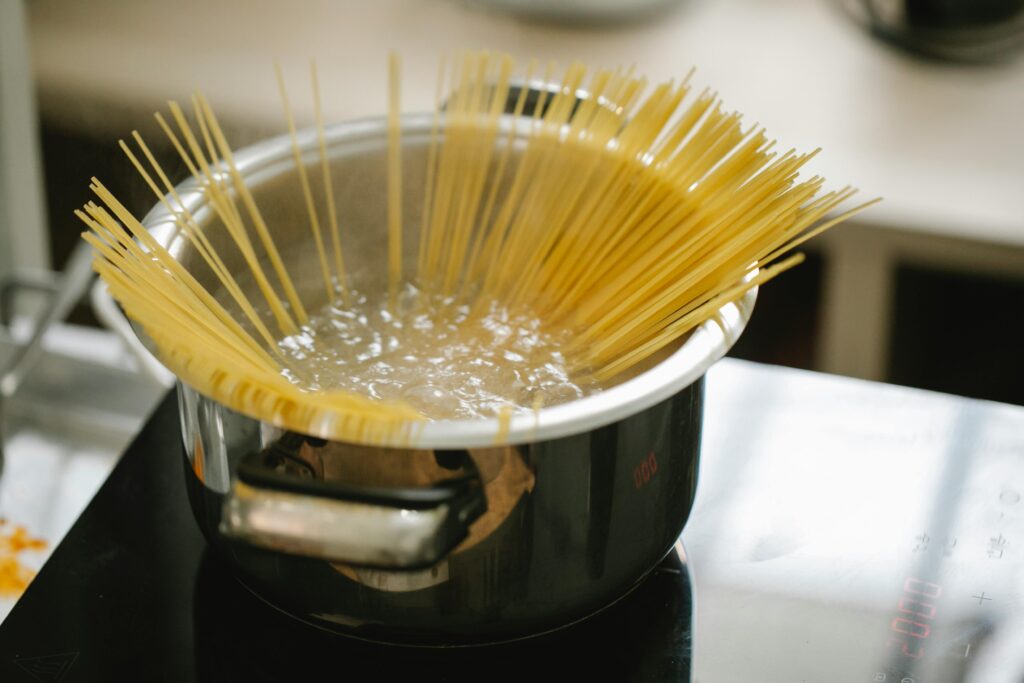
This was my biggest one. I’d grab whatever pot was clean (usually a medium saucepan, let’s be real) and cram a full pound of spaghetti into it. The noodles would stick out above the water line like some sad fountain. I’d push them down as they softened and call it good enough.
It was not good enough.
Pasta needs room to swim around. When it’s crammed in a tiny pot, the noodles stick together, cook unevenly, and the water temperature crashes the second you drop them in. You end up with some pieces overcooked and others still crunchy. The Italian rule is simple: one liter of water for every 100 grams of pasta. For a standard box, that’s about five quarts. Yes, it feels like you’re boiling enough water to take a bath in. That’s the point. I actually bought a bigger pot specifically for pasta after my Italy trip. My wife thought I was losing it. She came around after dinner that night.
How much salt to put in pasta water
I used to toss in a little pinch and feel responsible. Maybe a teaspoon? Maybe less? I was so worried about sodium that I basically seasoned a giant pot of water with good intentions and nothing else.
Italians have a saying: the water should taste like the sea. The first time I salted my pasta water that aggressively, I genuinely panicked. It felt like too much. But here’s what happens: the pasta only absorbs a fraction of that salt, and what it does absorb gives the noodle itself actual flavor. Without it, you’re eating bland dough and hoping the sauce does all the work.
I aim for about a heaping tablespoon of coarse sea salt per liter of water now. Sounds like a lot. It is a lot. It works. And no, your pasta won’t taste like a salt lick. Trust me on this one, I had the same fear.
Overcooking pasta (and how to get al dente right)
Okay, confession time. For most of my adult life I just set a timer for whatever the box said and walked away. Sometimes I’d get distracted by something on my phone and come back two minutes late. The pasta would be soft, floppy, kind of sad. I figured that’s just what pasta was.
Al dente. “To the tooth.” It means the pasta should have a little bite to it, a slight firmness in the center. Not crunchy, not hard, just… resistance. Like the noodle is pushing back a tiny bit when you chew. The first time I nailed it at home, I honestly stood at the stove and went “oh.” Out loud. To nobody. Just me and my penne having a moment.
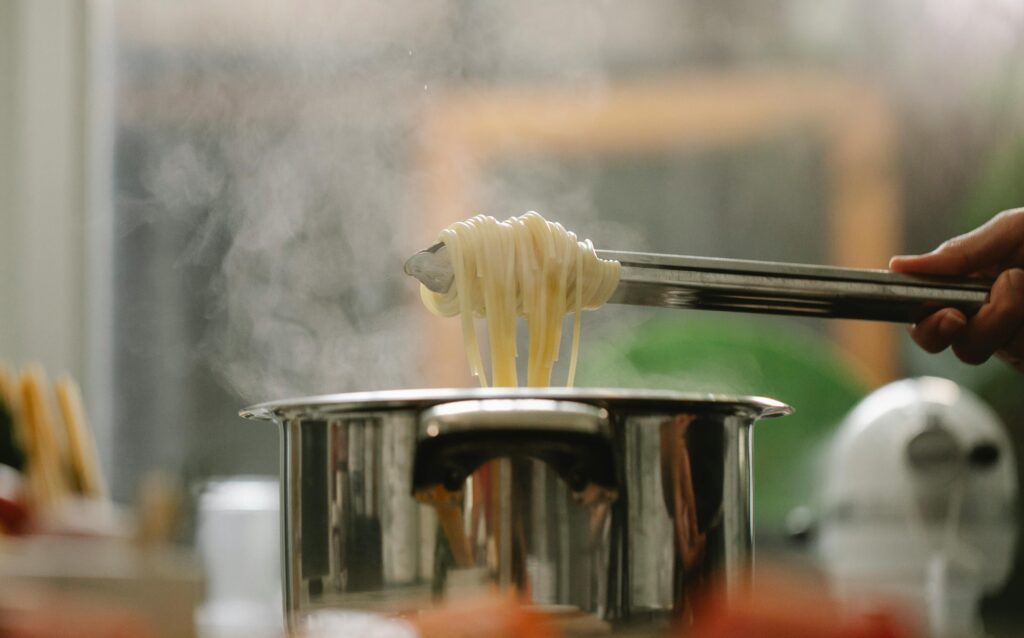
What I do now: I start tasting one or two minutes before the package time. Pull out a piece, blow on it, bite it. If there’s a thin white line in the center when you break it in half, it’s almost there. Give it another thirty seconds. This part takes practice, but once your teeth know the feeling, you’ll never go back to mushy pasta.
Why you should never rinse pasta after cooking
This one physically pains me because I did it for so long. Every single time. I’d drain the pasta and then run cold water over it, thinking I was stopping the cooking process and being all smart about it.
Nope. What I was actually doing was washing off all the starch. That starch is the magic glue that makes sauce cling to pasta. Without it, you get slippery noodles sitting in a puddle of sauce at the bottom of the bowl. Sound familiar? Yeah, me too. When Maria in Puglia saw me reach for the faucet after draining, she literally grabbed my wrist. No words needed. Message received.
Just drain it and move on. The residual heat is fine. That’s actually what you want.
Does adding oil to pasta water do anything?
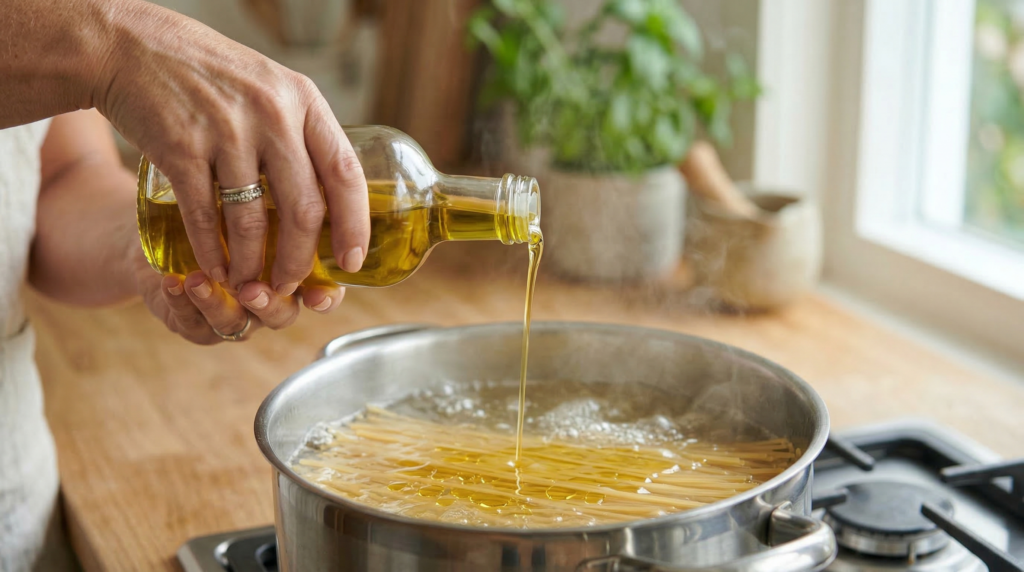
Short answer: yes, but nothing good.
I picked up the oil trick from my mom, who picked it up from her mom. It was one of those kitchen “facts” that nobody ever questioned. Pour a glug of olive oil in the water and the pasta won’t stick! Sounds logical. Makes zero sense in practice. Oil floats on water. It doesn’t mingle with the noodles down below. And when you drain the pasta, the oil coats it on the way out, creating a slick surface that repels sauce. So now your beautifully made marinara just… slides off.
If you want to prevent sticking, use enough water and stir the pasta during the first minute or two after you drop it in. That’s it. That’s the whole trick. I felt so betrayed when I learned this.
How to properly combine pasta and sauce (stop putting it on top)
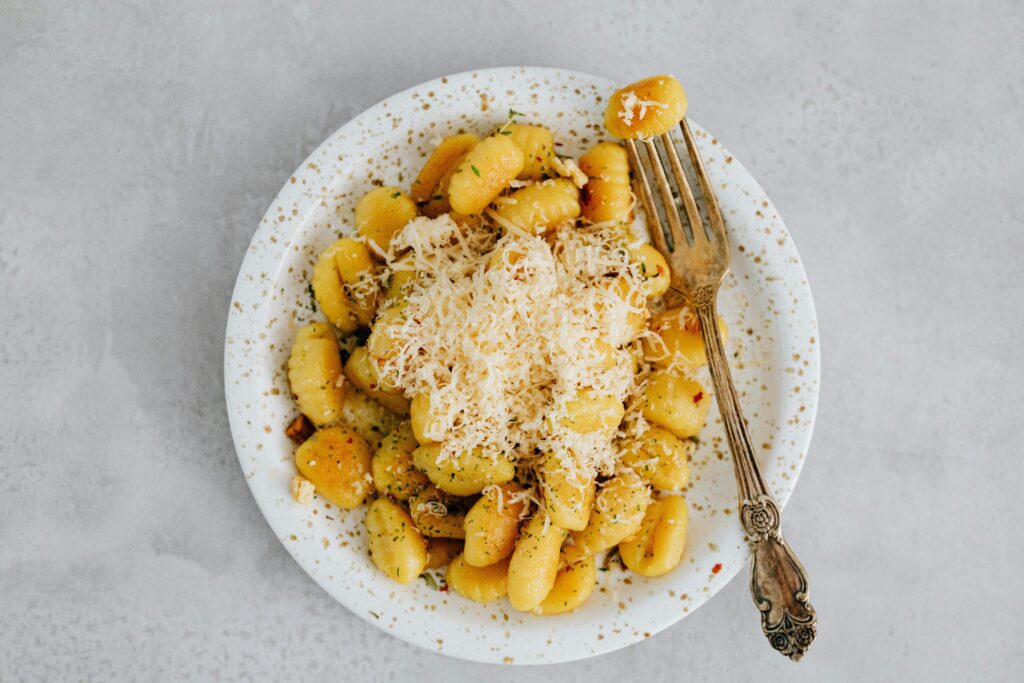
This was the big revelation for me. In my house growing up, pasta night meant a bowl of plain noodles with a ladle of sauce plopped on top. You’d mix it yourself at the table. Totally normal, right?
In Italy, that’s almost offensive. The pasta goes into the pan with the sauce. You toss it together over heat for a minute, maybe add a splash of the starchy cooking water, and the sauce and noodle become one thing. Not pasta with sauce on it. Pasta that IS the sauce. The first time I did this at home, my spaghetti went from “weeknight dinner” to something I was genuinely proud of. And all I changed was this one step. I keep a ladle of pasta water aside every time now, just in case the sauce needs loosening. It always does.
Why Italian cooks save their pasta water
Speaking of pasta water. Don’t pour it all down the drain. I know it looks like cloudy, starchy nothing. But that cloudy starchy nothing is what Italian grandmothers call “liquid gold,” and after using it for a while, I totally understand why.
It thickens sauces without adding cream or flour. It helps sauce and pasta bond together. It’s already salted, so it seasons as it goes. I scoop out a mugful before draining now. Sometimes I use it all, sometimes I don’t. But on the nights I forget to save it? I can tell the difference. The sauce feels disconnected, thinner, less… together. It’s a small habit that changed everything for me.
Should you cook pasta with the lid on or off?

Lid on to bring the water to a boil faster? Sure, go for it. But the second that pasta goes in, lid comes off. I learned this the messy way. Starchy water plus a closed lid equals a foamy eruption all over your stovetop. I cleaned dried pasta foam off my burners more times than I’d like to admit before I finally accepted this rule.
Cooking with the lid off also lets you actually watch what’s happening. You can stir when needed, check the boil, test a noodle. It’s one of those things that seems insignificant until you realize how much control you give up with a lid on.
Best pot size for cooking pasta at home
I already mentioned I bought a new pot. Let me tell you what I replaced. It was this medium-sized, thin-bottomed thing I’d had since college. Served me well for ramen. Terrible for pasta. The water never stayed at a steady boil, and there wasn’t enough room for even half a box of spaghetti to move freely.
You want something tall, wide, and with a thick bottom. The thick bottom keeps the heat even so you don’t get hot spots. The depth gives you enough water volume. My current pasta pot is probably the least glamorous piece of cookware I own, but it’s the one I use most. Go figure.
How to choose good quality pasta at the store
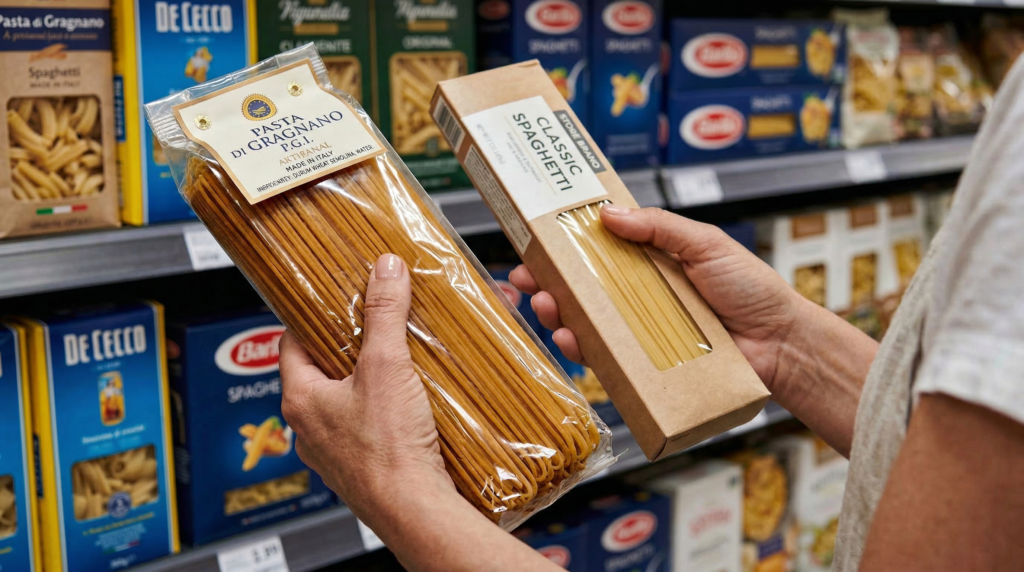
For the longest time I just bought whatever was cheapest. A dollar a box? Sold. And look, I get it, budgets are real. But the difference between cheap soft-wheat pasta and proper durum wheat semolina pasta is staggering. Cheap stuff goes from undercooked to mush in about ninety seconds. Good semolina pasta gives you a window. You have time. It holds its shape, has a slightly nutty flavor, and actually feels like food rather than wet cardboard.
Flip the box over. If it says “durum wheat semolina” you’re good. Brands like De Cecco or Rummo are easy to find in most grocery stores and don’t cost much more. Maybe an extra dollar or two per box. I think that’s worth it for something I eat three times a week. And oh, a quick side note: if you ever spot bronze-die pasta (the surface looks rough instead of smooth), grab it. That rough texture grabs sauce like nothing else. Game changer.
My step-by-step method for cooking pasta the Italian way
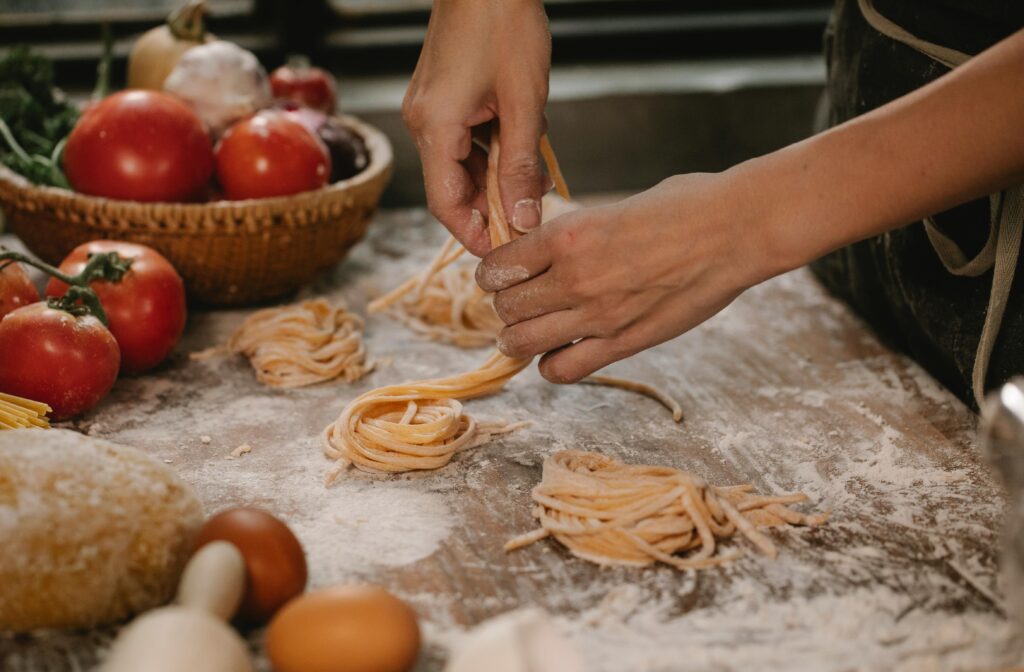
Alright, so after all that ranting about what not to do, here’s what I actually do now. This is my routine, most weeknights, give or take whatever chaos is happening in my kitchen.
First thing I do is fill my big pot with plenty of water and get it on the highest heat. While it’s coming to a boil, I start on the sauce. This is key because you don’t want cooked pasta sitting around waiting for sauce. That’s how you end up with a clumpy mess.
Once the water is at a proper rolling boil, not just a few bubbles, I mean really going, I dump in the salt. A lot of it. A heaping tablespoon per liter. I wince every time. It’s fine. Then the pasta goes in. I stir it immediately, and again about thirty seconds later, to keep everything from fusing together in the first moments when the starch is releasing.
A, and I almost forgot: set a timer for two minutes less than the box says. That’s your tasting window. Start checking. Bite a piece. Is there resistance? Good. Is there a white dot in the center when you snap it? Almost there. Wait just a bit more.
Before draining, I grab a mug and scoop out some of that beautiful cloudy pasta water. Then I drain the rest, no rinsing, and dump the pasta straight into my sauce pan. Toss, toss, toss. If it looks tight, I splash in some pasta water. You want everything glossy and clinging together, like the sauce and noodle just got married and are very happy about it.
And the most important thing, which took me embarrassingly long to figure out: use good pasta. Durum wheat semolina. Rough surface if you can find it. It makes every other step work better.
That’s really it. No secret ingredients, no special equipment besides a decent pot. Just paying attention to the basics that I ignored for about fifteen years of my cooking life.
What I learned about making real Italian pasta at home
I’m not going to pretend I’m some kind of pasta expert now. I still mess up sometimes. Last week I got distracted arguing with my kid about screen time and overcooked the linguine by a solid two minutes. It happens. But the average Tuesday night pasta in my house is miles better than it was a few years ago, and all because I stopped doing a handful of things that felt normal but were actively working against me.
More water. More salt. Less time. No rinsing. No oil in the pot. Sauce in the pan, not on top. Save the pasta water. These aren’t fancy techniques. They’re just what Italians have been doing forever, and once I started copying them, my dinners got so much better that even my picky eater started asking for seconds.
If there’s one thing that trip to Puglia taught me, it’s that great pasta isn’t about expensive ingredients or complicated recipes. It’s about respecting the noodle. Which sounds ridiculous when I type it out. But Maria would approve, and honestly, that’s good enough for me.