

Eight chicken breast recipes that actually work. Not the kind where you follow every step and still end up chewing something that tastes like warm cardboard. I’ve burned through dozens of variations over the years, ruined more pans than I’d like to admit, and finally landed on these eight. They’re tested, they’re real, and they come from someone who cooks chicken breast at least four times a week because meal prep doesn’t do itself.
How I Learned to Stop Making Dry Chicken Breast
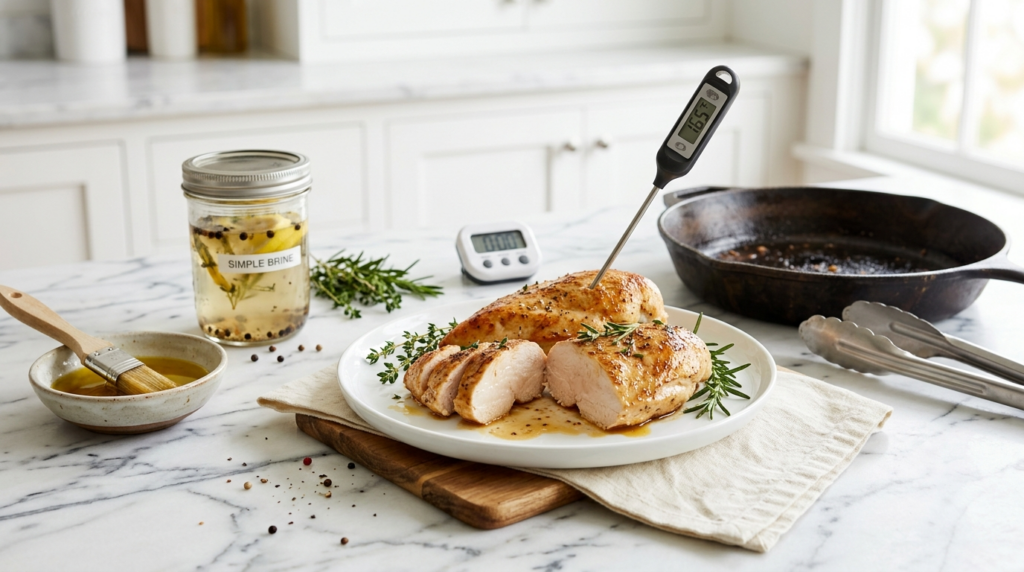
For the longest time, my chicken breast came out dry no matter what I tried. I’d marinate overnight, follow every instruction I could find online, and still end up with something that needed to be drowned in sauce to be edible. The turning point was buying an instant-read thermometer and actually learning what happens to chicken protein when you overcook it by even a few degrees. Once I started pulling chicken off the heat at 160°F instead of blasting it to 175°F “just to be safe,” everything changed. That one tool, plus a few techniques I’ll walk you through below, turned chicken breast from my most frustrating protein into my most reliable one.
How to Pick Chicken Breast Like You Actually Care
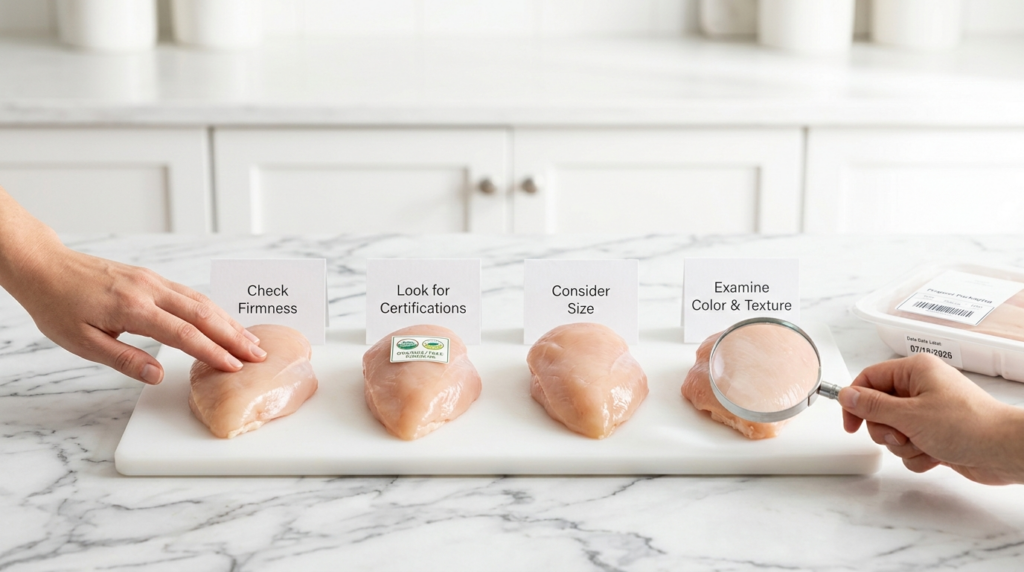
Most people grab whatever package is on sale. I get it. But here’s something worth knowing: the size of the breast matters way more than the brand. Those enormous, 12-ounce monster breasts from conventional farms cook unevenly because the thick end is still raw when the thin end has already turned to jerky. Look for breasts in the 6 to 8-ounce range, which tend to be more consistent in thickness and cook much more predictably.
Touch the package before you toss it in the cart. The meat should feel firm, not squishy or slimy through the plastic. The color should be light pink, not gray or yellowish. And give the package opening a sniff if you can, because fresh chicken smells like basically nothing, and the second it smells sour or egg-like, it’s past its prime.
I usually look for air-chilled or pasture-raised chicken when the budget allows. The texture is noticeably different from the water-injected stuff that comes from bigger producers. That injected water steams out during cooking and leaves you with a shrunken, rubbery result. Check the label for “retained water” or “containing up to 15% solution” and try to avoid those when possible.
Organic vs. Conventional Chicken Breast
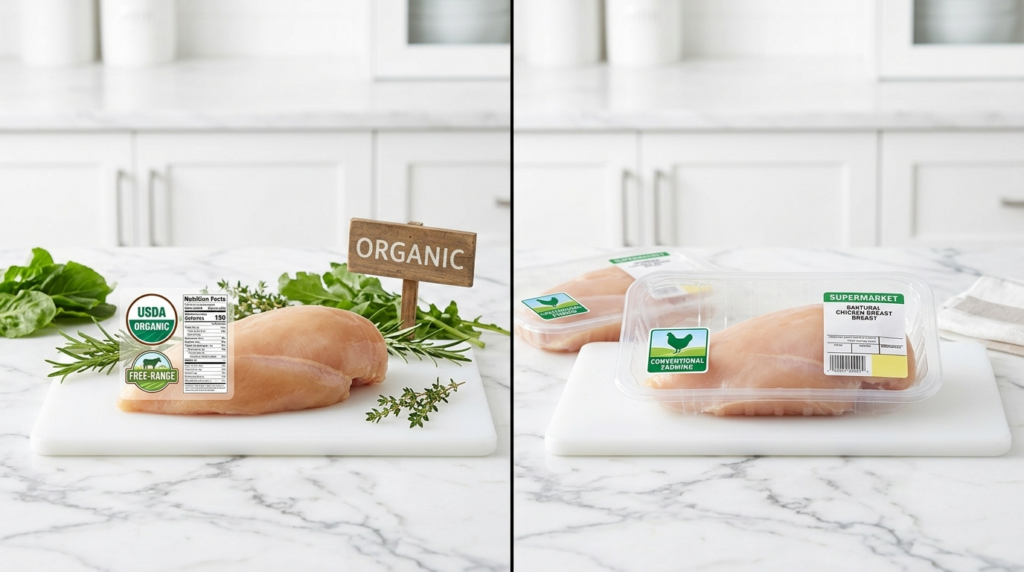
For something like a honey garlic stir-fry loaded with bold sauce, conventional chicken works perfectly fine since the marinade does most of the heavy lifting. But for simple preparations where the chicken is the star, like a classic grilled breast or lemon butter, I find that organic or pasture-raised has a cleaner, less watery flavor that’s worth the extra cost.
Smart Substitutions for Easy Chicken Breast Recipes
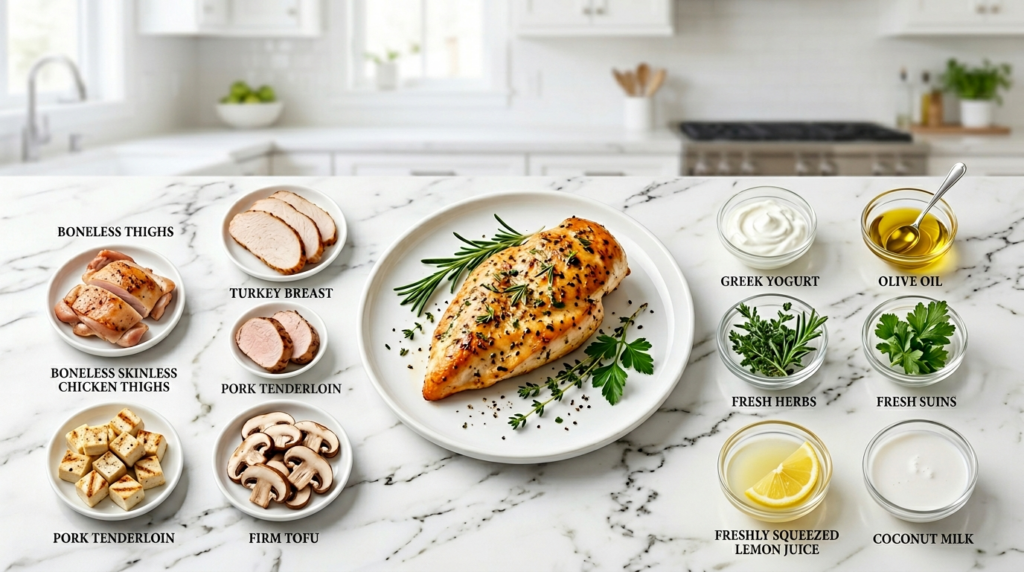
Life happens. You’re halfway through prepping dinner and realize you’re out of something. Here’s what you can swap and what’s better left alone.
Fresh herbs to dried: Use a 3:1 ratio, so one tablespoon of fresh rosemary becomes one teaspoon dried. The flavor profile shifts slightly toward earthier and more concentrated, but it works well in all of these recipes.
Panko breadcrumbs: Regular breadcrumbs work in a pinch, but the crust won’t be as shatteringly crispy. Crushed cornflakes are honestly a better stand-in than regular breadcrumbs if you have them on hand.
Rice vinegar: Apple cider vinegar at half the amount plus a tiny pinch of sugar gets you close. I’d avoid white distilled vinegar here, though, since it’s too harsh and can throw off the balance of a honey garlic sauce.
Lemon juice: I’d recommend sticking with fresh lemon juice for any pan sauce recipe, especially the lemon butter chicken below. Bottled tends to have a slightly metallic, cooked taste that becomes noticeable when the sauce is this simple. For marinades, bottled is fine.
Feta in the stuffed recipe: Feta holds its shape during baking and provides that salty crumble you want inside the chicken. Mozzarella melts into goo and tends to leak out, so it’s not the best trade here. Goat cheese would be a closer alternative if you can’t find feta.
1. Juicy Grilled Chicken Breast with Fresh Herbs
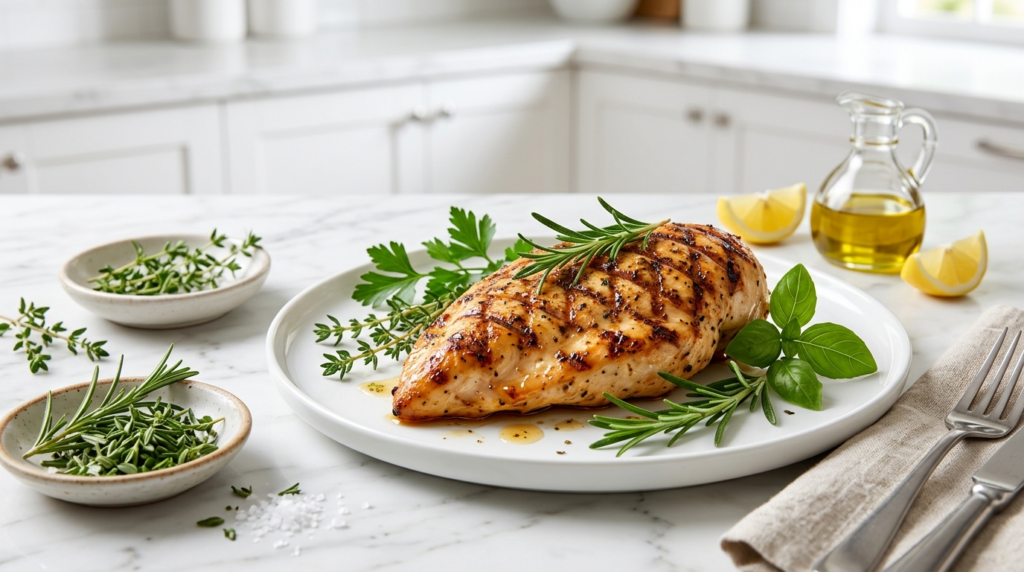
First thing I do is brine. I dissolve a quarter cup of coarse kosher salt in four cups of cold water and submerge the breasts for at least 30 minutes. By my experience, this step genuinely transforms the texture of the meat, and it’s become something I do almost automatically now, even on busy weeknights.
After brining, I pat them completely dry with paper towels, and I mean really dry, not just a quick dab. Surface moisture is the enemy of a good sear or grill mark. Then I pound them to even thickness, about three-quarters of an inch, which makes them cook at the same rate from edge to edge.
The marinade is olive oil, lemon juice, minced garlic, fresh rosemary and thyme, dried oregano, and a teaspoon of smoked paprika. I prefer smoked over regular paprika here because it adds this background warmth and depth that you don’t get from the standard version. Marinate for two hours if you have the time, though even 30 minutes makes a difference.
Grill at 400°F, six to seven minutes per side, and pull them off at 160°F internal. The residual heat will carry them up to 165°F while they rest. That five-degree cushion is the difference between juicy chicken and something you need to apologize for.
2. Baked Parmesan Chicken Breast with Crispy Crust
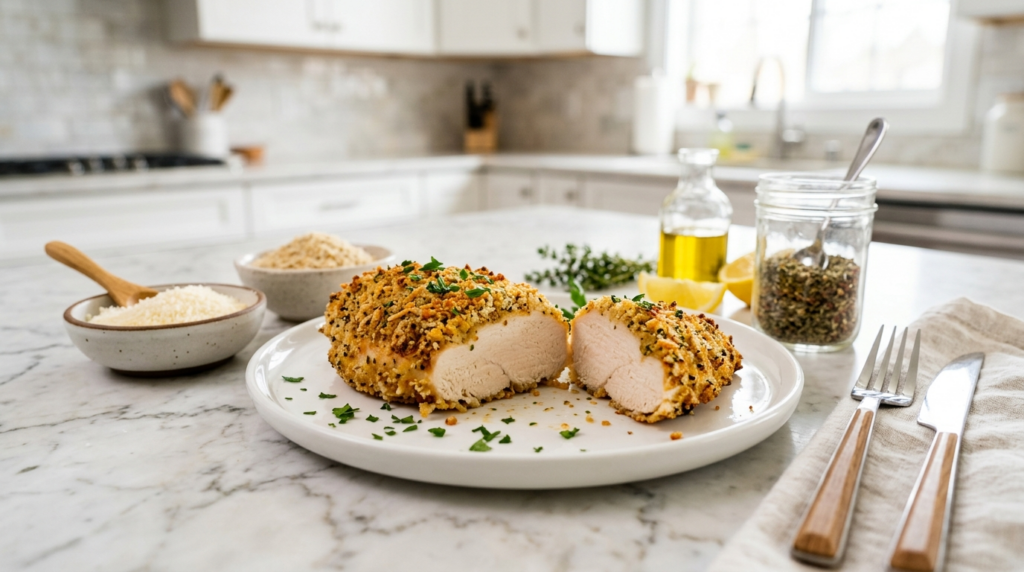
This one’s my weeknight workhorse. The panko-Parmesan crust gets insanely golden in the oven while the coating acts as insulation to keep the inside tender. I use real Parmigiano-Reggiano when I can, because it melts differently than the pre-grated stuff and creates these little crisped-up cheese bits on the edges that are genuinely addictive.
I set up my breading station with flour in the first dish, beaten eggs in the second (I mix in a tablespoon of Dijon mustard, which adds a subtle tang that really improves the flavor), and then the panko combined with grated Parmesan, parsley, garlic powder, and Italian seasoning in the third.
One thing that took me a while to figure out: after breading, let the pieces sit on a wire rack for about ten minutes before they go in the oven. The coating dries slightly and adheres much better, so you don’t end up with breading that slides off halfway through baking. Cook at 375°F for 25 to 30 minutes, and drizzle melted butter over the top before they go in for even better browning.
3. Honey Garlic Chicken Breast Stir-Fry
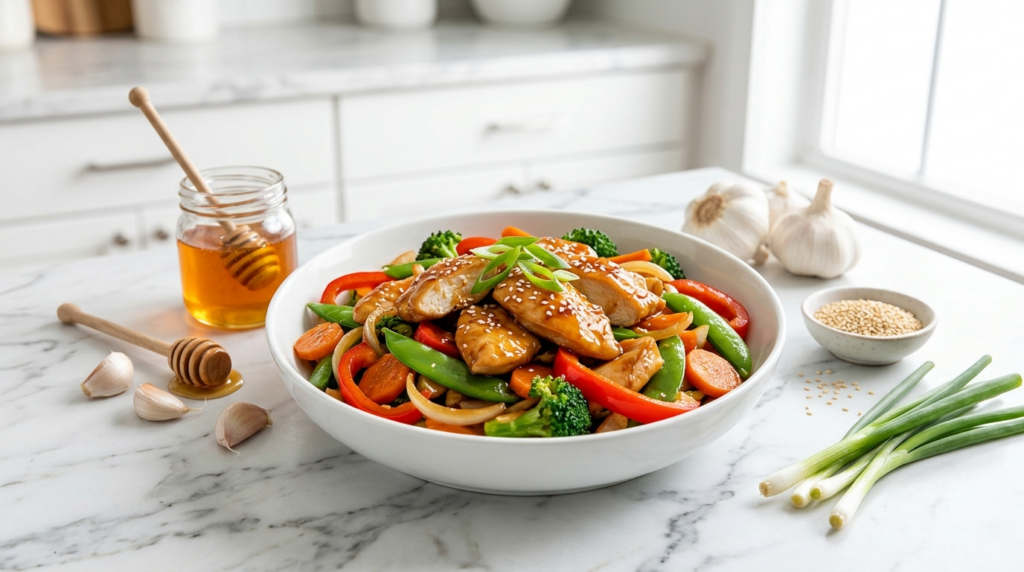
The cornstarch coating on the chicken pieces is what makes this recipe come together. It creates a thin, slightly crispy shell that the sauce clings to beautifully. I toss the chicken chunks in two tablespoons of cornstarch and let them sit for five minutes before they hit the hot pan. Use a wok or your widest skillet, because crowding the pan means steaming instead of searing, and steamed chicken in a stir-fry never has the right texture.
The sauce comes together in the same pan. Soy sauce, honey, rice vinegar, sesame oil, and then garlic and freshly grated ginger hit the hot oil for about 30 seconds. Much longer than that and the garlic starts to burn and turn bitter, which is a mistake I’ve made more times than I care to remember. If you’re not confident with the timing, just set a timer.
I always include the red pepper flakes even though the recipe lists them as optional. The gentle heat balances the sweetness of the honey in a way that rounds out the whole dish. This one goes over jasmine rice in my house, since the soft, slightly sticky texture soaks up the sauce perfectly.
4. Mediterranean Stuffed Chicken Breast Recipe
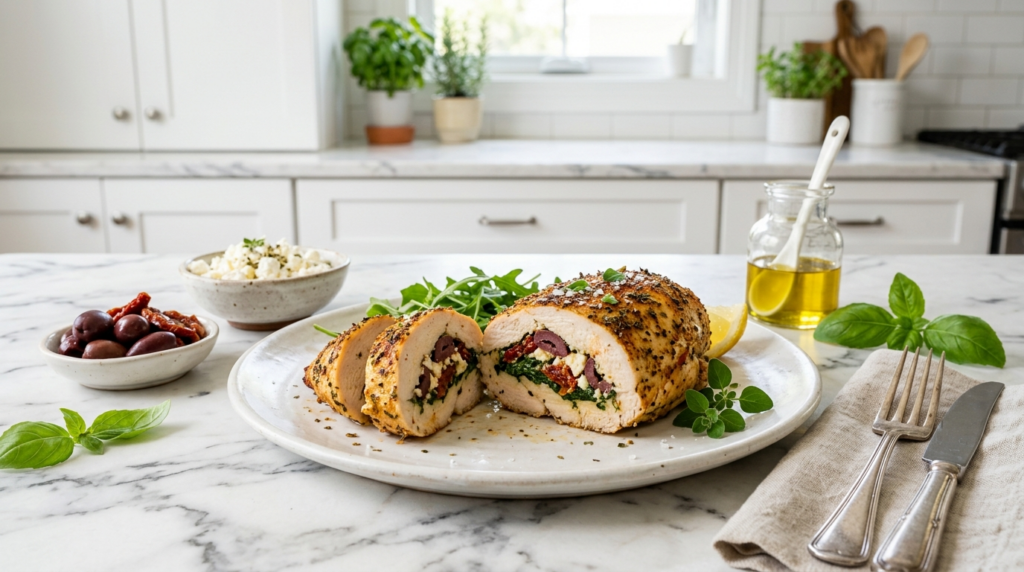
The type of sun-dried tomatoes you use matters more than you’d think. I go with the ones packed in oil rather than the dry, leathery kind sold in bags. Oil-packed tomatoes are softer, more flavorful, and the oil itself is infused with tomato flavor that you can use when sautéing the spinach. The dry ones need rehydrating and they never quite reach that same jammy, concentrated sweetness.
Cutting the pocket is the part that makes most people nervous. Use your sharpest knife, place your palm flat on top of the breast, and slice horizontally, leaving about half an inch connected on three sides. Go slowly and don’t try to rush it, because cutting all the way through turns it into an open butterfly situation where the filling just falls out during cooking.
One lesson I’ve learned from making this recipe many times: resist the urge to overstuff. Two to three tablespoons of filling per breast is plenty. Any more than that and the breast won’t close properly, the toothpicks pop out in the oven, and you end up with a feta-spinach mess spread across your baking sheet instead of a clean, stuffed breast.
Sear first in a screaming hot oven-safe skillet to build color, then finish at 400°F for 20 to 25 minutes so the inside cooks through without the outside burning.
5. Crispy Panko Chicken Tenders
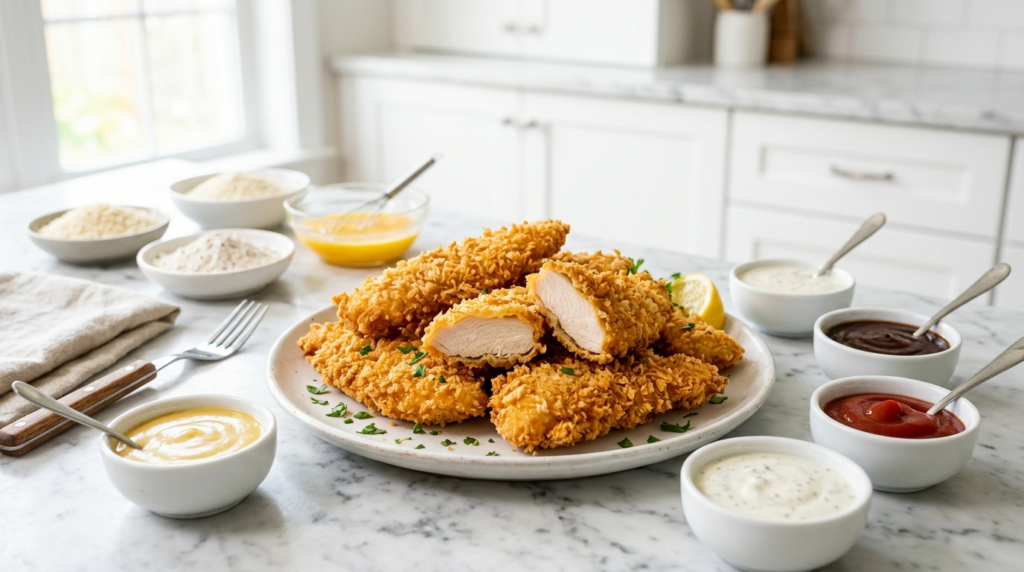
Adults eat chicken tenders, and I’m tired of pretending this is just kids’ food. These homemade tenders hold up well against anything from a drive-through, and they give you full control over what goes into the breading.
Cut the breasts against the grain into strips about one inch wide and season your panko aggressively with paprika, garlic powder, a hit of cayenne, and Italian seasoning. The breadcrumb mixture should look visibly tinted rather than plain white, because white panko means bland tenders.
Fry in vegetable oil at 350°F, and I’d really recommend using a thermometer here rather than guessing. Eyeballing oil temperature is how you get tenders that are charred on the outside and raw in the middle. Three to four minutes per side until they’re a deep golden brown, not pale gold. Keep finished batches warm in a 200°F oven on a wire rack while you fry the rest, since paper towels alone make the bottom soggy.
6. Lemon Butter Chicken Breast with Capers
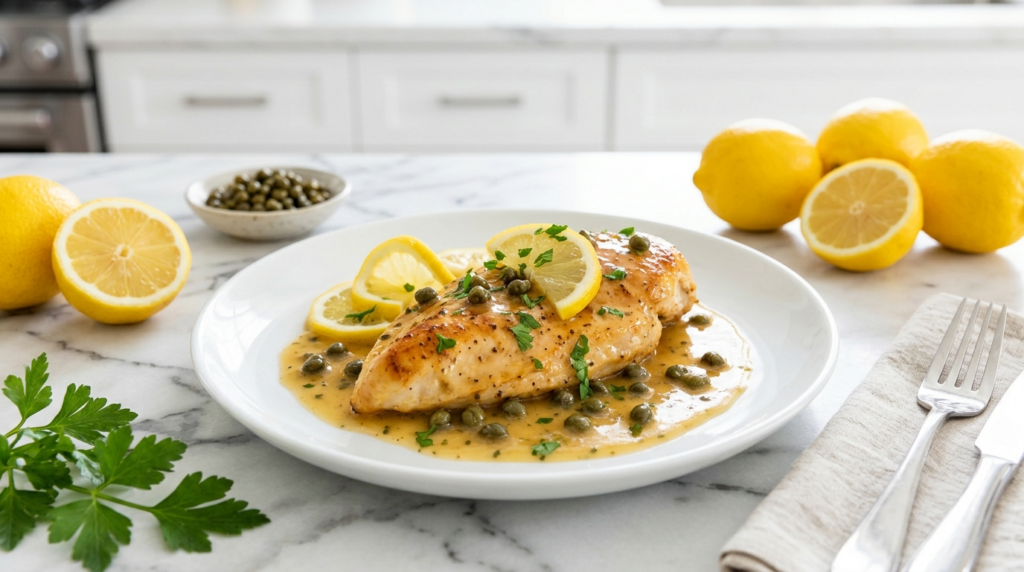
This is the recipe I reach for when I want something that tastes more elegant than the effort involved. The pan sauce takes about four minutes to pull together, and the result is honestly restaurant-quality.
Butterfly the breasts and pound them to half-inch thickness for fast, even cooking. Season with salt and white pepper, since black pepper can burn and turn bitter in a butter sauce at this temperature. Sear in olive oil for four to five minutes per side, then remove the chicken. The pan will have beautiful browned bits stuck to the bottom, and that fond is where all the concentrated flavor lives.
Drop in butter, let it foam, add garlic for about 30 seconds, then deglaze with fresh lemon juice and a splash of dry white wine. I use whatever inexpensive Pinot Grigio happens to be open in the fridge. The capers go in last, bringing a salty, briny pop that plays off the richness of the butter beautifully. I wouldn’t skip them, because they really tie the whole sauce together.
7. Buffalo Baked Chicken Breast
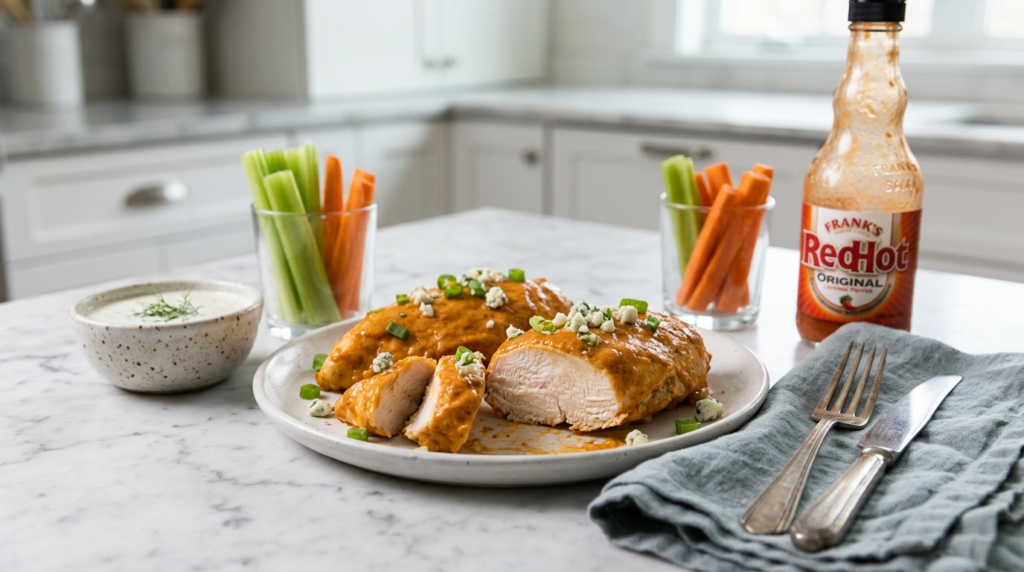
For the buffalo sauce, I’ve had the most consistent results with Frank’s RedHot, which has a vinegar-to-heat ratio that works well without overpowering the chicken. Mix it with melted butter and a tablespoon of honey, which smooths out the acidity without making the sauce sweet.
Bake at 425°F, which is hotter than most chicken breast recipes call for. The high heat caramelizes the sauce edges and creates almost a glaze, while the interior stays moist, especially if you baste with reserved sauce during the last five minutes. Let the chicken rest for five full minutes before cutting into it. Serve with crumbled blue cheese and celery sticks alongside, because the cool, crunchy celery and the tangy cheese are what balance all that heat and butter.
8. Coconut-Crusted Chicken Breast with Mango Salsa
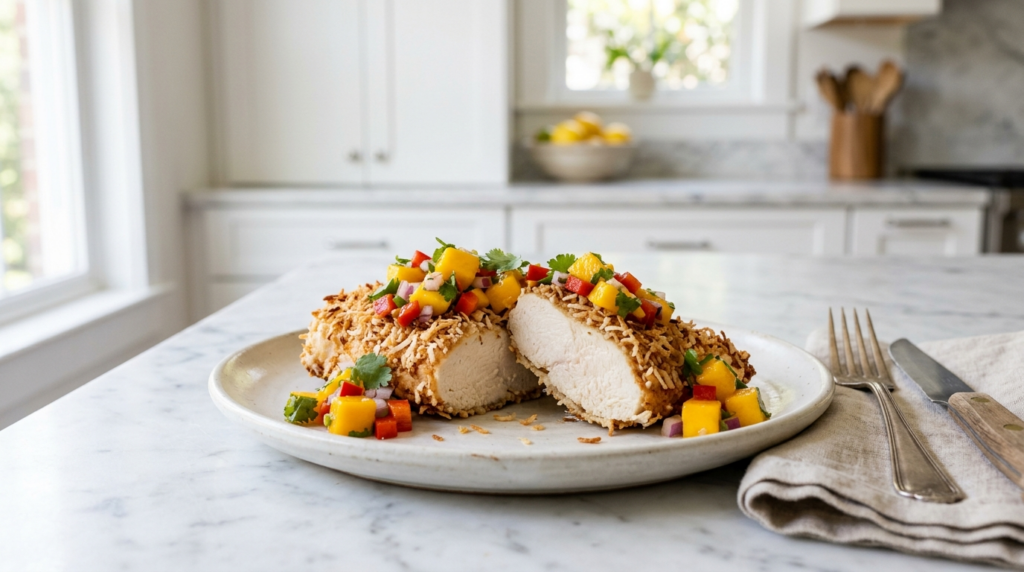
This is probably the most unexpected recipe on the list, and it’s the one that gets the most requests when I make it for other people. The combination of crispy coconut crust with bright, acidic mango salsa creates this tropical contrast that works way better than it sounds on paper.
Use unsweetened shredded coconut, because the sweetened kind burns faster and pushes the whole dish into dessert territory. Mix the coconut with panko for structure, curry powder for warmth, ground ginger, a touch of cayenne, and fresh lime zest. Sear in coconut oil for two to three minutes per side, since the coconut oil reinforces the coconut flavor in the crust, then finish in the oven at 375°F.
The mango salsa is what brings everything together, and I wouldn’t skip it. Ripe mango, finely diced red onion, seeded jalapeño, cilantro, and lime juice. The brightness cuts through the richness of the coconut crust, and each bite has this layered quality that keeps you reaching for more.
Storing Leftover Chicken Breast and Calorie Counts
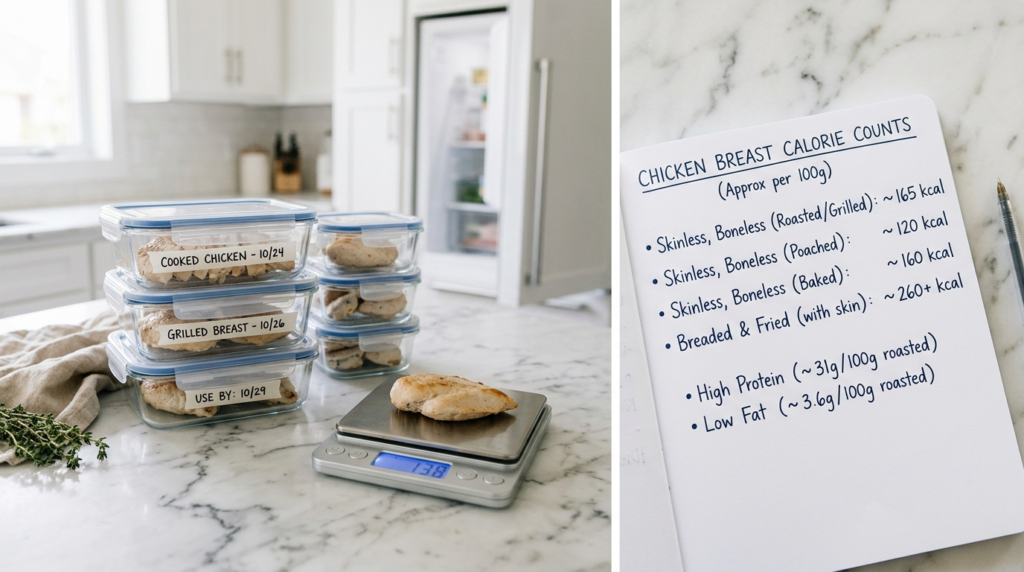
All eight recipes store well in airtight containers in the fridge for three to four days. The breaded and crusted versions will lose their crunch, which is unavoidable, but you can restore some of it by reheating in a 350°F oven for about 10 minutes rather than using the microwave, which tends to turn any breading into a soggy layer.
For freezing, the grilled, Mediterranean stuffed, honey garlic, and buffalo recipes hold up well for up to three months. Thaw overnight in the fridge and reheat gently. The breaded recipes don’t freeze as gracefully, so I’d suggest making those fresh when the craving hits.
Calorie-wise, the simpler preparations like the grilled and buffalo versions come in around 280 to 290 calories per serving. The sauced and stuffed versions land between 320 and 380, and anything with a breaded crust runs from about 390 to 420 calories. The coconut-crusted sits at roughly 410 per serving. None of these numbers are particularly extreme, especially when you consider you’re getting 32 to 40 grams of protein with each one, making any of these chicken breast recipes a solid choice for balanced meal planning.