

Three years ago I opened my fridge and found liquefied spinach, wrinkly bell peppers, and strawberries that had basically become a biology project. Forty bucks a week, straight into the trash. So I bought freezer bags and started cramming everything in there with zero research. The results were… educational. But I figured it out eventually, and now my freezer is basically a second pantry. Here’s what actually works.
Why I Stopped Buying Canned Vegetables
I grew up eating canned corn and canned green beans. My dad would open a can, heat it in a pot, done. Dinner vegetable handled. And look, there’s nothing wrong with that, it kept us fed. But canned vegetables taste like the inside of a tin can to me now. I can’t unsee it. Or untaste it. Is that a word? It is now.
When I switched to freezing my own produce, the difference hit me immediately. Frozen broccoli I’d prepped myself still tasted like broccoli. Actual broccoli. Not the soggy khaki-colored stuff from a can that kind of tastes like disappointment.
And the vitamins thing is real. I looked into it after my friend (she’s a nurse, always correcting everyone at dinner parties) mentioned that canning destroys a ton of vitamin C because of all the heat processing. Freezing doesn’t do that. You basically just pause the vegetable in time. The nutrients stay where they are.
There’s also something I didn’t expect to love so much: portions. With a can you open it and now you’ve got a whole can of beets to deal with. With frozen stuff I reach in, grab what I need, put the bag back. No commitment. No leftover beet juice staining my Tupperware pink for eternity.
How to Pick Produce for Freezing (Spoiler: Not the Sad Stuff)
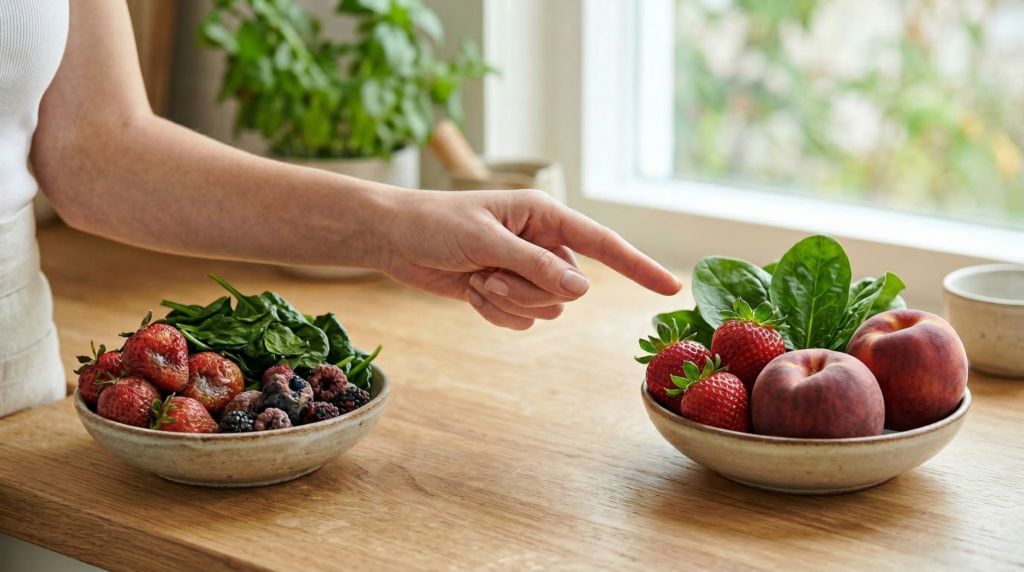
My first instinct was to freeze the things that were about to go bad. You know, “rescue freezing.” Strawberries getting soft? Freeze ’em! Spinach starting to wilt? Into the freezer!
Terrible strategy.
Freezing doesn’t fix bad produce. It just… preserves the badness. I froze some strawberries that were already mushy and they came out tasting like frozen mush with a faint memory of being a strawberry. The mold flavor got into the whole bag somehow. I had to throw out the entire batch, which defeated the whole point.
Now I’m picky about what goes in. I want ripe, firm, no bruises, no soft spots. For things like spinach and kale I go for the younger leaves because the big tough ones freeze weird and nobody wants to chew on a frozen leaf that feels like plastic. Fruits should be at that perfect moment when they smell incredible but aren’t falling apart yet. You know that two-day window where peaches are absolutely perfect? That’s when I freeze them. Not a day later.
Washing and Cutting Produce Before Freezing
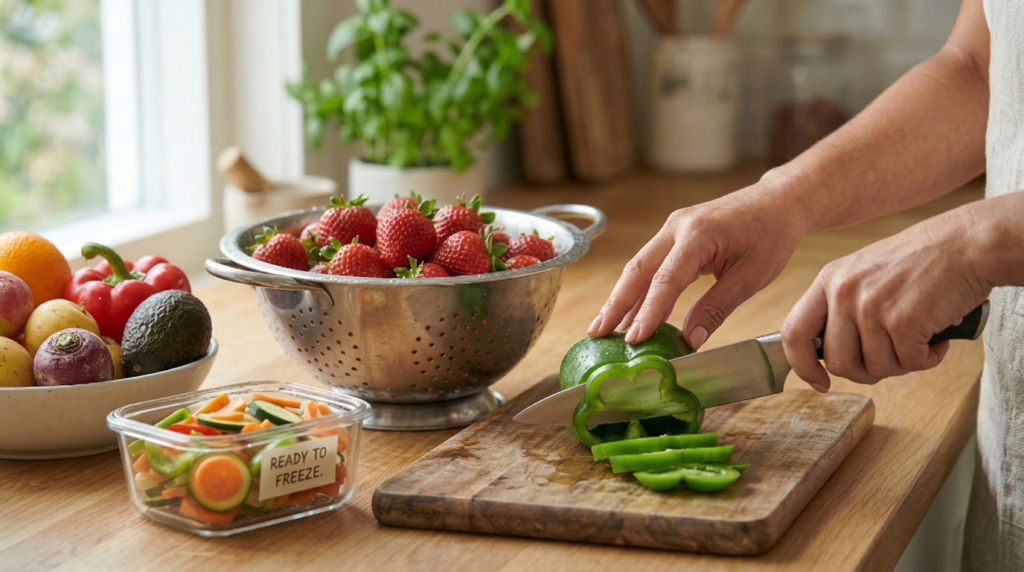
I rinse everything under cold water. For apples and pears I use this little brush I got from Dollar Tree like three years ago, it’s falling apart but it works. Then I take out pits, stems, cores, whatever shouldn’t be in there.
And then I cut everything small. This is something I wish I’d done from the start. I used to freeze whole bell peppers. Whole. Have you ever tried to cut a frozen bell pepper? It’s like trying to slice a rock with a butter knife. I nearly took off my thumb. Now everything gets diced or sliced before it goes in. It also freezes faster that way, which matters and I’ll explain why in a minute.
Oh, for apples specifically: squeeze some lemon juice on the slices right after cutting. I forgot this one time and my apple slices came out looking like they’d been sitting in the sun for a week. Brown, sad, ugly. They tasted fine in a pie but the visual was… rough.
Best Way to Freeze Fruits and Vegetables at Home
The Baking Sheet Method (Game Changer)

This is the thing that fixed most of my problems. You take a baking sheet, line it with parchment paper, spread your berries or vegetable pieces out so they’re not touching, and stick the whole tray in the freezer for a couple hours. Once everything’s frozen solid you transfer it into bags.
Why bother? Because I spent months dealing with frozen fruit bricks. I’d put fresh blueberries in a bag, freeze them, and the next morning I’d have a solid block of blueberries fused together like some kind of berry concrete. Then I’m standing at the counter at 6:45am trying to break apart frozen blueberries with a fork because I just want to make a smoothie. That’s no way to start a day.
The tray method keeps everything separate. You grab ten blueberries, twenty, whatever you need. They come out individually. It feels like magic the first time it works.
Bags vs. Containers
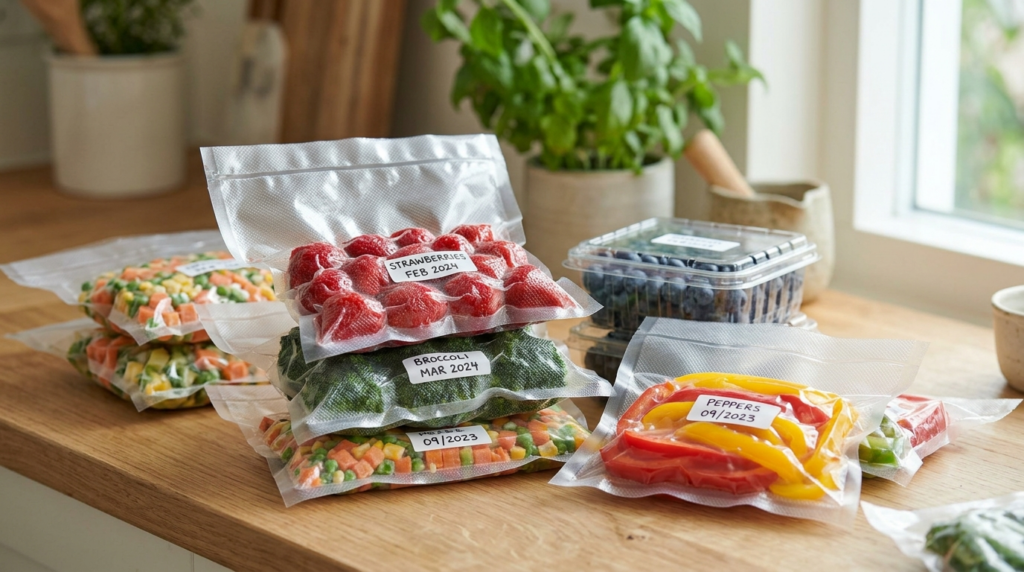
I mostly use zip-top freezer bags because they’re cheap and I can press out the air. Getting the air out is important because air causes freezer burn, that weird dry crusty layer that makes everything taste like the inside of an old freezer. I push out as much as I can and sometimes use a straw to suck out the last bit. My wife thinks this is disgusting. She’s probably right. But it works.
I also label everything now. I used to think I’d remember. I never remembered. I found a bag in the back of my freezer last year that could’ve been butternut squash or sweet potato or possibly mango. There was no way to tell without thawing it. I guessed wrong and put alleged sweet potato into a smoothie. It was squash. The smoothie was not good.
Masking tape. Sharpie. Date and contents. Five seconds. Do it every single time.
Sugar Coating for Delicate Fruits
Some fruits just don’t hold up well in the freezer on their own. Peaches, mangoes, cherries, they get mushy and lose their shape. I started tossing them with a thin layer of sugar before freezing and the difference surprised me. They keep their texture better, taste sweeter when thawed, and work beautifully in desserts. It’s not a lot of sugar. Maybe a tablespoon or two per cup of fruit. Just enough to form a light coating.
Why You Need to Blanch Vegetables Before Freezing
I skipped blanching for the first six months of my freezing journey. I figured it was one of those fussy cookbook steps that doesn’t actually matter, like when a recipe says to “temper your eggs” and you just dump them in anyway.
Blanching matters.
The batch of broccoli I froze without blanching came out gray-green and tasted like absolutely nothing. Wet cardboard would’ve been more flavorful. What happens is the enzymes in raw vegetables keep working even in the freezer. They break down the color, the flavor, the texture. Blanching stops those enzymes dead.
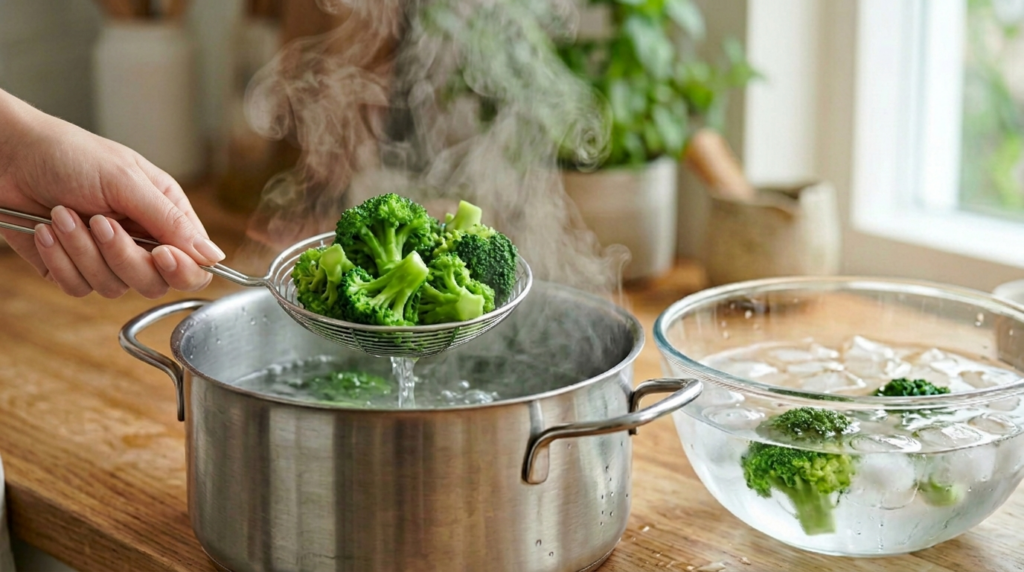
The process is simple and fast. Boil water, drop the vegetables in for a couple minutes, then immediately dump them into a bowl of ice water to stop the cooking. That’s it. Broccoli and cauliflower need about three minutes. Carrots maybe two. Spinach, barely sixty seconds. Corn on the cob takes four or five minutes, and it’s worth every one because frozen corn that’s been blanched properly tastes almost like you just pulled it off the grill.
And dry everything after. Seriously. I lay it all out on a clean kitchen towel and pat it down like I’m burping a baby. Excess water turns into ice crystals during freezing, and ice crystals wreck the texture. More water equals mushier vegetables when you thaw them. Simple as that.
Freezing Fresh Herbs in Ice Cube Trays
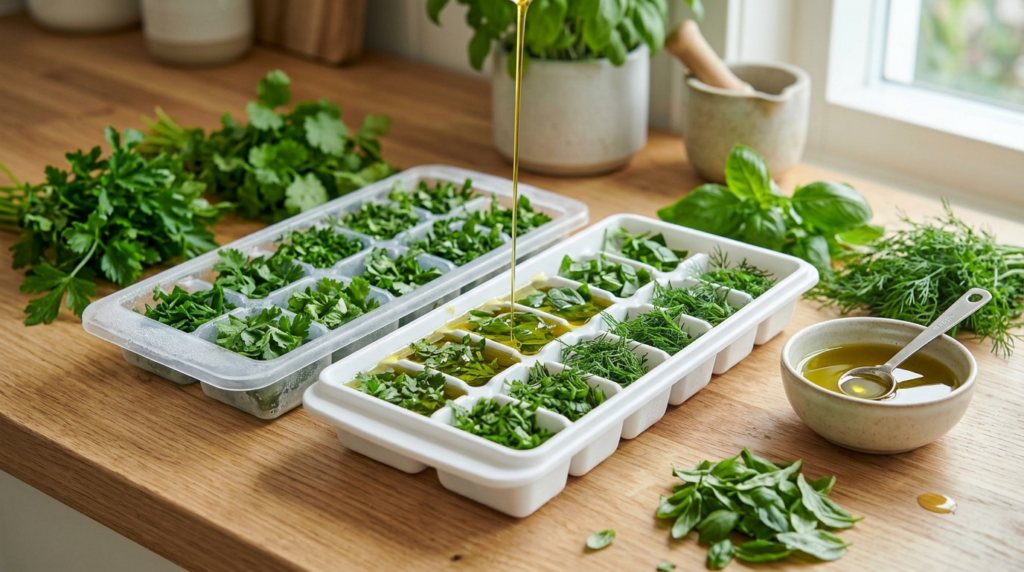
This is my favorite trick and I’m a little embarrassed I didn’t think of it sooner. I saw it on some cooking account while scrolling at midnight and tried it the next day.
You chop up whatever fresh herbs you have. Parsley, basil, dill, cilantro. Pack them into ice cube trays, pour a little olive oil or water over each one, freeze. Now you’ve got herb cubes. When you’re making soup or pasta sauce, just pop one out and drop it in the pot.
I used to buy cilantro every week. I’d use a quarter of the bunch for tacos on Tuesday and then find the rest liquefied in my produce drawer by Friday. Now I chop the whole bunch at once, freeze it in cubes, and I’ve got cilantro for a month. Maybe longer. The olive oil ones are especially great because they melt right into a hot pan.
Freezing Mistakes I’ve Made (So You Can Skip Them)
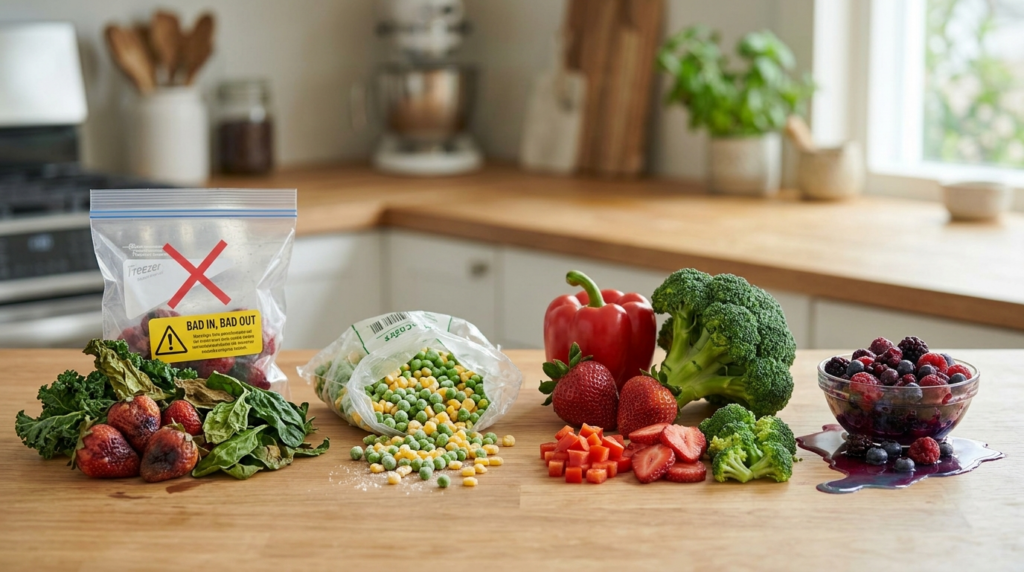
Freezing stuff that was already going bad. I covered this but it bears repeating because I did it multiple times before I accepted the truth. Bad in, bad out. The freezer is not a hospital for dying vegetables.
Using those flimsy produce bags from the grocery store. The thin clear ones. They rip, they let air in, they do nothing to prevent freezer burn. I had a bag of frozen peas in one of those and after two weeks they tasted like whatever else was in the freezer. Fish, maybe? It was bad. Real freezer bags or containers. That’s it.
Not cutting things small enough. Big chunks freeze slowly. Slow freezing creates big ice crystals inside the food. Big ice crystals tear apart the cell walls. When you thaw it the whole thing collapses into mush because the structure is destroyed from the inside. Small pieces freeze fast. Fast freezing means tiny ice crystals. Tiny crystals mean better texture. I don’t know the exact science behind it but I’ve seen the results enough times to believe it completely.
Refreezing thawed food. I had some thawed berries I didn’t use one morning and thought I’d just put them back. They came out the second time as a sad purple puddle. Every freeze-thaw cycle does more damage. Now I freeze in small portions so I only take out what I’ll actually use.
How Long Frozen Fruits and Vegetables Last
I’m not super scientific about this but from my experience: berries and most fruits stay good for about eight to twelve months. Regular vegetables like broccoli, carrots, corn, about six to ten months. Leafy greens start tasting off after six months or so. Herbs in oil cubes I’ve used up to eight months later and they were still fine.
This is why you label your bags. I keep saying it. The Sharpie is your best friend in this whole operation.
How to Defrost Frozen Produce
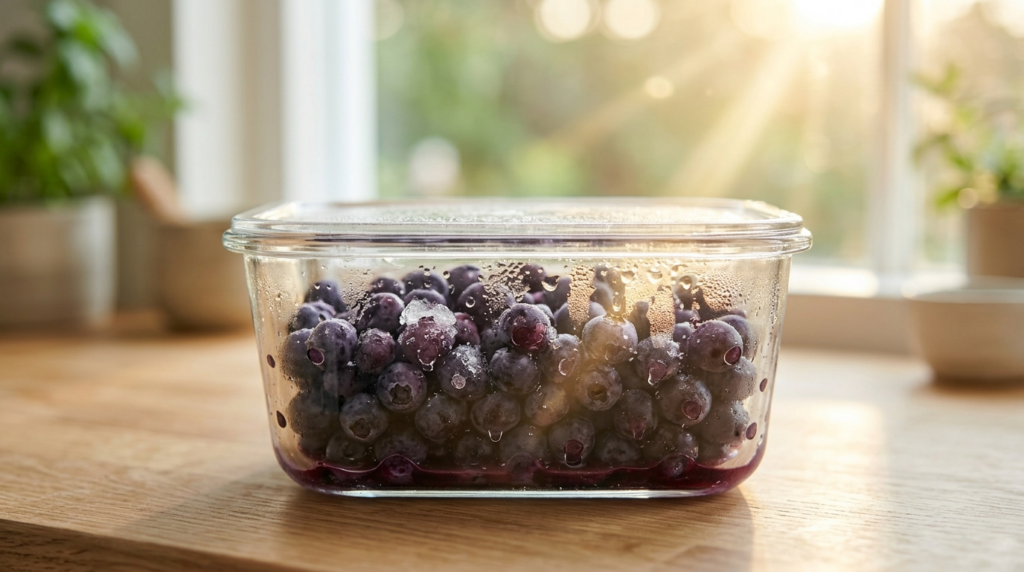
The fridge is the best option if you remember to plan ahead. Move whatever you need from the freezer to the fridge the night before. It thaws slowly, keeps its texture, doesn’t get waterlogged.
The microwave works if you forgot to plan ahead (I forget about 60% of the time, honestly). Use the defrost setting and check it every thirty seconds. I’ve accidentally cooked frozen mango chunks more than once because I walked away to check my phone.
But here’s my real secret: I usually don’t defrost at all. Frozen berries go straight into smoothies. Frozen spinach cubes go right into the soup pot. Frozen corn gets tossed into a hot skillet. Frozen banana slices go into the blender for that one-ingredient ice cream thing that’s honestly better than it has any right to be. Most of the time, defrosting is an unnecessary step.
Freezing Guide for Popular Fruits and Vegetables

Broccoli gets blanched for about three minutes, dried, flash frozen on a tray. I use it in stir-fries at least twice a week and it comes out with actual color and crunch, nothing like that canned stuff I grew up on.
Carrots I dice first, then blanch for two minutes. They keep their sweetness really well and they’re perfect for soups when you don’t feel like doing any prep on a weeknight.
Spinach barely needs a minute of blanching. I freeze it in ice cube trays and it disappears into smoothies and sauces without anyone knowing. My kid has no idea he’s been eating spinach in his fruit smoothies for two years.
Berries of any kind get washed, dried completely (this part matters, wet berries freeze into clumps), and flash frozen on a tray. Strawberries, blueberries, raspberries, blackberries, all the same method. Blueberries go into my oatmeal every morning and I swear sometimes they taste better than fresh because they’re frozen at peak ripeness.
Bananas need to be peeled and sliced before freezing. I made the mistake of freezing whole unpeeled bananas once. Trying to peel a frozen banana is a form of punishment I wouldn’t wish on anyone. Sliced frozen bananas are perfect for smoothies, and if you blend them alone in a food processor you get this creamy soft-serve texture that’s kind of addictive.
Corn gets blanched four to five minutes, whether it’s kernels or whole cobs. I froze a bunch of corn on the cob from a summer barbecue and grilled them in December. My neighbor looked at me like I was insane but they tasted incredible.
Cauliflower I blanch for three minutes. Mostly ends up in casseroles or gets riced in the food processor when I’m trying to eat fewer carbs. Which lasts about a week before I go back to regular rice, but still.
Bell peppers are easy because they don’t even need blanching. Just dice or slice and freeze. The texture changes a bit, they’re softer after thawing, but for cooking that doesn’t matter at all. Great in stir-fries.
Pumpkin I cube and blanch for two or three minutes. I prep a bunch every fall so I’m not wrestling with a raw pumpkin the morning of Thanksgiving. Ask me about the Thanksgiving of 2022 when I tried to cut a raw sugar pumpkin with a dull knife. Actually don’t ask.
Apples get sliced and tossed with lemon juice. They’re my go-to for lazy fall desserts. Frozen apple slices with cinnamon and butter in a pan, crumble topping on top, into the oven. Twenty minutes and you’ve got something that tastes like you spent all afternoon baking.
Cherries need to be pitted before freezing, which is annoying but necessary. I learned this because I froze unpitted cherries and then tried to pit them frozen. It’s impossible. Pit them fresh, freeze on a tray, bag them. They’re amazing eaten straight from the freezer on a hot day. Like little frozen flavor bombs.
Green beans get blanched two to three minutes. They keep a nice snap that canned green beans could never dream of achieving. I’m sorry, canned green bean fans, but it’s the truth.
Is Freezing Produce at Home Worth It?
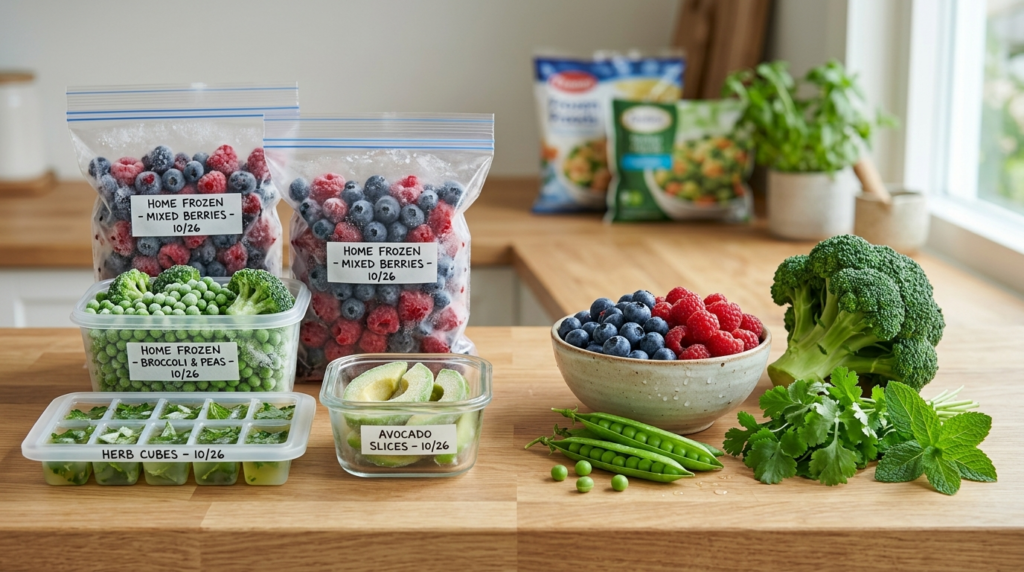
My freezer right now has bags of peaches from last summer’s farm stand trip, herb cubes from the basil and parsley I grew on my balcony (the basil thrived, the parsley sort of survived, the rosemary died twice), broccoli and spinach ready for weeknight dinners, and enough frozen banana slices to keep my smoothie habit going through April.
The upfront work is real. Washing, cutting, blanching, drying, tray freezing. It takes me about an hour on a Sunday afternoon, usually with a podcast going and a cup of coffee that I keep forgetting about and reheating three times. But then I’ve got weeks of ready-to-go produce in my freezer that actually tastes like food. Not like freezer. Not like tin. Like actual food.
If you’re just starting out, grab some extra berries or a couple extra bags of green beans next time you’re shopping. Toss them on a tray, freeze them, bag them up. See how it goes. I think you’ll be surprised at how simple it is once you do it once. And your future self, standing in the kitchen in February making blueberry pancakes from your summer stash, will be grateful you started.