

So here’s a boring domestic confession: I used to throw away about half the herbs I bought. Just tossed them. The $3.99 bunch of dill from Whole Foods would go into the crisper on Sunday and come out as a translucent green puddle by Wednesday. I didn’t think much of it until I actually added up what I was wasting per month and got annoyed enough to start testing things.
Two years of trying different methods. Water jars, damp towels, sealed containers, the OXO herb keeper thing. Some of it worked. Most of what the internet recommends is half-right at best.
The Basil Problem

I put basil in the fridge for years. Like a normal person. And it always turned black. Not a little brown around the edges. Black. The kind of black where guests glance at your caprese salad and politely eat around the leaves.
Turns out this is basic botany that somehow nobody mentions on the packaging. Basil is a tropical plant. Southeast Asian origins. Sticking it in a 37°F fridge ruptures its cell membranes. An enzyme called polyphenol oxidase kicks in, and the leaves oxidize. This can happen in under ten minutes below 50°F. Genuinely, ten minutes.
Dill is the opposite. Cool-weather herb. Loves the fridge. Hates your countertop. I’d been treating them identically for years, which explains a lot.
Buying Herbs That Aren’t Already Dying

No storage trick fixes herbs that were half-dead when you bought them.
With dill, you’re looking for fronds that are actually feathery and upright, not wilting into a sad little curtain. Deep green, no yellowing at the tips. Smell it before you buy it. Good dill has a sharp, almost grassy anise smell that hits you immediately. If it smells like nothing, it’s been sitting under that grocery store mist system for too long. Farmers’ market dill, picked that morning, stores noticeably longer than anything in a clamshell at Trader Joe’s.
Basil: plump leaves, no dark spots. Any bruise, even a small one, turns into a black hole within a day. Genovese stores the best. Thai basil is hardier because the leaves are thicker but still can’t handle cold. Purple basil looks stunning and is absurdly delicate.
The Water Jar: Best Way to Store Fresh Dill

This is basically the cut-flower method. Trim the stems, stand them in water, refrigerate. It sounds too simple to be the best option, but after six rounds of testing it consistently won.
First I unwrap everything and pull off any leaf that looks even slightly off. One slimy leaf will take the rest of the bunch with it in about two days, so I don’t hesitate. Then I wash the herbs in a bowl of cold water, swish them around, and spin dry. Washing before storage actually extends shelf life. Kenji at Serious Eats ran a proper comparison on this. The wash knocks off surface bacteria that speed up rot.
I snip about half an inch off the bottom of the stems at an angle. Same logic as flower arranging. Then about an inch of cold water in a clean glass jar, any wide-mouth jar works. Stand the dill upright. No leaves in the water. None. Submerged leaves become a bacterial incubator within 48 hours. I drape an inverted Ziploc over the top, not sealed, just resting there to hold in some humidity without creating a swamp.
Middle shelf of the fridge. The back wall can freeze things. The door fluctuates every time you open it.
I swap the water out every two to three days and re-trim the stems a tiny bit each time. Most people skip this. It matters.
Results: 12 to 14 days. The outer fronds start yellowing around day 11, but the inner stems stay firm and fragrant well past that.
The Damp Towel Roll: Solid Runner-Up
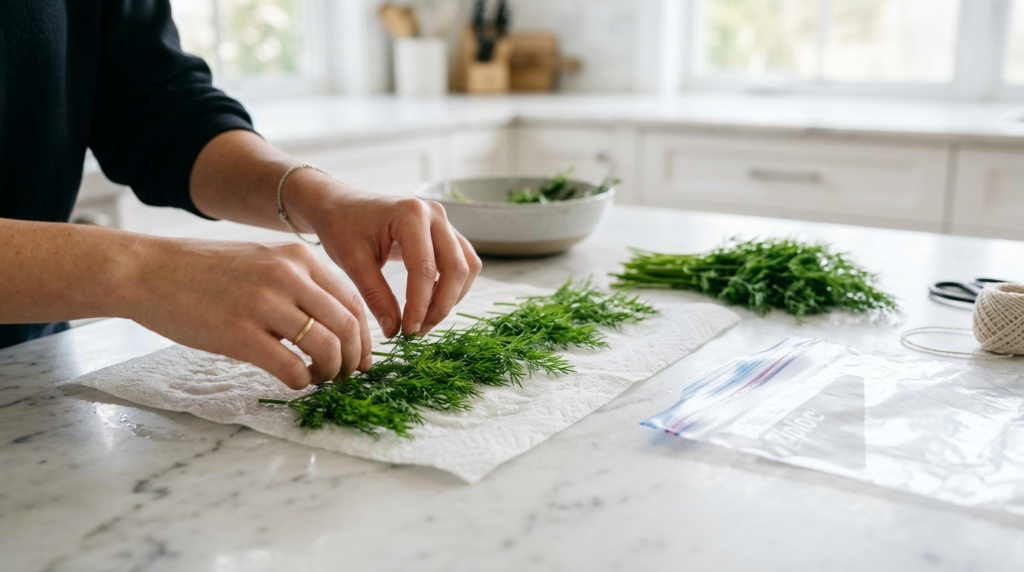
The Kitchn tested this against four other methods and it won their comparison too, which tracks. One detail worth underlining: the towel needs to be damp. Not wet. I used a soaking paper towel early on and had mold in three days.
I use a full sheet of Bounty, the thick kind, not the cheap stuff that dissolves when you look at it. Run it under cold water, wring it out until it feels barely moist. If any water drips when you squeeze, keep wringing.
Lay the herbs in a single layer along one edge. One layer. Stacking creates moisture pockets that turn slimy. Roll gently, slide the roll into a Ziploc, leave the bag cracked open about an inch for airflow, crisper drawer.
For dill this gets me 10 to 12 days. A couple less than the jar, but it takes up almost no space and there’s zero chance of knocking a jar of herb water across the bottom shelf of your fridge at 11 PM. Which has happened to me more than once.
For basil in the fridge this way: 5 to 7 days. Okay. Not great. The leaves don’t blacken as fast as when they’re loose, but they go flat. Basil shouldn’t be in a fridge.
The Countertop Bouquet: The Only Way to Store Basil

Don’t wash basil before storing it. Water on the leaves speeds up oxidation. Wash it right before you eat it.
Trim the stems at an angle. Put them in a drinking glass with about an inch of room-temperature water. Room temp. Not cold. Cold water shocks the stems.
Set it on your counter, somewhere without direct sunlight. And keep it away from your fruit bowl. Bananas, avocados, apples and tomatoes all pump out ethylene gas as they ripen, and ethylene tells nearby plant matter to decompose faster. I lost an entire bunch of basil overnight once because it was next to some bananas. Took me a few rounds of this before I connected the dots.
You can loosely drape a bag over the leaves. I forget half the time and it doesn’t seem to matter much either way. Change the water every couple days.
This gives me 10 to 14 days. The bottom leaves start curling around day 10, but the top two-thirds stays in good shape.
The OXO Herb Keeper
I have one. The small size, about $12. It works. It’s a prettier version of the jar-and-bag setup with a built-in basket and vented lid. For dill it performs about the same as my Mason jar, maybe one extra day. For basil it doesn’t solve anything, because the problem was never the container. It was the cold.
A jar and a plastic bag do the same job.
Substitutions
A flour-sack cotton towel works instead of paper towels and holds moisture a bit more evenly. Any glass or mug works instead of a Mason jar. A grocery bag draped over the top works instead of a Ziploc. The point is a loose cover, not a hermetic seal.
Stuff I’ve Messed Up

Don’t mix different herbs in one container. They rot at different speeds and one bad cilantro stem will take out everything next to it.
Check your herbs daily. It takes ten seconds. Pull any leaf that’s turning. Some weeks I don’t bother and those are the weeks I lose herbs early. It’s annoying. It works.
Don’t push anything to the back of the fridge. I’ve had dill freeze back there. Ice crystals wreck the cell walls and you get mush when it thaws.
Wilted dill (wilted, not rotten) can sometimes come back if you dunk it in ice water for 15 to 20 minutes. The cells absorb moisture and the fronds stiffen up. Don’t try this with basil. The ice water will blacken it. For tired basil, re-trim the stems and put it in fresh room-temp water. Sometimes it works. Sometimes it doesn’t.
And basil and dill can never share a storage setup. Fridge kills basil. Room temp kills dill. No middle ground.
Freezing
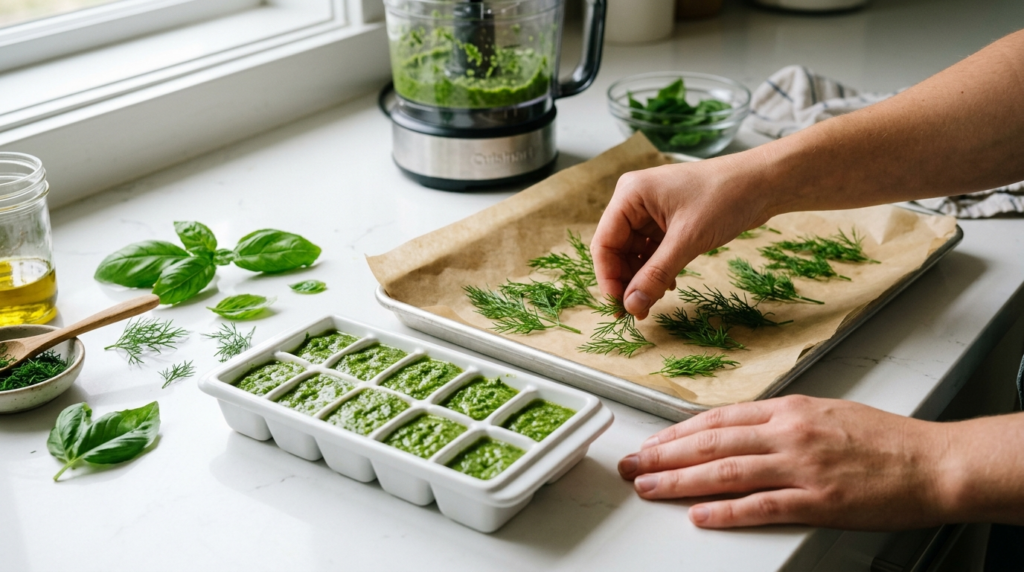
Dill freezes well. Wash, dry, spread on a sheet pan, freeze for a couple hours, then bag it. Lasts months. The texture is gone but the flavor holds up fine for soups and sauces.
Basil can’t be frozen whole because the leaves turn black and collapse. Blend the leaves with a little olive oil, freeze the paste in ice cube trays, bag the cubes. One cube into a winter pasta sauce and you’re set.
I opened my fridge just now to check on the dill I bought last Saturday. Day 9 in the jar. Still green, still smells right. I’ll get at least four or five more days out of it, which means it’ll outlast me wanting to write about herb storage by a comfortable margin.