

Your burgers are dry. Your ribs are chewy. Your marinade tastes like the bottle it came from. I know because I was you, standing over a grill full of expensive meat that was quietly turning into charcoal while I panicked. This guide is everything I learned after years of wrecking cookouts and slowly getting better. Real techniques for grilling burgers, smoking ribs, and building marinades from scratch, with specific temperatures, times, and the mistakes I made so you don’t repeat them.
What a Failed Cookout Taught Me About Grilling Burgers and Ribs
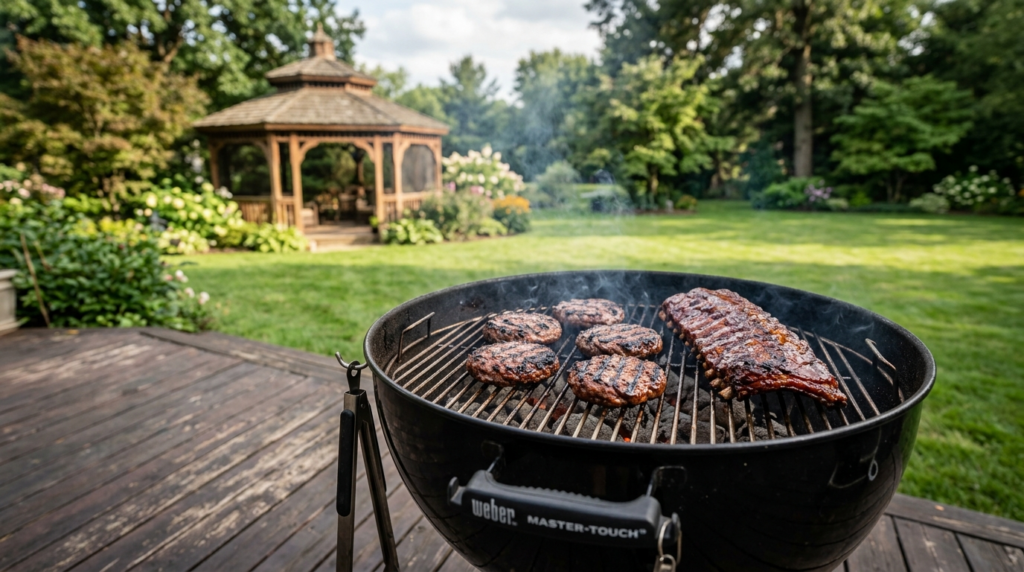
Memorial Day, three years ago. I volunteered to grill for the whole family. Bought frozen pre-made patties, a rack of spare ribs still sealed in Cryovac that I hadn’t even inspected, and a bottle of teriyaki marinade that smelled like sugar water. My plan for heat management was to crank the grill to max and put everything on at the same time.
The burgers came off the grate looking like something from a crime scene. Black crust, gray center, and when they landed on the plate they made that hollow, papery thud that dry meat makes. No juice. No sizzle. Just crumbling beef that tasted like chewing a sponge. The ribs still had the membrane on the back because nobody had ever told me to remove it, and biting into them felt like trying to eat through a rubber glove.
My aunt went back for potato salad three times. She never touched the ribs.
I spent the rest of that summer learning how a grill actually works. What follows is the result.
What Meat to Buy for Burgers (and What to Avoid)

Eighty percent lean, twenty percent fat. Chuck. Not round, not sirloin, not whatever the grocery store labeled “grind for burgers” this week. The 20% fat is what makes a burger a burger. It renders on the grate, bastes the meat from inside, spatters on the coals, and sends up that smoky, beefy perfume that drifts across the yard. Without it, you’re grilling a meatloaf disc.
I tried 90/10 once, being health-conscious. The patty crumbled on the grate, fell through in pieces, and what survived tasted like warm sand. Never again.
At the butcher counter, ask for coarse-ground chuck. Pre-packaged tubes work in a pinch, but the texture is usually too fine and compact, and that matters more than people think. Coarse grind has little pockets of air and fat that melt during cooking and keep everything loose and juicy. Fine grind packs together tight and gives you a dense puck.
How Much Meat Per Patty
A third of a pound. About the size of a tennis ball before you flatten it. Quarter-pounders are the industry standard but they shrink by 25-30% on a hot grill, and you end up with a sad little coin that rattles around inside the bun. A third of a pound shrinks down to a perfect bun-sized patty.
Spare Ribs vs. Baby Backs: Pick a Side
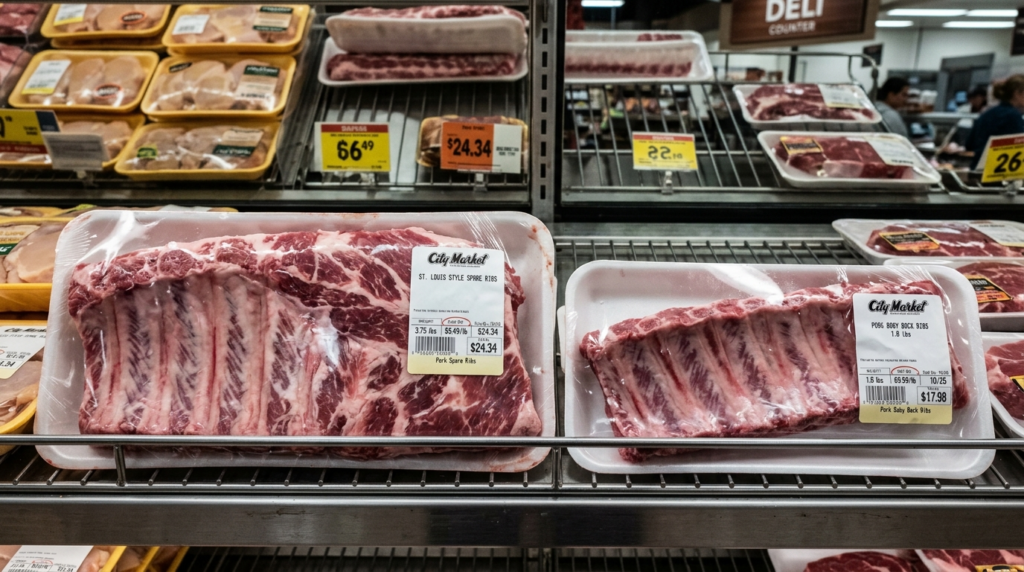
Spare ribs. Every time.
Baby backs are leaner, smaller, and cook faster. They photograph well. But they dry out fast, and if your grill temperature swings even 25 degrees (which it will, because your backyard Weber is not a $4,000 competition offset), you go from “done” to “overdone” in minutes. Spare ribs have more fat marbled between the meat and bone. That fat renders slowly, bastes from inside, and buys you a much wider window of “this is perfect.” A full rack is 3 to 4 pounds. Baby backs run a pound and a half, maybe two. Less meat, less margin for error, more stress.
At the store, flip the rack over. Look at the bone side. Even, white bones with thick meat between them. Patchy racks with exposed bone cook unevenly and you end up with three good ribs and five pieces of jerky. Smell through the packaging. Fresh pork should smell like almost nothing. I once bought discounted ribs that were technically within the sell-by date. Opened them at home and the smell hit me from arm’s length. Sour. Fifteen bucks, straight into the trash.
How to Build a Grilling Marinade That Actually Does Something
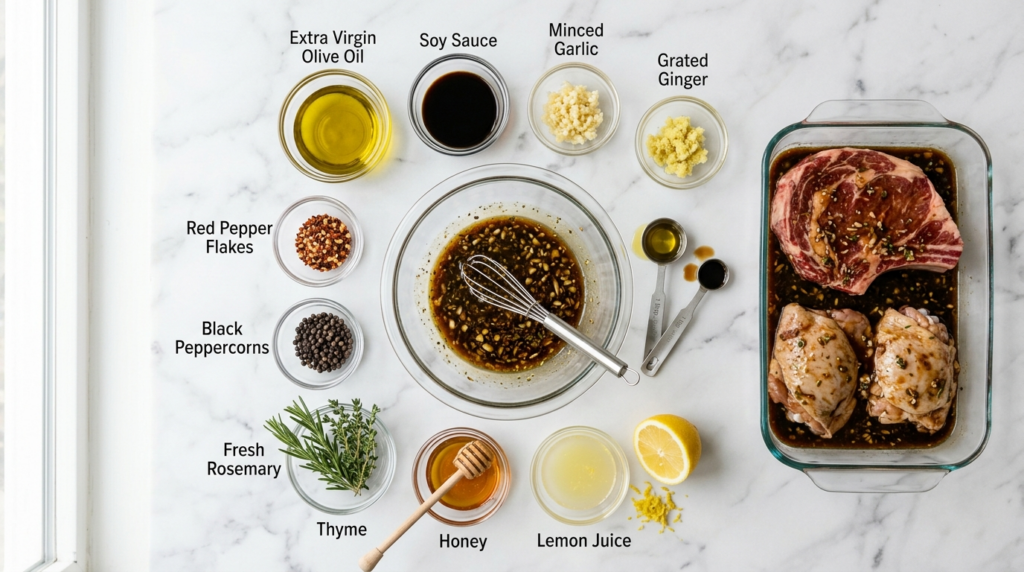
Most marinades are a waste of time. Watery, too sweet, can’t grip the meat. This one is different, and I’ve been making it every week from June through September for four years running. It works on chicken thighs, skirt steak, pork chops, even thick-cut zucchini.
- 1/3 cup olive oil (regular, not extra virgin. EVOO burns at grill temperatures and turns bitter and acrid)
- 3 tablespoons soy sauce. Kikkoman, always. Store-brand soy often has a metallic edge that sticks around after cooking.
- 2 tablespoons red wine vinegar
- 4 cloves garlic, smashed flat with your knife and rough-chopped
- 1 tablespoon Dijon mustard which emulsifies the oil and vinegar so the marinade coats the meat instead of puddling at the bottom of the bag
- 1 teaspoon smoked paprika,
- 1/2 teaspoon cayenne,
- 1 tablespoon brown sugar,
- black pepper
Whisk. Throw your protein into a zip-lock, pour the marinade in, squeeze the air out, fridge. Two hours is plenty. Don’t leave it overnight. Past six hours the acid breaks the meat fibers down into a mushy, slippery texture that feels wrong in your mouth. Chicken is especially vulnerable to this. I ruined a batch of thighs last August by forgetting them in the marinade before bed. By morning they had the consistency of wet tissue paper.
Chimichurri: The Sauce That Made Me Rethink Everything

First time I had chimichurri was at an Argentine steakhouse in Brooklyn, spooned over a strip steak that was still crackling from the grill. The herb hit first, then garlic, then a sharp vinegar bite that cut through all the fat. I went home and threw away my bottle of Italian dressing that night.
One big bunch flat-leaf parsley, chopped fine (about a cup packed). 1/4 cup fresh oregano. Four garlic cloves minced into a paste. 1/3 cup red wine vinegar. 2/3 cup olive oil. Pinch of red pepper flakes. Salt.
Let it sit 30 minutes at room temperature before using.
If you’re eyeing that jar of dried parsley from three years ago in the back of your spice rack, just close the cabinet. Dried parsley in chimichurri tastes like mowing a lawn and putting the clippings in a bowl. The whole point of this sauce is the raw, grassy, peppery shock of fresh herbs melting into warm meat. No fresh parsley? Skip chimichurri today. Make the marinade above instead.
What You Can Swap in a Grilling Marinade (and What You Can’t)
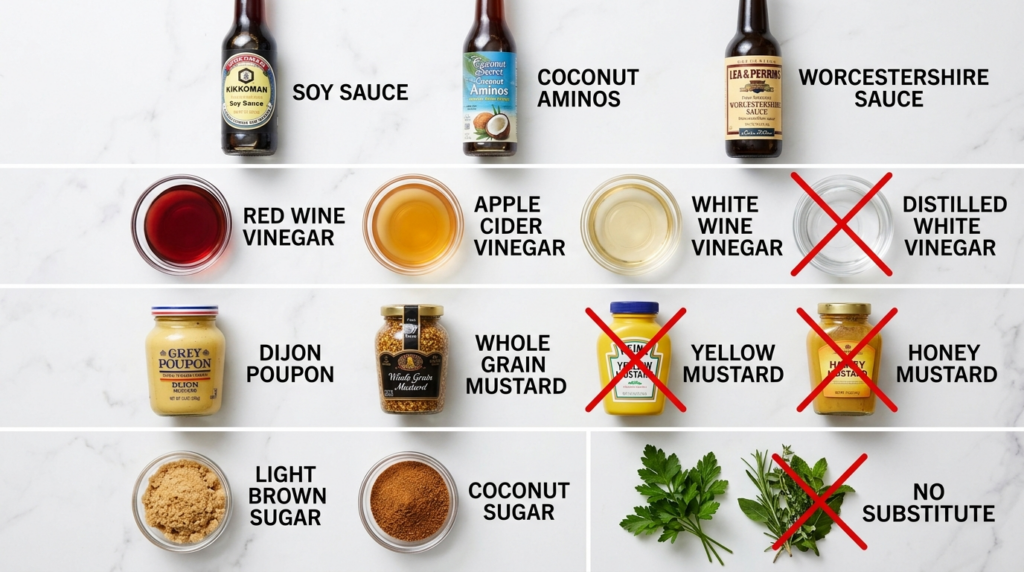
Soy sauce: coconut aminos work here. A little sweeter, a little gentler, but the caramelization on the grill is nearly identical. Worcestershire in a pinch, half the amount.
Red wine vinegar: apple cider vinegar, fine. White wine vinegar, also fine. Distilled white vinegar will bulldoze everything else in the bowl. Hard pass.
Dijon: whole grain mustard is the best swap. Similar richness, nice texture. Yellow mustard is too sharp and pushy, it shoves its way in front of the meat flavor. And honey mustard doesn’t belong anywhere near a grill. I’ll argue about this with anyone.
Brown sugar in a rub: coconut sugar goes 1:1 and actually gives a deeper, darker bark that I’ve grown to prefer.
Fresh herbs in chimichurri: there is no substitute. Period. Make something else that day.
Grilling Burgers: What I Actually Do (Not What Cookbooks Say)

Pull the chuck out of the fridge 20 minutes early. Not to bring it to room temp (that idea is overblown) but just so it’s not cracking apart when you shape it.
Press each ball into a patty about 3/4 inch thick. Gentle. Loose snowball, not tight snowball. Overworked beef binds together into a dense, rubbery mass that bounces when it hits the plate. Then press your thumb into the center. Burgers dome up as they cook. The dimple fights that. I spent years making weird meatball-burgers that wouldn’t sit flat in a bun before someone at a cookout finally said “just put a dent in it.”
Kosher salt. Cracked pepper. Right before the grill, not earlier. Salt pulls moisture to the surface and surface moisture kills your sear.
The grill should scream when the meat hits the grate. A furious, crackling hiss that carries across the yard. If you get a soft, wheezy little “pshh” instead, pull the patty off. Close the lid. Walk away for five minutes. Let the coals catch up. That initial contact sear is where the Maillard reaction fires off, proteins and sugars on the surface browning into a crust that tastes like smoke and salt and everything good about summer. A weak sear means a weak burger.
Four minutes, untouched. Don’t press. Pressing forces juice out of the patty and you’ll watch it hiss and flare on the coals, smelling incredible, knowing that flavor just left your burger forever. Flip once. Three to four more minutes. Pull at 160°F internal.
The Cheese Situation
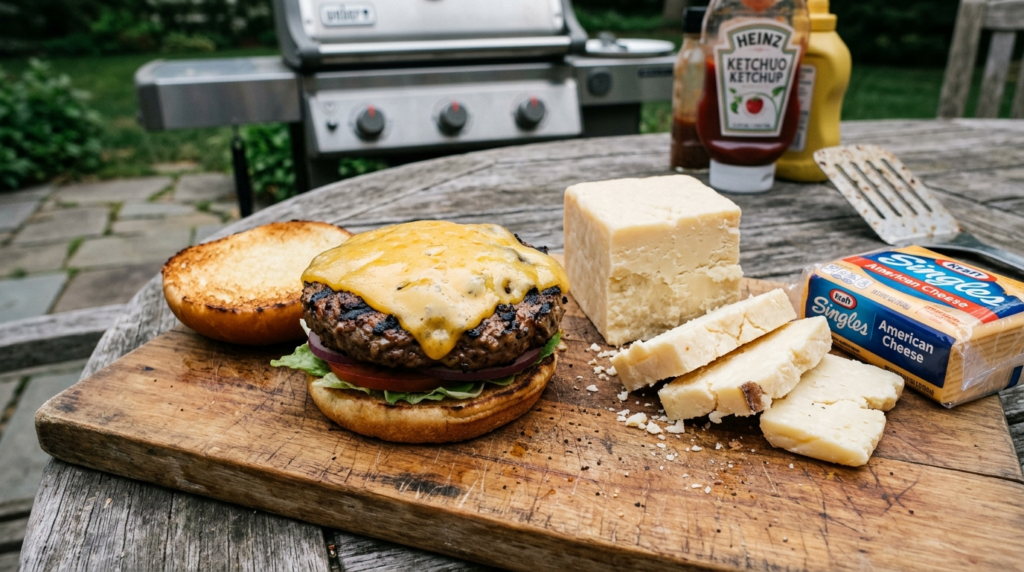
Cheese goes on one minute before the burger comes off. Lid closed.
Get a block of sharp cheddar. Something aged, something that crumbles and fractures under the knife instead of bending like a yoga mat. Slice it thick, maybe a quarter inch. That crumbly texture melts into uneven pools across the top of the patty with little pockets of barely-melted cheese that still have bite.
Those individually wrapped singles that peel apart like cellophane? After everything you just did with real charcoal, quality chuck, four minutes of patience building a crust, you’re going to put plastic cheese on top? We can’t be friends.
How to Smoke Ribs on a Grill (My Modified 3-2-1 Method)
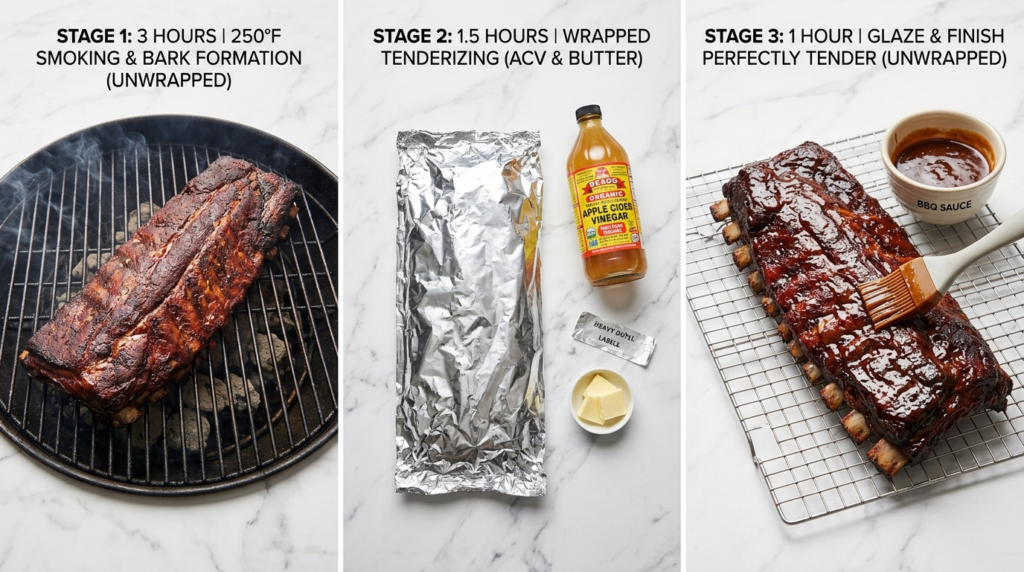
The classic 3-2-1 rib method is everywhere online: 3 hours of smoke, 2 hours wrapped in foil, 1 hour sauced. All at 225-250°F. It works. Sometimes. The problem is that for spare ribs, those full 2 hours in foil often push them past “tender” into “disintegrating.” The meat doesn’t just fall off the bone. It collapses. Falls apart in your fingers before it reaches your mouth. Texturally it’s closer to baby food than barbecue.
Here’s what I do instead:
- 3 hours unwrapped at 250°F. Leave the lid shut. Every peek costs you 30-50 degrees and adds time. Around hour two the edges darken and the fat starts to render. There’s this smoky-sweet-peppery smell that rolls across the yard, and you’ll notice your neighbor suddenly finding reasons to be outside.
- 1.5 hours wrapped in heavy-duty foil with a splash of apple cider vinegar and a tablespoon of butter sealed inside. The butter sounds odd but it melts into the meat and adds a richness I stumbled onto by accident. Haven’t skipped it since.
- 45 minutes unwrapped, mopping BBQ sauce on every 15 minutes. Thin coats, layered up. You’re building a tacky, glistening glaze that catches the light.
The Dry Rub Goes On the Night Before

First, strip the membrane off the back of the rack. Butter knife under one corner, grab it with a paper towel (slippery as hell), peel. Sometimes it tears off in one satisfying sheet. Sometimes it shreds and you’re standing there swearing at a piece of pork. Doesn’t matter how it comes off. Just get it off. That membrane doesn’t render, doesn’t soften, and blocks every ounce of smoke and seasoning from reaching the meat underneath.
The rub:
- 1/4 cup dark brown sugar,
- 2 tablespoons smoked paprika,
- 1 tablespoon each garlic powder and onion powder,
- 2 teaspoons each kosher salt and black pepper,
- 1 teaspoon cumin,
- 1/2 teaspoon cayenne.
Coat generously, both sides. Wrap in plastic. Fridge overnight.
Here’s why the overnight matters. The sugar pulls moisture to the surface, dissolves, and forms a sticky layer called the pellicle. Smoke grabs onto the pellicle. Heat hardens it. It becomes bark, that dark, crunchy, almost candied crust that shatters between your teeth before you hit the soft, pink, smoky meat underneath. You can skip the overnight rest and your ribs will be fine. But “fine” and “people stop talking mid-bite” are two very different things.
Smash Burgers: A Whole Different Thing

Cast iron griddle on the grill. Screaming hot. A 2.5-ounce ball of beef dropped onto the surface and pressed flat immediately with something heavy.
The sound is almost aggressive. A violent sizzle, fat popping and spattering outward, smoke curling off the edges as they go lacy and crisp and start to curl upward. Smells like the best diner you’ve ever walked into at 2 AM. Two minutes per side. Two patties stacked. Sharp cheddar melted between them. Soft Martin’s potato roll that soaks up the juice and goes translucent on the bottom.
Eight minutes, start to finish.
The thick grilled patty and the smash burger are different moods entirely. Tuesday, tired, want dinner now? Smash burger, cast iron, done. Saturday, charcoal lit, nowhere to be? Thick patties on the grate, lid closed, patience on. I keep both in rotation all summer and I’m not picking a favorite.
How I’ve Embarrassed Myself at the Grill (So You Don’t Have To)
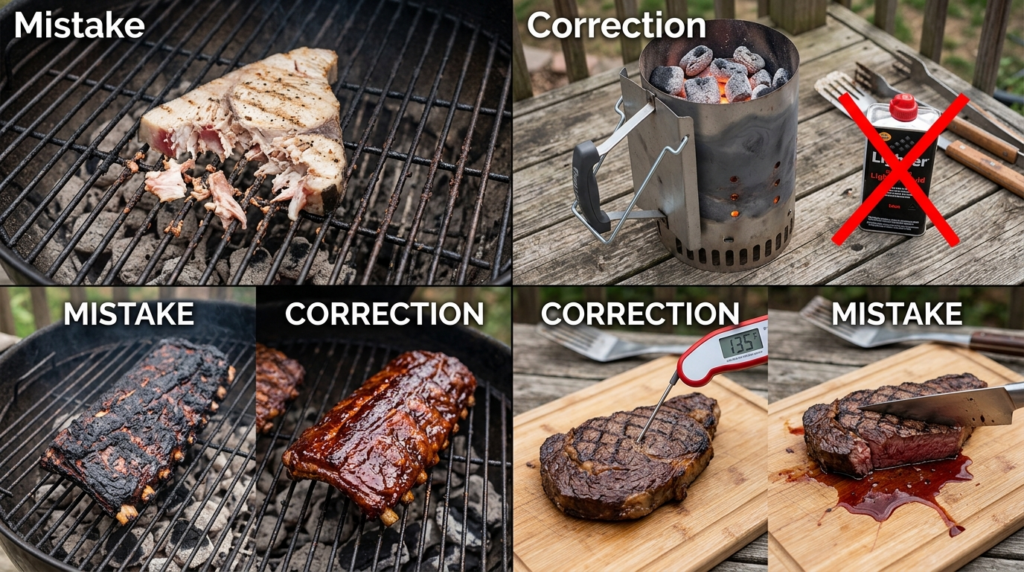
Not preheating. Fifteen minutes, lid closed, minimum. Last July I got impatient and put a piece of swordfish on a lukewarm grate. When I tried to flip it, the entire sear ripped off the fish and stayed welded to the metal. Sounded like tearing packing tape off a cardboard box. Looked like the fish had been attacked. I served it anyway. Nobody commented. The silence was deafening.
Lighter fluid. Get a chimney starter. Fifteen bucks. Twenty minutes to full heat. Your food won’t taste like a parking lot. I cannot fathom why lighter fluid is still on store shelves.
Saucing too early. BBQ sauce is mostly sugar. Sugar burns. Brush it on during the first hour and you don’t get a glaze, you get a scorched, black, bitter mess that tastes like burned candy and smells worse. Last 30-45 minutes only. Thin layers, built up slowly. I know you want to start basting the second the ribs hit the grill. Don’t.
Cutting into meat to check doneness. Every cut is a tiny river of juice escaping, dripping onto the coals, hissing away as steam. Gone. Get an instant-read thermometer. One poke, the hole closes, the juice stays in. I use mine more than any knife in my kitchen.
Hope this is the year your neighbor wanders over to the fence not to complain about the smoke, but to ask what you’re making. See you at the grill.