

After fifteen years of cooking nearly every day, I’ve cycled through more kitchen gadgets than I can count. Avocado slicers, garlic rockers, a cherry pitter that worked on cherries and absolutely nothing else. Most of it ended up donated or shoved into the back of a drawer. But along the way, a handful of tools proved themselves so useful that I’d replace them the same day if they broke. These are the kitchen tools that are actually worth the money, and I’m writing this for anyone who’s tired of buying things that look great in an Instagram ad and then collect dust next to the blender.
A Quick Word About How I Got Here
When I moved from Austin to Brooklyn in 2019, I packed up my entire kitchen into boxes and realized I owned forty-seven utensils, gadgets, and single-use tools. I kept eleven. The rest went to Goodwill. And you know what happened? I cooked better with less. Not because minimalism is magic, but because I stopped rummaging through drawers looking for the “right” tool and just started reaching for the few things that actually worked. That experience is basically the foundation of everything I’m about to tell you.
1. A Real Chef’s Knife
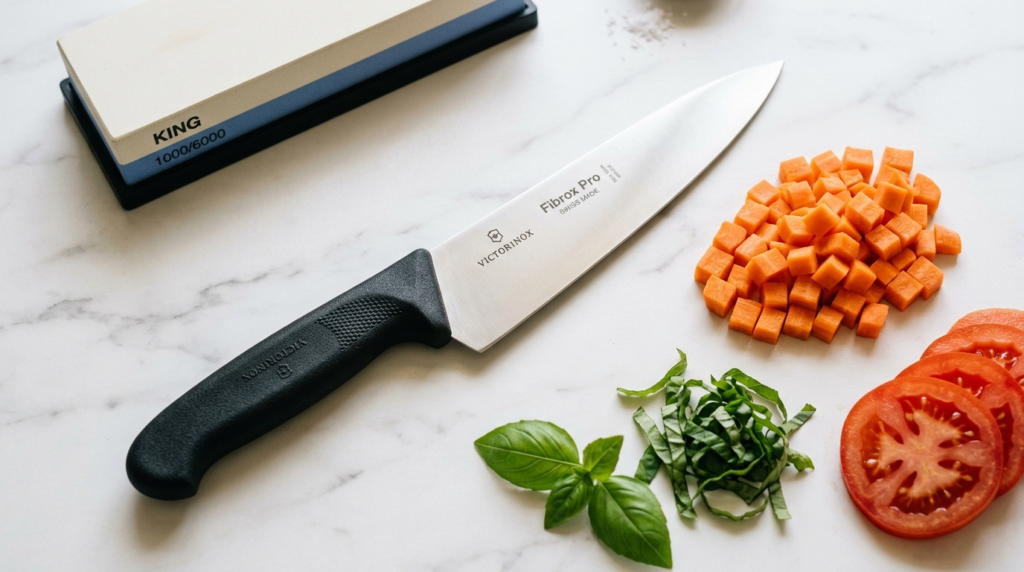
The Victorinox Fibrox Pro 8- inch costs about $32, and it genuinely changed how I cook. I know that sounds dramatic for a thirty-dollar knife, but hear me out. For years I used whatever came in a department store block set, and I just assumed that chopping onions was supposed to feel like a wrestling match. Tomatoes squished. Herbs turned into green paste instead of clean ribbons. Then a friend handed me her Victorinox while we were prepping Thanksgiving dinner in 2018, and I remember standing there staring at a pile of perfectly diced carrots, completely stunned by how little effort it took. I ordered one on my phone before we sat down to eat.
The Fibrox handle stays grippy even when your hands are slick with olive oil, and the blade holds its edge well for the price. I sharpen mine on a King 1000/6000 whetstone every few weeks, which takes about five minutes. And I’ll say this plainly: there is no workaround for a dull knife. A dull blade slips off the surface of what you’re cutting and goes somewhere you didn’t intend. A sharp one goes exactly where you put it. That is not a matter of preference.
Do you need a fancy Japanese knife? I own a Tojiro DP Gyuto and I love it, but you absolutely do not need to spend $70 or more to cook well at home. Start with the Victorinox, learn how to maintain it, and upgrade later when you actually know what you want from a blade.
2. An Instant-Read Thermometer
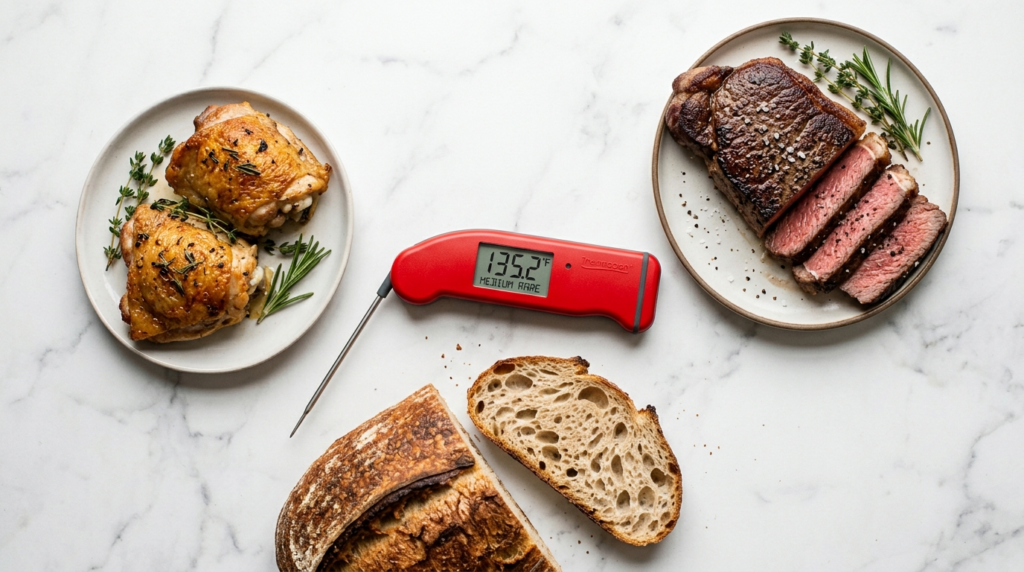
The single thing that made me a more confident cook wasn’t a technique or a recipe. It was buying a ThermoWorks Thermapen ONE. It reads temperature in about one second, it’s accurate to plus or minus half a degree Fahrenheit, and it costs around $105. I know that’s steep for what looks like a pointy stick with a screen, but consider how much money you’ve lost to overcooked chicken breasts and steaks you nervously sliced into just to check doneness, watching the juices pool on the cutting board.
Once I started using a thermometer consistently, the stress around cooking expensive cuts of meat for guests just evaporated. I pull chicken thighs at 175°F internal. Steaks come off the heat at 130°F for medium-rare and rest for five minutes. Sourdough bread is done when the center reads 205°F. Having those numbers takes the guesswork out entirely, and I stopped ruining things I’d spent good money on. ThermoWorks is a Utah company, and they also make the ThermoPop for about $35 if the Thermapen price is hard to justify right now. It reads in 3 to 4 seconds instead of one, but it’s still very accurate and a massive upgrade over poking your steak with a finger and hoping for the best.
3. A Kitchen Scale
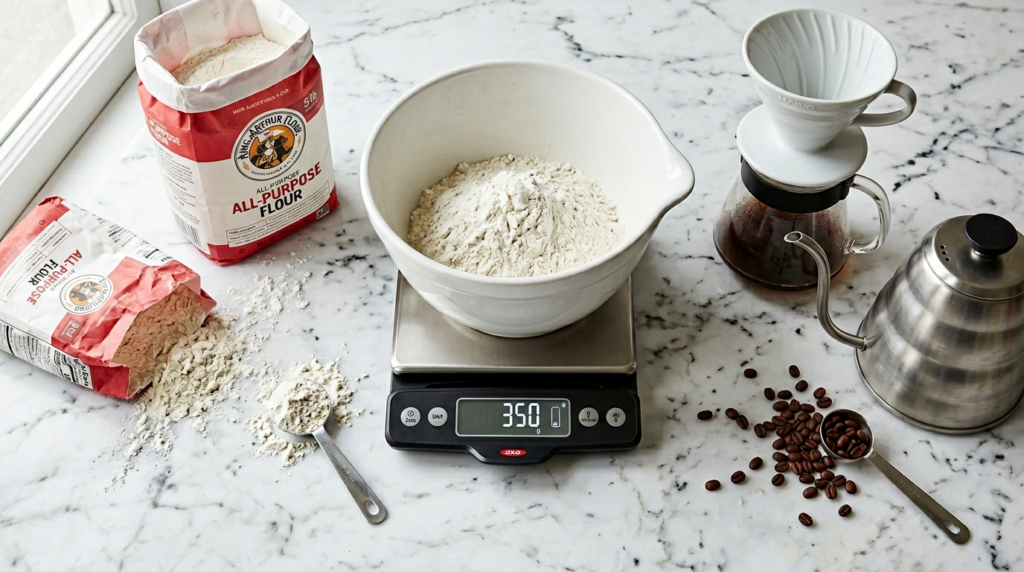
I’ll be honest with my fellow Americans here: the Europeans are right about weighing ingredients, and we should just accept it. A cup of flour can weigh anywhere from 120g to 160g depending on how you scoop, and that kind of variance will wreck a cake. I use the OXO Good Grips scale, which costs about $15 and has a pull-out display so you can actually read it under a large bowl. Mine has been on the counter for four years, and I use it every morning to measure water for pour-over coffee. It became one of those tools I just never put away because I always need it for something.
Every recipe I develop starts in grams. When I write “350g all-purpose flour,” I mean 350g, not “roughly two and a half cups, give or take.” Precision matters in baking, and a fifteen-dollar scale is the cheapest way to get there.
4. A Cast Iron Skillet

The Lodge 10.25-inch cast iron skillet runs between $20 and $30 depending on where you find it. Lodge has been making cast iron since the 1890s, and these pans are genuinely generational. I know people cooking on skillets their grandmothers seasoned.
I sear steaks at screaming high heat in mine. I bake cornbread. On Sunday mornings I make Dutch babies, pouring that eggy batter into a skillet that’s been sitting in a 425°F oven with a tablespoon of butter pooling and sizzling at the bottom, and the whole thing puffs up with crispy, caramelized edges and the apartment fills with a smell that is dangerously close to a French bakery. You cannot get that result from a nonstick pan. The thermal mass of cast iron creates a sear and a crust that lighter cookware simply can’t match, and once you experience the difference, it’s hard to go back.
Maintenance is simpler than the internet makes it sound. Cook in it, wipe it out with a paper towel while it’s still warm, rub on a thin layer of oil every now and then. Modern dish soap is not going to strip your seasoning. That old myth needs to retire. Yes, it’s heavy. About 5 pounds. But that weight is the whole point.
5. The Microplane Zester
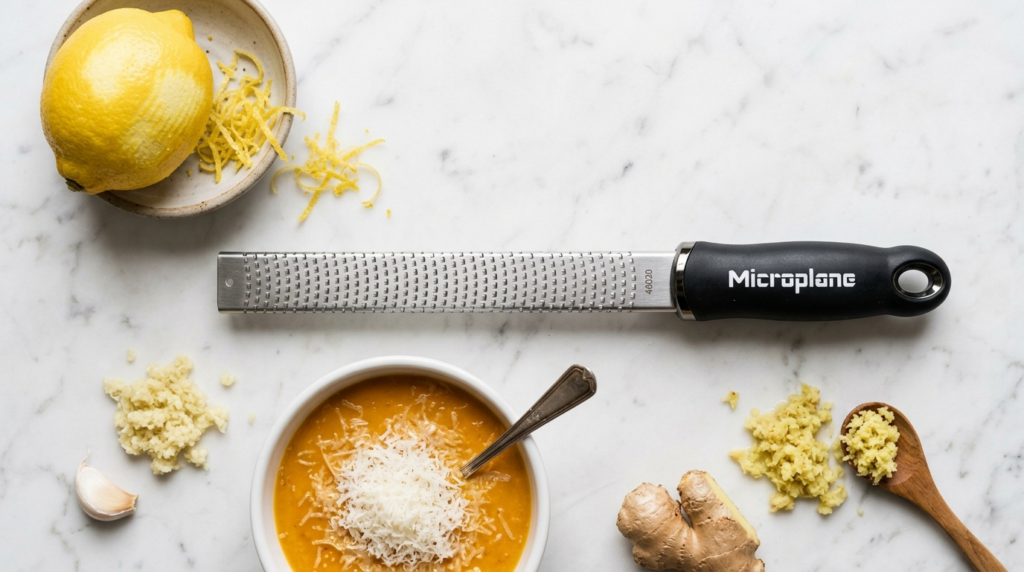
Around $13 to $16 , and there are days I use mine three or four times before dinner is on the table. Lemon zest over pasta, garlic grated into dressings so fine it practically dissolves, parmesan snowed over a bowl of soup, fresh ginger for a stir-fry without any of those stringy fibers getting in the way. Before I owned a Microplane I used the fine side of a box grater, and my knuckles paid the price every time.
I’ve tried cheaper knockoffs from Amazon and they dull within weeks. The original Microplane stays sharp for years, which is one of those cases where the brand-name version is measurably better and the price difference is small enough that there’s no reason to gamble on an imitation. One thing to remember when zesting citrus: stop the second you see white pith underneath the colorful outer layer. The pith is bitter. The zest is all fragrance and oil, and that’s the part you want.
6. A Fish Spatula
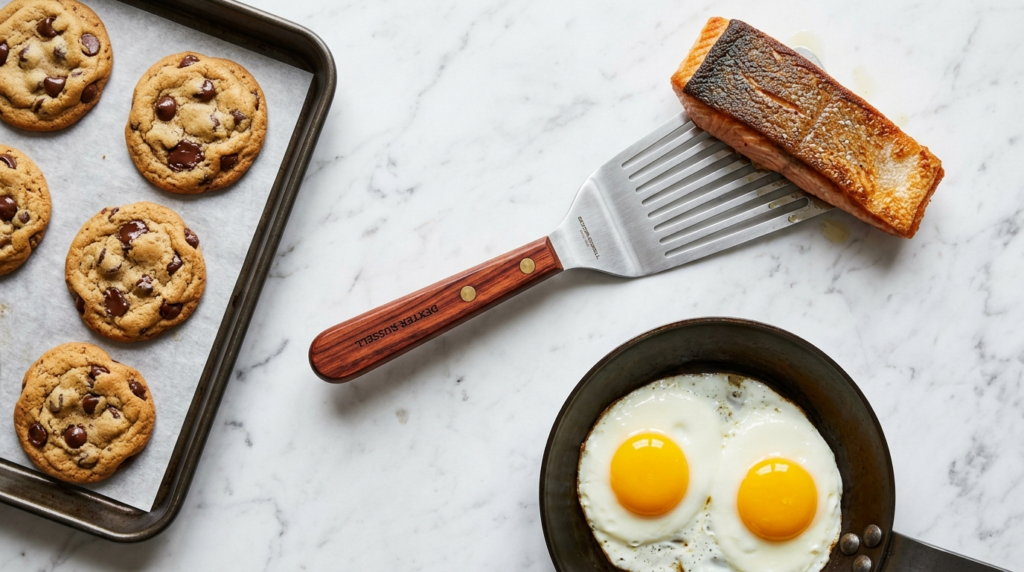
This one surprises people. A fish spatula looks like a slotted metal turner with a thin, slightly flexible blade and an offset angle. I use a Dexter-Russell with a rosewood handle that cost me maybe $15 at a restaurant supply store, and it has quietly become the spatula I reach for more than any other.
It slides under a piece of salmon without tearing the skin. It flips fried eggs cleanly. It lifts cookies off a sheet pan without bending them. The slots let oil drain when you’re pulling something out of a skillet, and the thin edge gets under food in a way that a thick plastic spatula never will. I honestly cannot remember the last time I used a regular spatula for anything. Every line cook I’ve ever talked to owns one of these, and most home cooks have never heard of them, which is a shame because they cost almost nothing and do the job of three other tools.
7. A Dutch Oven
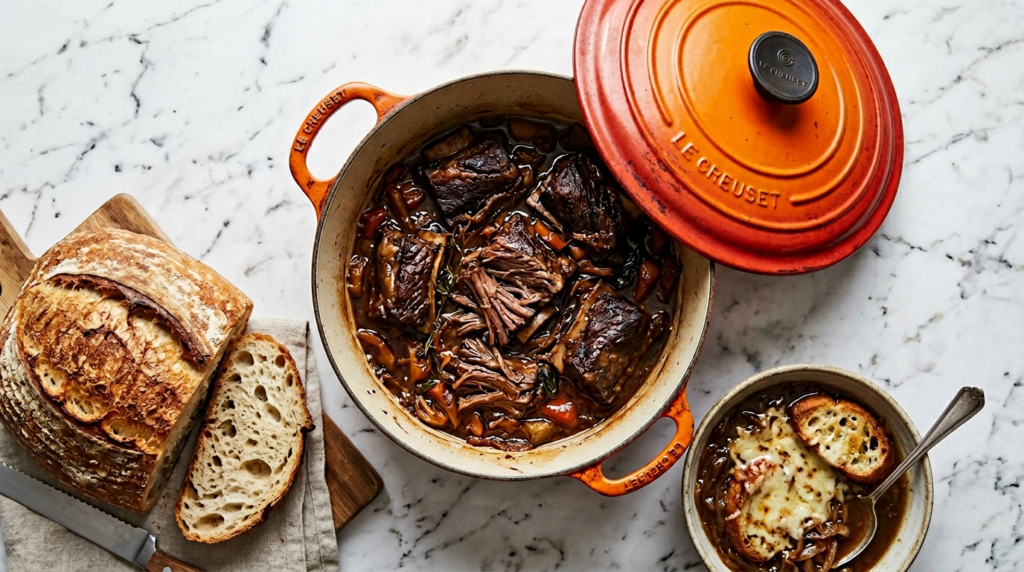
A Le Creuset 5.5-quart (about 5.3 liters) runs around $ 380. I bought mine in 2014 right after I got my first real food writing gig, as a wildly irresponsible “treat yourself” purchase that I could not actually afford. It has survived two apartments and a cross-country move, and the enamel still looks almost the same as it did eleven years ago.
I braise short ribs in it at 325° F for three hours until the meat falls into dark, glossy strands. I bake sourdough with the lid on so the trapped steam gives the crust that shattering crackle. I make French onion soup, caramelizing onions low and slow for about 45 minutes until they collapse into sweet, jammy ribbons. The heavy walls distribute heat so evenly that I’ve never once had scorching on the bottom, which used to be a constant problem with my old thin-walled pot.
But if Le Creuset pricing makes you wince, the Lodge enameled Dutch oven performs shockingly well for about $60 to $80. The interior enamel is a touch rougher and the lid doesn’t seat quite as tight, but functionally it gets you 90% of the way there for a fraction of the cost.
8. A Rimmed Sheet Pan
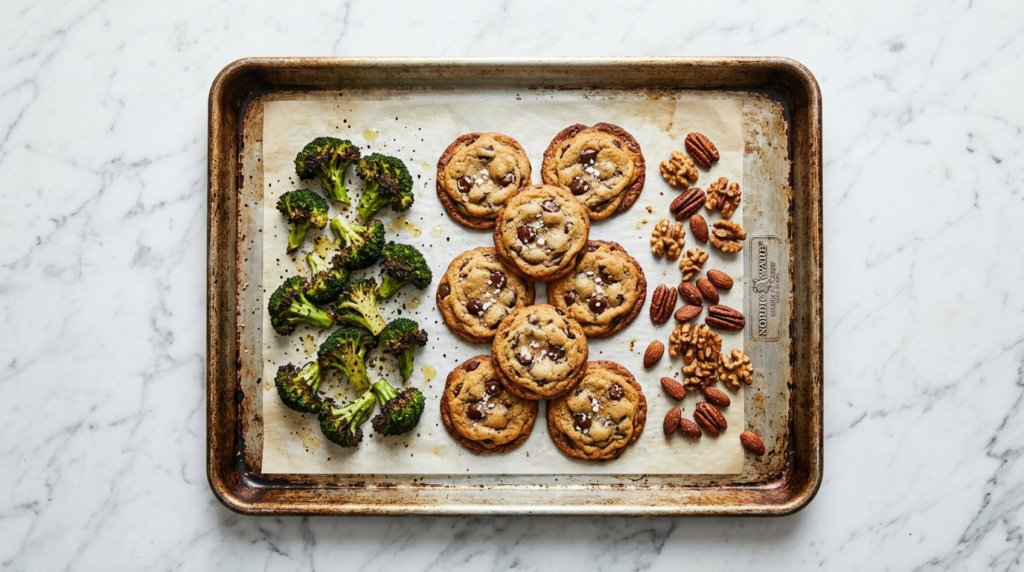
The Nordic Ware Baker’s Half Sheet, about $15. Natural aluminum, 18 by 13 inches, and it will never warp on you. I had a cheap dollar-store pan buckle with a loud bang at 400°F once and it warped so badly that my cookies baked into uneven lumps. Switched to Nordic Ware after that and never looked back.
Line them with parchment. Pre-cut sheets from King Arthur Baking fit the half-sheet perfectly and save you from fighting with a curly roll. I roast broccoli on these at 425°F, bake cookies, toast nuts, use them as giant prep trays during the holidays. When they get stained and dark over time, that’s not a problem, that’s just what a well-used pan looks like.
9. An Old Wooden Spoon (Seriously)
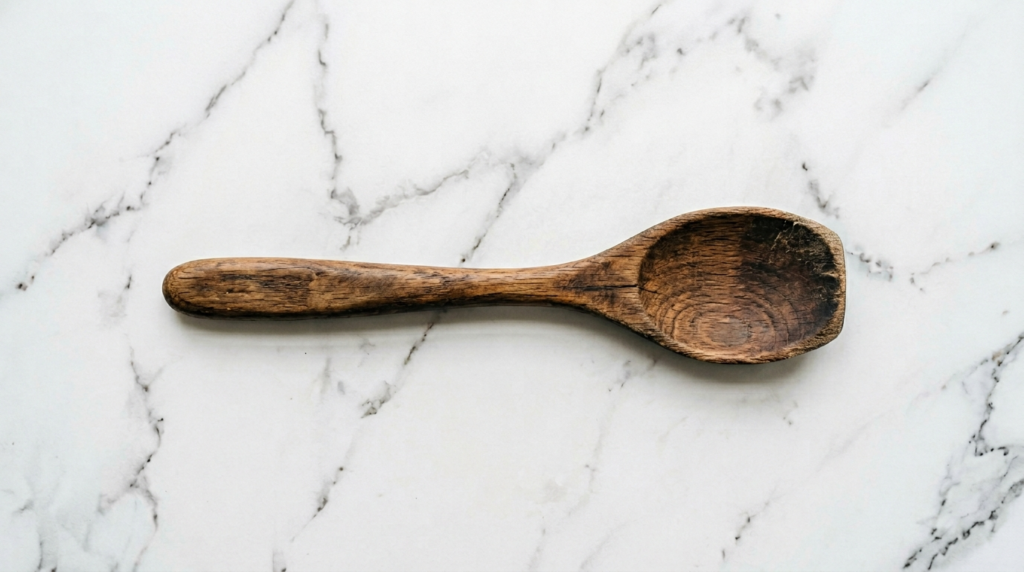
I know this sounds ridiculous on a list next to thermometers and Dutch ovens, but the tool I reach for most often in my kitchen is a wooden spoon I bought for two dollars at a flea market in Round Top, Texas, sometime around 2016. It’s slightly curved, the handle is thinner than most modern spoons, and one edge is worn flat from years of someone scraping the bottom of a pot before I ever owned it.
I’ve bought plenty of “nice” wooden spoons since then. Olivewood ones that look beautiful in photos. Fancy spatula-spoon hybrids. And I keep coming back to this beat-up, anonymous flea market spoon because it fits my hand perfectly and the worn edge scrapes fond off the bottom of a pan better than anything with a designed shape. Sometimes the right tool finds you by accident, and all the curated buying guides in the world can’t replicate that. I have no idea who made it or what wood it is. Doesn’t matter. It works better than anything I’ve bought on purpose.
10. Parchment Paper and Kitchen Shears

These are the two things I’m constantly running out of and constantly repurchasing because I use them for everything. Parchment I already mentioned for sheet pans, but I also wrap fish in it for en papillote, use it as a surface when breading cutlets so the flour mess stays contained, and tear off sheets as makeshift funnels. A box of pre-cut half -sheets runs about $12 and lasts a couple of months in my kitchen.
For shears, I use a pair of Shun kitchen scissors that cost around $20. They come apart at the hinge for cleaning, which matters more than you’d think once you’ve tried to sanitize cheap scissors after cutting through raw chicken. I spatchcock whole birds with them, snip herbs directly over a pot, and cut pizza when I’m too lazy to find the wheel. They handle chicken bones without complaint, which destroyed every cheaper pair I tried before.
Where to Start If You Can’t Buy Everything at Once

Buy the knife first. Nothing else on this list matters if you’re fighting your cutting board with a dull blade. Then the cast iron skillet, because for $25 it replaces several more expensive pans. Add the scale, the tongs, and the bench scraper, and you have a solid working kitchen for under a hundred dollars.
The thermometer and the Dutch oven can wait for a sale. ThermoWorks runs deals around the holidays, and the Lodge enameled Dutch oven drops to around $50 during Amazon sales, which is hard to believe for an enameled piece but it happens. I would not try to substitute the Dutch oven with a thin pot for bread baking specifically because you need that mass and lid seal to trap steam, but for soups and braises a heavy pot with a snug lid will get you most of the way.
The honest truth about kitchen tools is that the good ones disappear from your attention. You stop noticing them. You just cook, and the equipment gets out of the way, and your focus stays on the food. That’s all I really want from anything in my kitchen, and every single thing on this list delivers on that quietly and without fuss.