

People search for ways to fix oversalted food hoping to find a magic kitchen hack that acts like a sodium vacuum. I need to burst that bubble right away. Once salt dissolves into a liquid or penetrates the cellular structure of a piece of meat, it is there for good. You cannot neutralize it the way you balance a harsh acid with a pinch of baking soda. Salt isn’t an acid. It’s a mineral, and there is no “anti-salt” you can drop into a pot.
When you oversalt a dish, you are left with exactly two options. Dilute the concentration of the salt by increasing the volume of everything else, or trick your palate into not noticing it as much by throwing competing flavors at your taste buds.
Before we get into the actual salvage operations for different types of food, we have to talk about the potato.
The raw potato myth needs to die
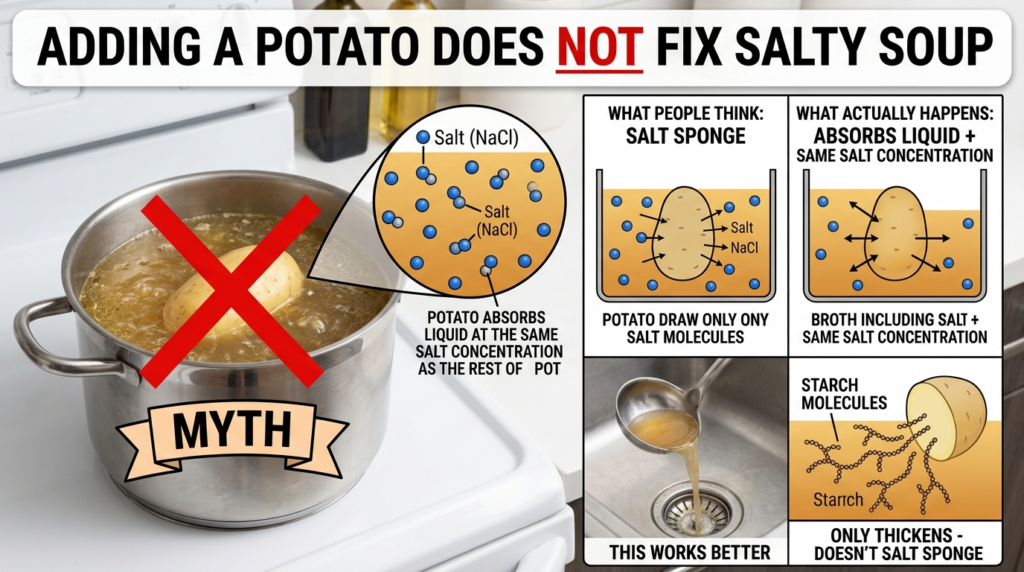
I don’t know who started the rumor that dropping a raw peeled potato into a salty soup acts as a “salt sponge,” but the internet refuses to let it go. Here is what a potato actually does in a pot of broth. It absorbs liquid.
It absorbs that liquid at the exact same sodium concentration as the rest of the pot. It does not selectively hunt down and extract salt molecules. Taking a ladle, scooping out a cup of your broth, and pouring it down the sink accomplishes the exact same volume removal as the potato trick. It also saves you from wasting a perfectly good russet.
The only reason people think the potato works is because as it simmers, it breaks down and leaches starch into the liquid. That starch thickens the broth slightly, changes the mouthfeel, and makes the salt feel slightly less aggressive on the tongue. But chemically? The salt is still there. If your soup is severely oversalted, a potato is like putting a band-aid on a broken leg.
Fixing liquid disasters: soups, stews, and sauces
Liquid-based dishes are the easiest to rescue because you have total control over the volume. If your soup tastes like seawater, you have to dilute it. There is no way around this.
The dilution and rebuild method
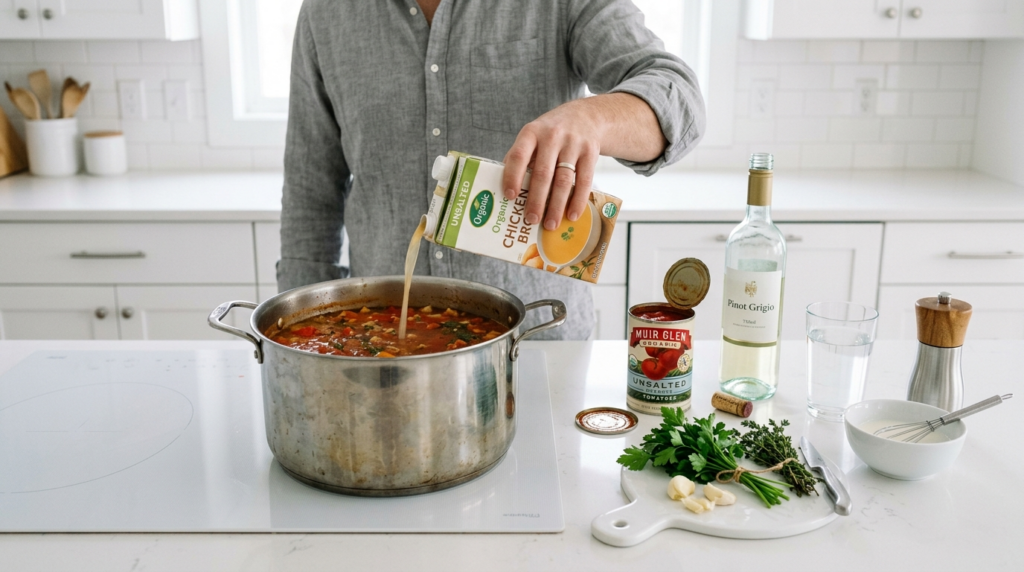
You need to add unsalted broth, unsalted canned tomatoes, a splash of wine, or just plain tap water. Doing this is going to thin out the flavor profile and ruin the consistency you just spent an hour building. That is the tax you pay for oversalting.
Once you’ve added enough liquid to bring the salt concentration down to a tolerable level, you have to rebuild the dish. You aren’t just “fixing” the soup anymore. You are essentially forcing yourself to make a larger batch. Toss in more crushed garlic, fresh herbs, or a little black pepper. If the broth got too watery, whisk a cornstarch slurry into a small bowl of the hot liquid and stir it back into the main pot to regain that lost body.
How to neutralize salt without adding water: the fat and acid method
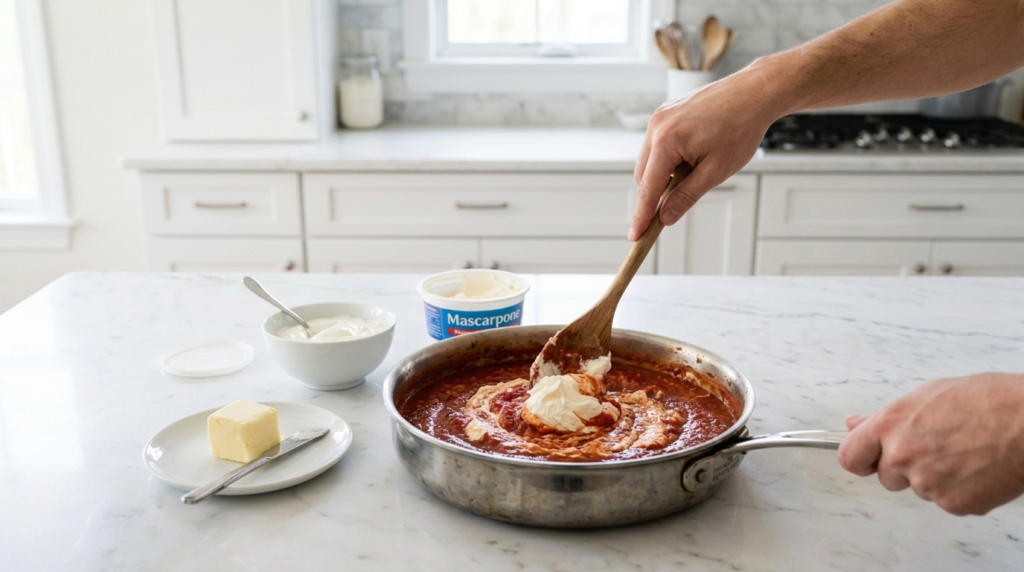
If dilution isn’t an option, say you made a thick gravy and adding water would ruin it completely, you have to rely on palate distraction. Heavy fat and sharp acids are your best tools here.
A heavy pour of heavy cream, a giant knob of unsalted butter, or a spoonful of sour cream does something very specific. It coats the inside of your mouth. Fat creates a physical barrier on your tongue that blocks some of those salt receptors from firing. This is why a wildly salty tomato sauce suddenly tastes completely fine the second you stir mascarpone into it.
Acid works differently. A splash of apple cider vinegar, white wine vinegar, or fresh lemon juice won’t mask the salt, but the sharp hit of sourness forces your brain to process two intense competing flavors at once. It scrambles the signal. Just don’t overdo it, or you end up with something that is both aggressively salty and aggressively sour.
How to Fix Oversalted Meat: Solutions for Raw and Cooked Cuts
Meat is a completely different animal. And honestly, a much worse problem to have.
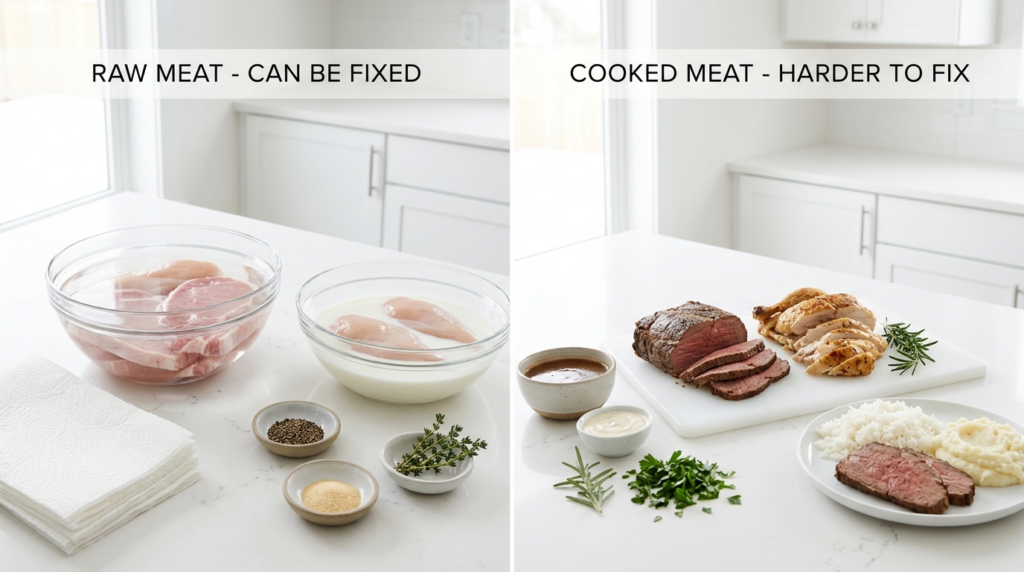
If you realize you dumped way too much dry rub on a pork shoulder and you haven’t cooked it yet, you’re fine. Take it to the sink, wash it off under cold water, pat it completely dry with paper towels, and start over. Surface salt is entirely removable.
But if you already cooked it? Or if it sat in a heavily concentrated brine for twelve hours? That sodium has permeated the muscle fibers. You are stuck with it.
The only way to salvage heavily salted cooked meat is by altering how it hits the plate. Slice it paper-thin, across the grain. A thick piece of salty steak is practically inedible because it delivers a massive payload of sodium to your palate in a single chew. Slicing it as thin as possible spreads that salt over more surface area and reduces the total sodium per bite.
Next, serve those thin slices with something deliberately, aggressively bland. Unseasoned steamed white rice. Mashed potatoes made with heavy cream but zero salt. A pile of butter lettuce with just olive oil. Let the side dish act as the missing dilution, forcing your mouth to balance the salt out as you chew them together.
Rescuing starches and vegetables
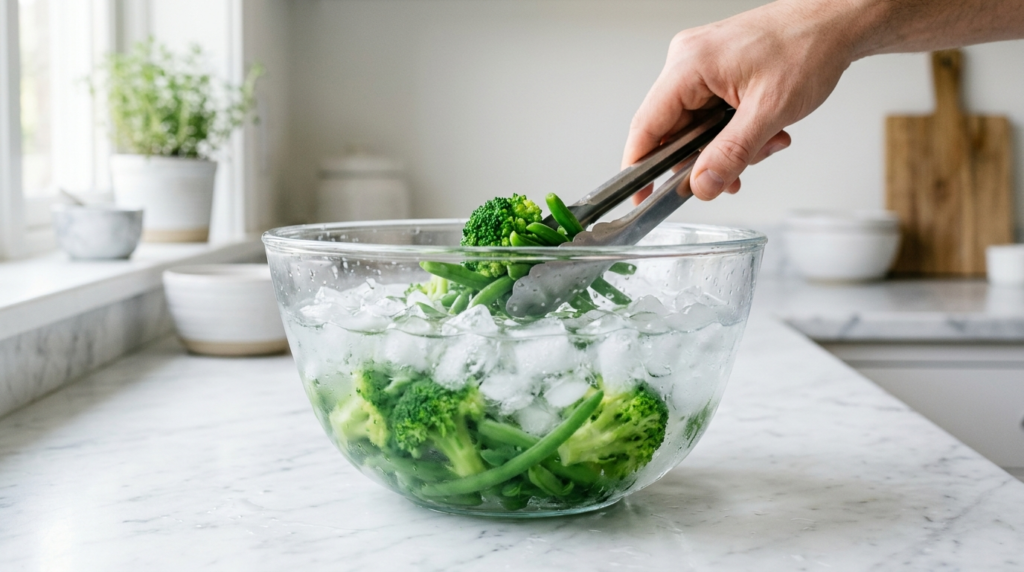
Side dishes usually fall victim to salty boiling water. If you over-salted the water for your green beans or broccoli, just shock them in an ice bath, drain them, and toss them with an unsalted fat, like a quick glug of olive oil, and some lemon zest. They usually recover fine.
Pasta is less forgiving. If you boiled your spaghetti in water that actually tasted like the ocean, the starch structure of the noodle is compromised and infused with salt. You can’t un-ring that bell. Rinsing cooked pasta is usually a terrible idea because it washes away the surface starch you need to make sauces cling. But in an oversalting emergency, a quick rinse under warm water can knock off the exterior sodium. After that, your only play is to make a completely unsalted pan sauce, something like a heavy butter and garlic emulsion, toss the noodles in it, and hope the fat masks the worst of it.
If you oversalted roasted vegetables in the oven, don’t try to serve them as a standalone side. Chop them up roughly and fold them into an omelet, a frittata, or a massive bowl of quinoa. Turn the salty vegetable into a seasoning element for a larger, blander dish rather than forcing it to be the main event.
The only real fix happens before you cook
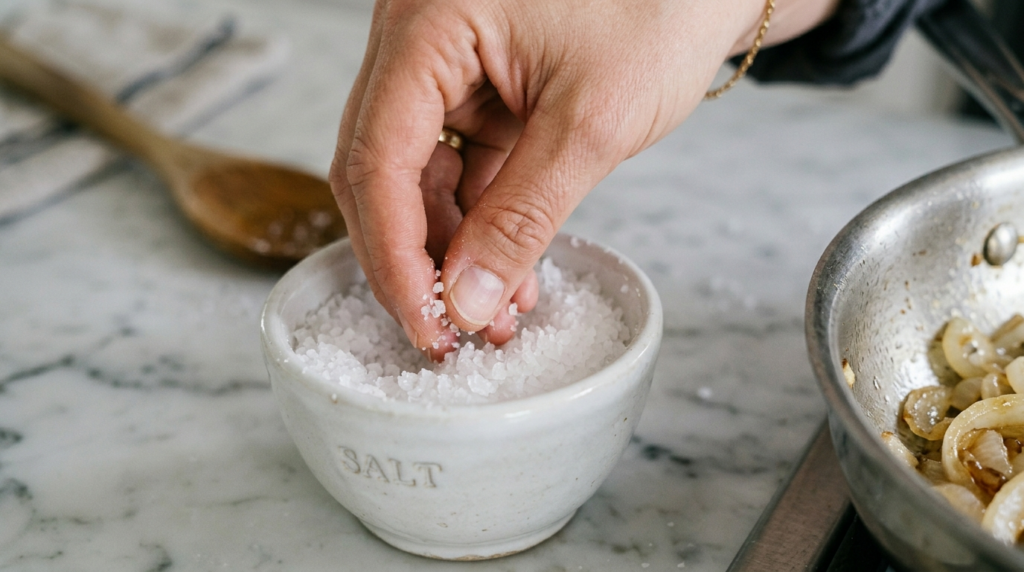
The reason people end up frantically searching for ways to fix salty food is that they treat salt like a finishing touch. They cook a whole meal, taste it at the very end, realize it’s bland, and dump a heavy pour of salt over the top. That is a recipe for disaster.
You should be salting in tiny increments at every single step of the cooking process. A pinch when the onions hit the hot oil. Another pinch when you add the crushed tomatoes. Taste it. Adjust it. If you build the seasoning in layers, the salt absorbs evenly, the flavors deepen naturally, and you know exactly where you stand at all times.
And throw away your salt shaker. Shakers are chaos. You can’t feel how much volume is pouring out, and all it takes is one loose lid to ruin a Tuesday night dinner. Get a small bowl, fill it with kosher salt, keep it next to your stove, and use your fingers. Your hands will eventually learn exactly what a proper pinch feels like. And you’ll never have to google how to fix a ruined pot of soup again.