

This started with oatmeal. Which is a stupid way to have a crisis, I know. I was at Trader Joe’s killing time before a dentist appointment, already in a bad mood, and I grabbed a box of oats off the shelf and then, for no good reason, grabbed a second one right next to it. Same oats. Same weight. One said “Natural” in that earthy lowercase font. The other had the USDA Organic seal. A dollar eighty-nine more. I stood there holding both like a broken person while a woman with a stroller asked me to move. Twice. I put both boxes back and left without buying anything.
That was years ago. I’m still thinking about it. Not the oatmeal, the feeling. That nagging sense that every food label on every package in the store is doing something to me and I can’t quite name what. So I went home and started reading, and what I found out about what organic, natural, and other labels on food packages really mean made me equal parts informed and irritated.
The organic label is real, I’ll give it that
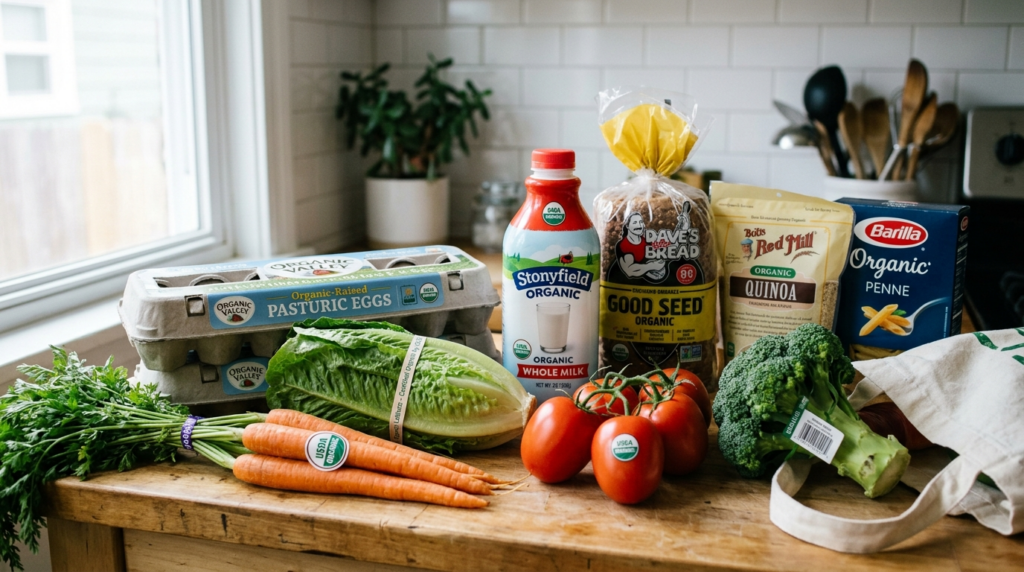
I assumed the USDA Organic seal was mostly decorative. Wrong. It’s one of the few food label certifications with actual enforcement. A farm has to prove three years of farming without synthetic pesticides, herbicides, or artificial fertilizers before they qualify. No GMOs. No sewage sludge as fertilizer, yeah, that’s a real thing in conventional farming, and I wish I could un-learn it. For meat and dairy, organic means organic feed, outdoor access, no antibiotics, no growth hormones. And the farms get audited regularly. Inspections, paperwork, the whole miserable bureaucratic routine. That’s why organic food costs more. It’s not a wellness tax. Someone is actually checking.
What “natural” means on food labels: almost nothing
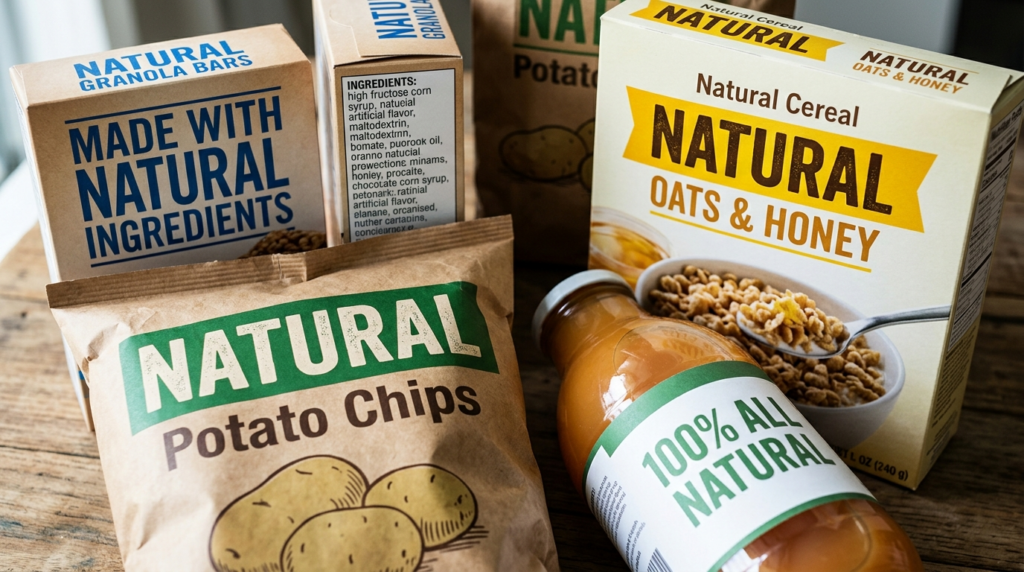
The FDA has never formally defined what “natural” means on food packaging. The agency whose job it is to regulate this stuff just hasn’t gotten around to it. The loose idea is no artificial ingredients, no added colors, “minimally processed.” But nobody defined “minimally processed” either, so the phrase stretches to fit almost anything. I found this out via a bag of chips I bought specifically because the package said natural. Got home, flipped it over. High fructose corn syrup. GMO-derived ingredients. All technically from corn, all technically from the earth. “Natural” soda has the same sugar as Sprite. “Natural” frozen pizza is still frozen pizza. The word is doing marketing work, not science.
Non-GMO, grass-fed, free-range, cage-free: decoded
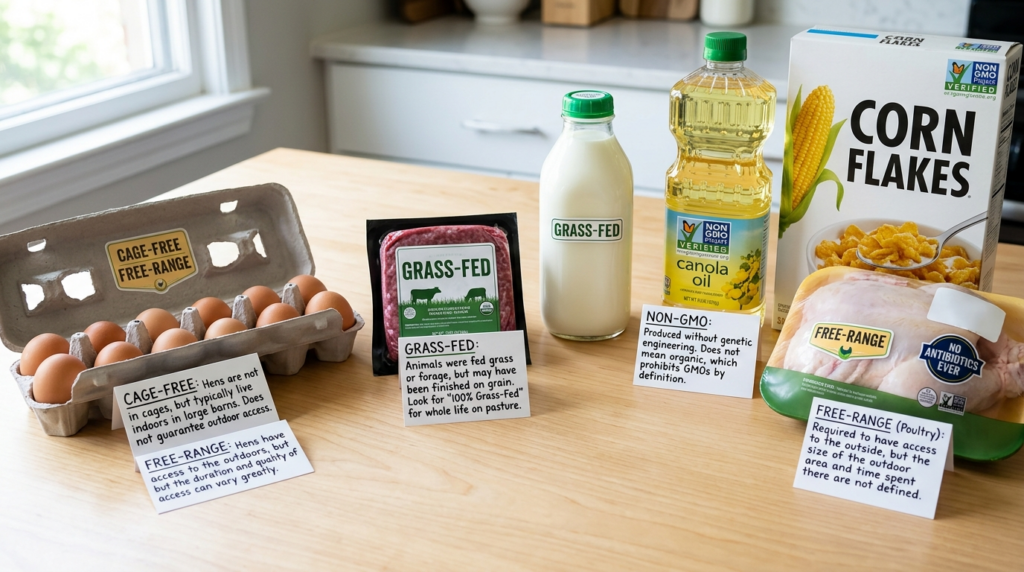
The Non-GMO Project Verified butterfly means an independent group tested the product and confirmed no genetically modified organisms. Good. But non-GMO says nothing about pesticides. A product can wear that butterfly while being grown in a field drenched in chemicals. One fact. That’s all it covers.
Grass-fed means the animal ate grass instead of grain. That part’s true. But the USDA’s grass-fed standard doesn’t restrict antibiotics or hormones. Many grass-fed ranchers skip those anyway, because that tends to be the type, but it’s correlation, not a rule. If you’re paying nine bucks more per pound thinking grass-fed means the whole package, check the brand’s website.
Cage-free eggs means hens aren’t in battery cages. That’s the entire promise. They can still be crammed into a windowless warehouse. Free-range requires “outdoor access,” but the regulation doesn’t say how big the outdoor area needs to be or how long the door stays open. I’ve seen photos where the “outdoor access” is a propped-open door at the far end of a massive barn, opening onto a concrete strip the size of a parking space.
Gluten-free: under 20 parts per million, FDA-regulated, actually does what it says for people with celiac disease. No complaints.
Nutrition claims that sound good but mean less than you think
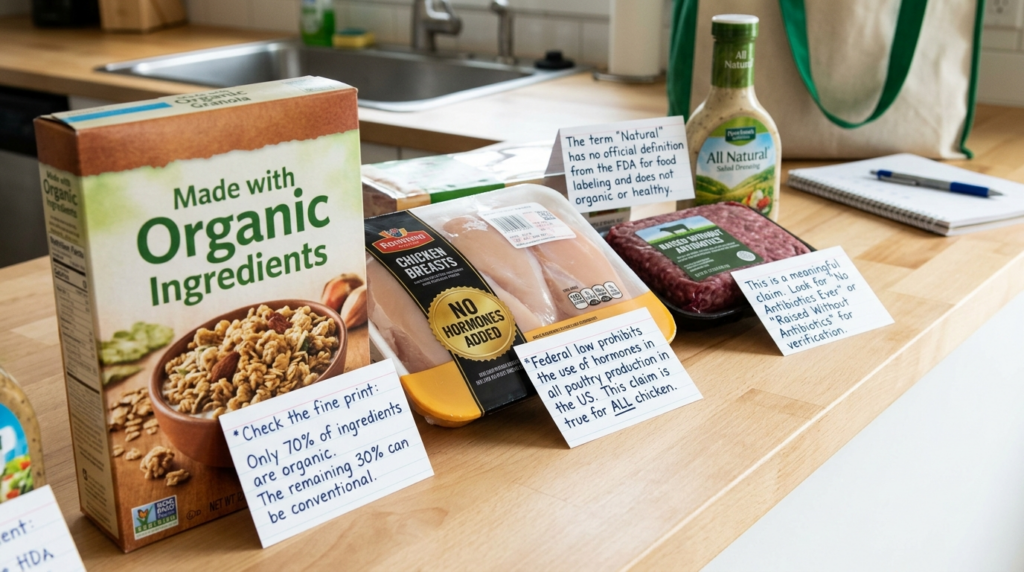
“Made with organic ingredients” means 70% organic. The other 30% could be anything. You have to flip the package and read the ingredient list to know, and they print it in a font designed to discourage exactly that. “Hormone-free” on chicken is the one that makes me genuinely angry. Federal law already bans hormones in poultry and pork. Every chicken in every store is hormone-free whether it says so or not. “Antibiotic-free” on beef actually matters though. Antibiotic overuse in cattle farming breeds resistant bacteria, it’s not banned by default, and when a producer opts out, that’s a real choice with real costs.
How I actually read food labels now
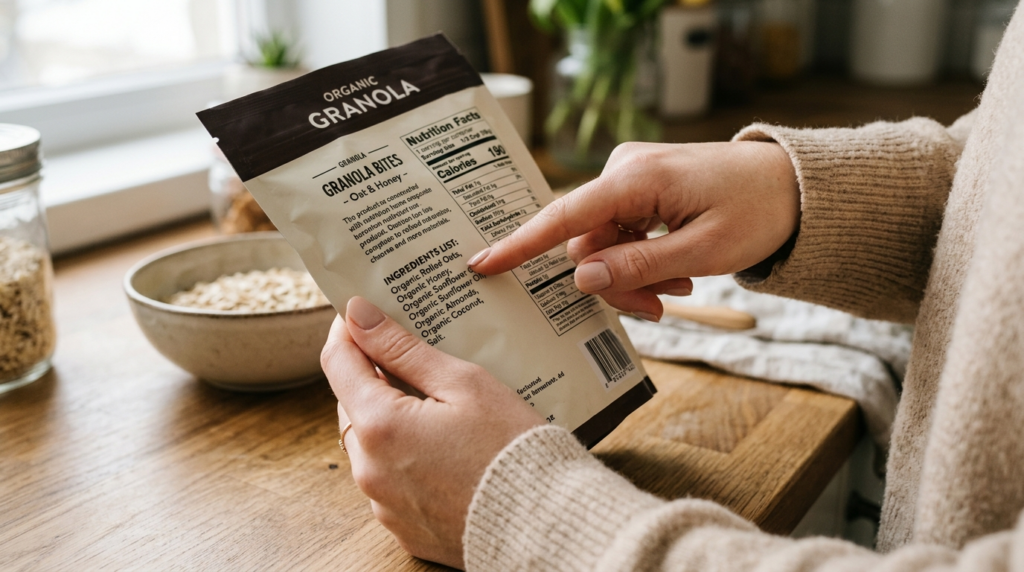
I went through a phase where I inspected everything. Grocery runs ballooned to two hours. My wife came once and told me afterward she wasn’t doing that again. I was Googling BPA in can linings at 9:30 PM in the bean aisle. Not sustainable.
What I settled into: I care most about pesticides, so I buy organic for things where you eat the skin. Strawberries, spinach, apples, peppers. For thick-skinned stuff like avocados and bananas, conventional is fine. The Environmental Working Group publishes annual “Dirty Dozen” and “Clean Fifteen” lists ranking produce by pesticide residue. I keep it on my phone. That’s my system.
I flip every package over now. The front is a commercial. The back, the ingredient list, is the truth. Ingredients listed by weight, most to least. If sugar’s in the top three of something marketed as healthy, I put it back.
The guy with the ugly tomatoes
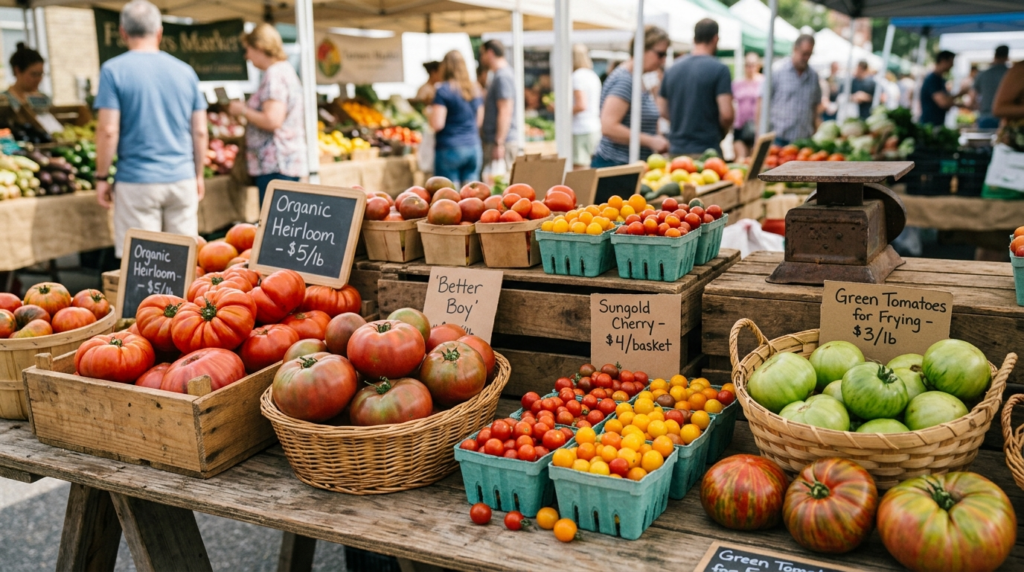
A few months back I was at a flea market looking for a lamp (my kid broke ours with a foam sword) and there’s this older guy behind a cardboard box of the ugliest tomatoes I’d ever seen. Handwritten sign: “TOMATOES $4/BAG.” Twenty years on the same twelve acres. No chemicals. No certification because the USDA paperwork costs more than he makes in a quarter. I bought a bag, sliced one over the sink with salt, and it was the best tomato I’d had in fifteen years. No label. No seal. Just a guy with dirt under his nails who told me exactly how he grows his food.
The organic seal is the only food label I trust to mean something enforceable. “Natural” is a word that costs nothing to print. Everything else, non-GMO, grass-fed, free-range, answers one question and dodges all the others. An organic cookie is still a cookie. I’ve bought organic Oreos. Twice. They tasted exactly the same except my receipt was higher.
The system is confusing on purpose. Confusion is profitable. The companies that benefit from you not understanding food package labels have marketing departments bigger than some towns I’ve driven through. All you can do is learn which words have rules behind them and which ones just have graphic designers. And if you find a guy at a folding table selling something that doesn’t need a label to prove what it is, buy the whole box.